
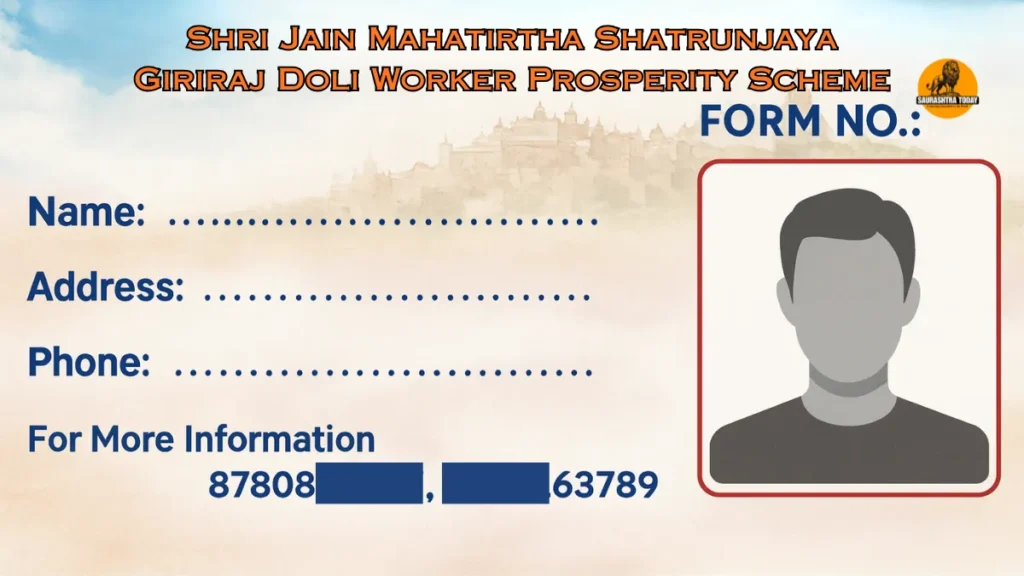
Palitana, Gujarat — Doli Worker Prosperity Scheme: A major reform is set to take place for pilgrims visiting the sacred Shatrunjay Mahatirth pilgrimage site. Starting from Tuesday, November 25, Jain pilgrims who travel up the hill using traditional doli (palanquin) services will now be included in a new identification and safety system. Under the spiritual direction of revered Acharya Bhagwant and the management initiative of the Jain community, Jain ID Cards will be issued to registered doli workers, marking the formal roll-out of the Doli Worker Prosperity Scheme.
Every year, hundreds of thousands of Jains from across the world come to the Shatrunjay Hills — one of the holiest places of pilgrimage in Jainism. The doli service remains a crucial mode of travel for elderly devotees, differently-abled pilgrims, and those unable to climb the steep ascent. Recognizing the need for greater transparency, organization, and pilgrim safety, the Jain community has implemented this landmark initiative.
Background: A System Rooted in Convenience, Safety, and Fairness
Speaking about the development, Bhadrash Shah, President of the Gujarat Yuvak Mahasangh, recalled that the Jain Sangh revamped doli services last year, eliminating the long-standing fee burden previously imposed on doli workers.
Before this policy change, doli workers were required to pay ₹100 per day, a system that often caused financial hardship. The new ecosystem created under community leadership liberated workers from this payment model. The Doli Worker Prosperity Scheme has now taken the initiative further by introducing Jain ID Cards — reinforcing security for pilgrims while guaranteeing rights and benefits for doli workers.
How the New System Works for Pilgrims
Every pilgrim who chooses to undertake the climb in a doli will be required to:
- Verify the authenticity of the doli worker by checking the Jain ID Card, and
- Ensure that the doli has an official management slip before beginning the journey.
This step is meant to prevent unauthorized operators from exploiting pilgrims or charging hidden costs.
The community management also highlighted that while the system is new, it will not impose any additional financial charges on pilgrims.
Action Against Illegal Charges
Currently, some operators are reportedly collecting an unlawful ₹20 fee from pilgrims for doli travel. A formal complaint has already been submitted to authorities ranging from the Deputy Collector to senior officials in Gandhinagar.
Once the new system launches, pilgrims will not be required to pay this ₹20 fee for the management slip, as it will be fully integrated into the service protocol.
Rewards for Professional and Ethical Conduct
One of the community-centric advantages of the initiative is the encouragement of ethical behavior. Under the Doli Worker Prosperity Scheme, workers who show:
- exemplary service,
- discipline,
- and courteous behavior toward pilgrims
will receive special rewards, recognition, and incentives.
This model is expected to motivate workers and raise the overall standard of service at the holy site.
Financial and Welfare Support for Doli Workers
The Doli Worker Prosperity Scheme is being described as a welfare-oriented, sustainable support program. Under the current framework:
- If a registered doli worker passes away, their family is provided ₹25,000 as financial assistance.
- In cases of illness, accidents, or emergencies, workers may receive ₹5,000 to ₹10,000 depending on the situation.
Prominent community leader Vireshbhai Sheth confirmed that the Jain leadership has also petitioned authorities to grant an official government license to doli workers, which would further elevate their safety rights and financial recognition.
Employment and Food Security in Non-Pilgrimage Seasons
During the monsoon months, when pilgrimage to Shatrunjay Tirth is traditionally closed, doli workers often struggle financially. To address this, the Jain Sangh is planning initiatives to provide:
- employment opportunities at Dharamshalas and Bhojanshalas,
- roles in Chaturmas religious arrangements, and
- monthly food kits or grain support to ensure no family goes hungry.
These measures are expected to bring stability to families whose livelihood depends solely on doli service.
A System Designed for Transparency, Dignity, and Long-Term Sustainability
After improvements to doli organization last year, this year’s implementation of Jain ID Cards and service slips under the Doli Worker Prosperity Scheme marks the next phase of reform. The broader mission is to ensure:
- pilgrims enjoy safe, transparent travel,
- workers receive dignity, stable earning, and long-term support,
- and the sacred environment of Shatrunjay Tirth remains disciplined and harmonious.
Benefits Intended Under the Scheme
Under the new ecosystem, registered doli workers will gain:
✔ Welfare benefits for workers and families
✔ Identity recognition and work security
✔ Transparent allocation of doli service opportunities
✔ Protection from financial exploitation by third parties
✔ Incentives for best professional conduct
Additionally, the system aims to ensure that full-time workers receive maximum work opportunities and fair compensation based on community-determined ethical standards.
A New Model for Pilgrimage Services in India
The Jain community’s reform effort could become a model for other pilgrimage sites across India. By addressing both safety for pilgrims and economic welfare for workers, the Doli Worker Prosperity Scheme demonstrates:
- progressive religious administration,
- community-based social support,
- and sustainable livelihood planning.
Pilgrims and workers alike are expected to feel the positive impact of this initiative, strengthening the reputation of Shatrunjay Hills as not only a spiritual destination but a disciplined global symbol of community management.
Also read: History of Shatrunjay Tirth: The Sacred Palitana Temples of Jainism
What Comes Next
With implementation beginning from November 25, volunteers and organizers will remain stationed at key points along the pilgrimage route to guide visitors and answer queries about the new system. Awareness outreach is expected to continue through:
- local announcements,
- community bulletins,
- temple coordination units, and
- Jain social organizations across India and abroad.
As the system stabilizes, further enhancements are expected, including:
- digital ID card integration,
- emergency helpline facilities for doli workers and pilgrims,
- health check-up camps for workers,
- and discussions around long-term insurance benefits.
Also read: Palitana Shatrunjaya hill: A Spiritual Journey to Jainism’s Sacred Summit
A Step Toward Compassion and Collective Responsibility
The Jain community has emphasized that the purpose of this initiative is rooted in values of compassion, gratitude, and respect toward those who assist pilgrims in their spiritual journey.
The Doli Worker Prosperity Scheme is not merely an administrative arrangement — it is a structured acknowledgment of the invaluable service provided by doli workers, many of whom have served multiple generations of pilgrims.
With this new chapter unfolding at Shatrunjay Mahatirth, community leaders hope to ensure that every pilgrim enjoys a safe and spiritually fulfilling journey, while every doli worker experiences dignity, security, and prosperity.