
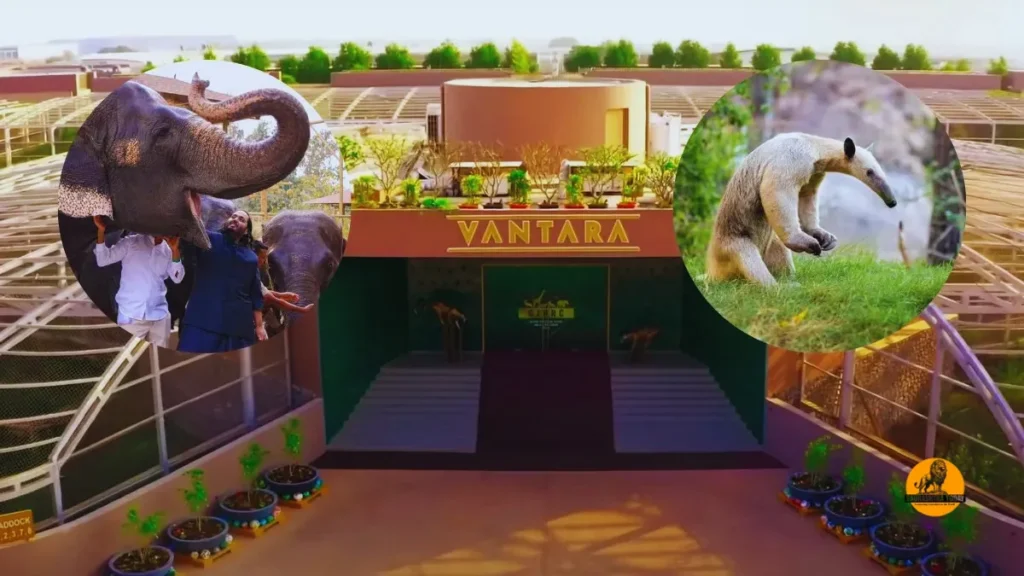
CITES Endorses India’s Vantara Initiative for Exceptional Infrastructure, Transparency, and Veterinary Excellence
Vantara: In a significant recognition for India’s conservation efforts, the Convention on International Trade in Endangered Species of Wild Fauna and Flora (CITES) has commended the Vantara initiative for setting new benchmarks in wildlife welfare and veterinary care. The international body, responsible for monitoring global trade in endangered species, described Vantara’s facilities as “operating in accordance with exceptionally high standards” and equipped with “advanced enclosures, medical care, and rehabilitation infrastructure.”
The endorsement follows a detailed CITES Secretariat mission-visit report, which examined Vantara’s infrastructure, animal welfare practices, and adherence to international regulatory norms. The report further noted that the Secretariat “has no reason to doubt that these facilities are suitably equipped to house and care for the animals”, affirming that India’s commitment to ethical wildlife care aligns with the highest global standards.
An International Seal of Approval
The CITES mission represents one of the most comprehensive international evaluations of any private conservation and rehabilitation initiative in India. According to the report, Vantara’s animal rescue and care operations meet — and in many cases, exceed — the expectations set by Article III of the Convention, which governs the management of species listed under Appendix I, the most critically protected category.
In its observations, CITES highlighted Vantara’s advanced veterinary breakthroughs, noting that the facility had achieved “important successes in medical treatment, rehabilitation, and the use of modern veterinary technologies.” The Secretariat encouraged that these innovations be shared with the wider global scientific community to contribute to the collective advancement of wildlife medicine.
Transparency and Legal Compliance Recognized by CITES and India’s Supreme Court
The CITES report also emphasized that it found “no evidence of animals being imported to India without valid CITES export or re-export certificates” and “no indications that animals were brought in for primarily commercial purposes.”
The Secretariat praised the Indian authorities and Vantara’s management for maintaining transparency, accurate record-keeping, and strict compliance with international wildlife trade laws. Importantly, the report noted that both Indian officials and facility representatives expressed a continued commitment to strengthening verification and data-sharing mechanisms with global oversight bodies.
Adding further credibility to the initiative, the Supreme Court of India, in a ruling dated 15 September 2025, reaffirmed that all animal acquisitions by the Greens Zoological Rescue and Rehabilitation Centre (GZRRC) and the Radha Krishna Temple Elephant Welfare Trust (RKTEWT) — both affiliated with Vantara — were carried out entirely in accordance with Indian law, CITES provisions, and other regulatory frameworks.
This judicial validation not only recognized the legality of Vantara’s operations but also underscored India’s robust wildlife governance system, which continues to function transparently and in harmony with international conservation principles. Together, the endorsements from CITES and the Supreme Court mark a major milestone for India’s global reputation in ethical wildlife care.
Inside Vantara: India’s Ambitious Vision for Animal Welfare
Founded by the Reliance Foundation, Vantara represents one of the most ambitious conservation initiatives in Asia — a visionary model combining rescue, rehabilitation, medical innovation, and education on a massive scale.
Located in Gujarat, India, and spanning over 3,000 to 3,500 acres, Vantara provides a safe haven for thousands of rescued and rehabilitated animals. Reports suggest that the facility currently houses more than 25,000 rescued wild animals across 48 species, while broader counts, including satellite centers, indicate that over 150,000 animals representing more than 2,000 species have received care under the program.
Unlike conventional zoological parks, Vantara’s philosophy focuses on animal recovery, welfare, and scientific advancement, rather than display or commercial breeding. Every aspect of its design — from veterinary facilities to enclosures — is built around that mission.
Asia’s First State-of-the-Art Wildlife Hospital
At the heart of Vantara lies Asia’s first fully integrated wildlife hospital, which features a range of cutting-edge medical technologies. The hospital includes CT and MRI scanning, ultrasound diagnostics, endoscopy, digital X-rays, live-surgery video systems, and advanced laboratories for pathology and microbiology.
These tools enable the veterinary team to perform complex procedures that were previously rare or unavailable in the region, including reconstructive surgeries, orthopedic treatments, and organ-function monitoring. The hospital also provides emergency trauma care, neonatal services for orphaned wildlife, and specialized post-operative wards for recovery.
According to experts, this hospital represents a paradigm shift in Asian wildlife medicine, placing India among a small group of nations capable of delivering such high-level care for rescued and endangered species.
Dedicated Rescue and Rehabilitation Zones
Beyond its medical infrastructure, Vantara features meticulously designed rescue and rehabilitation zones, each tailored to meet the behavioral and biological needs of specific species.
One of the most distinctive features is its Elephant Care Zone, which includes hydrotherapy pools, custom-designed recovery enclosures, and enrichment areas that allow rescued elephants to socialize and regain strength in natural conditions. Similarly, the Leopard Rescue Centre at Vantara has been described as the world’s largest of its kind, providing specialized habitats and long-term care programs for the big cats.
The site also houses India’s largest quarantine facility, which plays a critical role in ensuring that rescued animals undergo health assessments before entering broader rehabilitation programs.
Supporting these efforts is a fleet of more than 75 fully equipped ambulances, allowing rapid response to wildlife emergencies across the region. A dedicated veterinary pharmacy and research center provides continuous support to field teams and fosters the development of new treatment protocols.
Also read: Supreme Court Orders Fast-Track Clearance for Madhuri Elephant’s Rehabilitation Centre in Kolhapur
Commitment to Ethical Conservation Over Commerce
One of the most striking observations in the CITES report was the absence of any evidence suggesting commercial exploitation of animals at Vantara or its affiliated centers. The report explicitly stated that there was “no indication of any commercial activities linked to the sale of animals or their offspring.”
This affirmation strengthens the credibility of Vantara’s non-commercial, welfare-driven model, setting it apart from facilities that operate under the guise of conservation but engage in trade.
By ensuring that every rescued animal is either rehabilitated for release (where feasible) or provided lifelong care, Vantara aligns with both India’s Wildlife Protection Act and the core principles of the CITES convention.
A Model for Future Global Partnerships
The CITES Secretariat concluded its report by thanking the Government of India and the Vantara management team for hosting the mission and facilitating transparent site visits. It acknowledged India’s “excellent organization” and expressed appreciation for the country’s willingness to share best practices with international conservation networks.
Conservation experts believe that this recognition positions Vantara as a global model for public-private collaboration in wildlife rescue and care. With its blend of modern infrastructure, ethical governance, and scientific innovation, the initiative demonstrates how large-scale private sector engagement can complement national and international conservation goals.
As global attention shifts toward sustainable wildlife management, Vantara is emerging as a blueprint for responsible, technology-enabled animal welfare — one that prioritizes compassion over commerce and science over spectacle.
Also read: Pradyuman Zoological Park Rajkot: A Record-Breaking Visitor Rush During Diwali Holidays
Global Impact and the Road Ahead
Analysts suggest that Vantara’s recognition by CITES could encourage similar facilities around the world to adopt India’s integrated model of rehabilitation, medical innovation, and transparency. The facility’s success also signals a broader transformation in how emerging economies approach animal welfare, biodiversity protection, and regulatory compliance.
Experts note that the project’s large-scale impact extends beyond wildlife rescue — it also fosters community engagement, veterinary research, and global knowledge exchange. By combining conservation science with humanitarian values, Vantara is reshaping the narrative of how modern societies coexist with wildlife.
In the coming years, Vantara aims to expand its research partnerships, develop open-access educational programs for veterinarians and conservationists, and continue refining its infrastructure to meet evolving environmental challenges.
With both CITES’ endorsement and the Supreme Court of India’s affirmation, the initiative now stands as a globally recognized benchmark in ethical wildlife management — and a proud example of India’s leadership in sustainable conservation.
Also read: Lion Safari Park Rajkot: What Will Be the Ticket Price and When Will It Open?
Conclusion
The recent acknowledgment by CITES solidifies Vantara’s reputation as a world-class center of excellence in animal care, blending compassion with cutting-edge science. By maintaining complete transparency, rejecting commercial motives, and embracing global collaboration, Vantara has not only elevated India’s wildlife conservation landscape but also inspired a global conversation about what true ethical stewardship of nature should look like in the 21st century.
As nations search for sustainable models to protect endangered species and restore ecological balance, Vantara stands out as a living example of hope — where technology, empathy, and responsibility converge for the future of all living beings.