
Central Zoo Authority Approves First Phase of Relocation Amid Rising Human-Leopard Conflict in Pune District
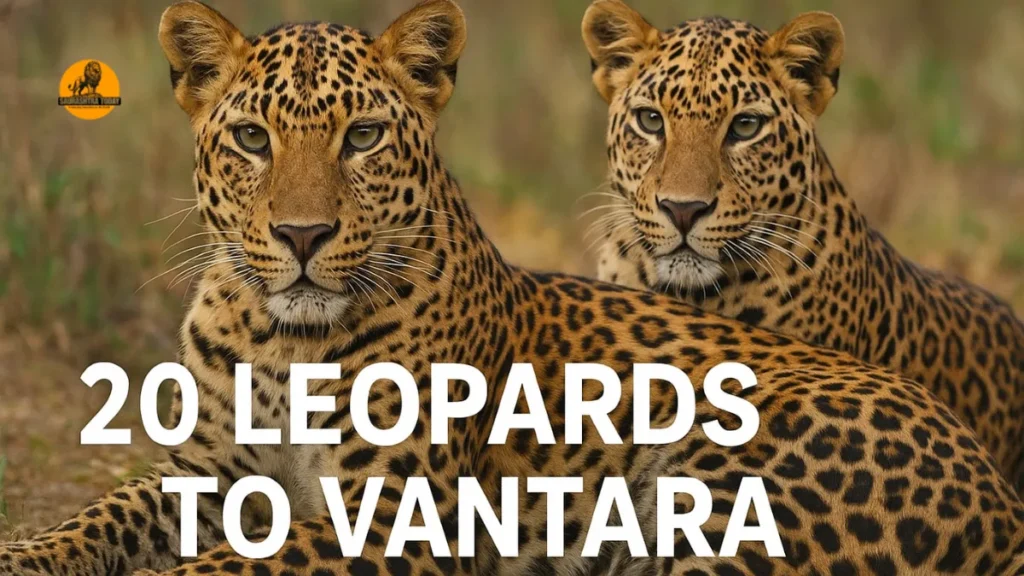
Vantara: In a major conservation step aimed at reducing human-wildlife conflict, the Junnar Forest Department has identified 20 leopards to be relocated to the world-class Vantara animal rehabilitation and conservation facility in Jamnagar, Gujarat. The move follows official approval from the Central Zoo Authority (CZA) to transfer a total of 50 leopards in a phased operation.
This significant initiative comes at a time when the Pune district has witnessed a sharp increase in encounters between humans and leopards, resulting in fatalities and injuries across rural areas. Authorities believe that relocating the animals to Vantara will not only safeguard local communities but also ensure the well-being of the leopards through improved care and controlled habitats.

CZA Gives the Green Light for Relocation
The approval from the Central Zoo Authority was granted on November 10, 2025, marking an important milestone for the Maharashtra Forest Department’s long-pending proposal. According to officials, the first batch of 20 leopards has already been identified, while the remaining 30 will be moved once adequate infrastructure at Vantara is prepared to accommodate them.
Assistant Conservator of Forests (ACF) Smita Rajhans confirmed the development, stating,
“We have received in-principle approval from the CZA and are now awaiting the formal communication that will outline the relocation guidelines. The Vantara facility currently has the capacity to house 20 leopards, and the remaining animals will be shifted once their new enclosures are ready.”
Rajhans added that five of the leopards were captured in Junnar, while the other fifteen came from Shirur Tehsil, both hotspots of human-leopard conflict. All 20 are currently housed at the Manikdoh Leopard Rescue Centre (MLRC) in Junnar, where they are undergoing health checks and observation before the transfer.
Vantara Team Begins Ground Assessment in Junnar
A specialized team from Vantara arrived in Junnar earlier this week to assess the logistical and technical requirements of the relocation process. The team visited both the MLRC and Pimparkhed village in Shirur, where a recent leopard attack resulted in a fatality.
According to officials, the visiting experts evaluated the holding enclosures, veterinary conditions, and the transport cages to ensure that the animals are relocated safely and with minimum stress. “The Vantara team’s visit marks the beginning of on-ground preparations. They will assist us in creating protocols for tranquilization, transportation, and acclimatization of the animals,” Rajhans said.
The forest department has also sought clarification from the CZA on whether the first batch should consist solely of captive leopards or if recently captured wild ones may be included.
“In either case, we already have a ready batch of 20 leopards. If the CZA directs us to send only captive ones, the newly caught leopards will later replace them in the next round of transfer,” Rajhans explained.
Why the Relocation to Vantara Matters
The upcoming transfer to Vantara is being hailed as a sustainable and long-term solution to Maharashtra’s escalating human-leopard conflict. Over the past decade, leopard populations around Junnar, Shirur, Ambegaon, and Mulshi have increased significantly, often pushing the big cats into human settlements in search of food.
Experts believe that by shifting the animals to Vantara — a state-of-the-art wildlife rehabilitation and conservation complex spread across thousands of acres in Jamnagar — both human and animal safety can be improved. The facility offers advanced veterinary care, open naturalistic enclosures, and continuous monitoring by wildlife specialists, ensuring that rescued leopards lead healthier, stress-free lives.
Wildlife biologists note that many rescue centres in Maharashtra, including Junnar’s MLRC, are operating over capacity. “Relocating leopards to Vantara will help decongest rescue centres and reduce stress on animals living in confined spaces,” said a senior wildlife expert familiar with the project.
Rising Conflict: A Grim Reality in Pune District
Pune district currently hosts an estimated 1,300 leopards, making it one of India’s densest leopard zones. While conservation efforts have helped the species thrive, the growing overlap between human habitats and leopard territories has led to tragic outcomes. Over the last five years, more than 35 deaths and 60 serious injuries have been linked to leopard attacks in the district.
In 2025 alone, five people have lost their lives in leopard-related incidents across Junnar and Shirur tehsils. Despite continuous awareness campaigns, compensation schemes, and rescue operations, fear and resentment among rural populations remain high.
Following public outcry after a series of attacks earlier this year, the Maharashtra Forest Department held an emergency meeting with senior officials from the Pune and Junnar divisions. The outcome was a consensus to relocate 50 leopards from the conflict-prone zones to Vantara. The formal proposal was submitted to the CZA in early November, and the authority approved it within days.
Previous Success with Vantara’s Pilot Relocation
This marks the second major leopard relocation from Maharashtra to Vantara. In March 2024, eight leopards from the same MLRC facility were successfully shifted to Jamnagar as part of a pilot project. The outcome of that operation was overwhelmingly positive, with reports indicating that the animals adapted well to their new, semi-natural environment.
According to a Vantara spokesperson, “The earlier batch of relocated leopards displayed improved behavioral patterns, reduced aggression, and healthy weight gain after a few months of acclimatization. The success of that pilot program gave both states the confidence to expand the initiative.”
The Vantara Animal Care Division, which manages the relocation, is equipped with high-end monitoring systems, GPS tracking, and veterinary staff trained in handling large carnivores. Each animal will undergo a detailed health assessment and DNA profiling before being introduced to its new enclosure.
The Road Ahead: A Phased Relocation Plan
Under the approved plan, the leopard relocation to Vantara will occur in two phases.
- Phase 1: Transfer of 20 leopards — primarily those currently at MLRC — once transportation protocols are finalized.
- Phase 2: Relocation of the remaining 30 leopards after the expansion of Vantara’s carnivore housing infrastructure, expected to be completed by mid-2026.
The transportation will be carried out in specially designed climate-controlled cages to minimize stress. Wildlife veterinarians from both Maharashtra and Gujarat will accompany the animals throughout the journey, ensuring their safety.
The Junnar Forest Department has also initiated a monitoring plan to track the relocated animals for at least one year after their transfer to evaluate health, adaptation, and behavioral changes. The data will later be used to refine India’s future wildlife translocation policies.
Also read: Vantara Zoo: India’s Revolutionary Private Wildlife Rescue and Rehabilitation Haven
Community Reactions and Conservation Impact
Local residents and activists have largely welcomed the move. For many villagers in Junnar and Shirur, the relocation represents long-awaited relief from the constant fear of leopard encounters. “We have lost livestock and even family members to leopard attacks. If Vantara can give them a safe home, it’s a blessing for both humans and animals,” said Ramesh Bhosale, a farmer from Pimparkhed.
Conservationists, however, emphasize that relocation alone cannot solve the conflict. They urge the government to pair such measures with better waste management, habitat restoration, and community education.
“Leopards often enter human settlements due to food availability and shrinking wild prey. Relocation to facilities like Vantara is a short-term fix — but it must go hand-in-hand with ecological management,” explained Dr. Anjali Deshmukh, a wildlife ecologist.
About Vantara: India’s Premier Wildlife Sanctuary and Rescue Centre
Founded by the Reliance Foundation, Vantara — meaning “Star of the Forest” — is one of the world’s most advanced wildlife rehabilitation, rescue, and conservation centres. Located in Jamnagar, Gujarat, it spans thousands of acres dedicated to the care and conservation of rescued and endangered species.
Vantara provides specialized care for animals rescued from circuses, illegal trade, or conflict zones. It features naturalistic enclosures, 24×7 veterinary services, hydrotherapy pools, climate-controlled habitats, and research facilities that meet or exceed international zoo and rescue standards. The centre collaborates with the CZA and several global wildlife organizations, making it a preferred partner for large-scale animal rehabilitation projects in India.
A Step Toward Coexistence and Conservation
The relocation of 50 leopards from Maharashtra to Vantara is more than a rescue mission — it is a pioneering example of collaborative wildlife management between states. As urbanization continues to fragment natural habitats, projects like this highlight the urgent need for long-term, humane, and science-driven conservation policies.
For the Junnar Forest Department, this is both a logistical challenge and a moral responsibility. “Our goal is to ensure safety for people while giving these magnificent animals the space and care they deserve,” said ACF Rajhans.
If the operation unfolds smoothly, the initiative could set a benchmark for similar projects across India — bridging the delicate balance between wildlife preservation and human safety, with Vantara leading the way.