
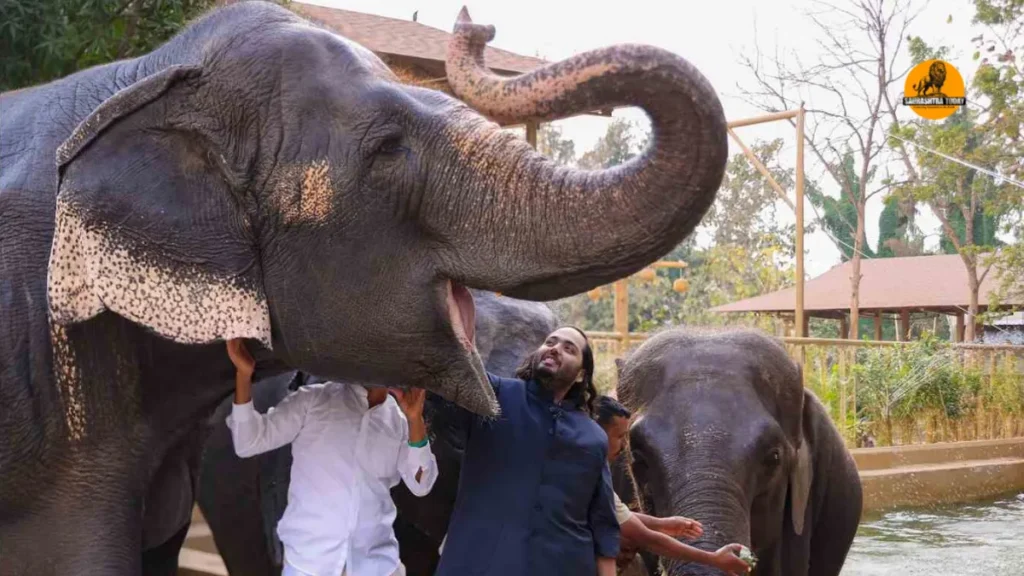
India has requested the UN wildlife body overseeing international trade in endangered species not to impose restrictions on its animal imports. The appeal comes amid growing scrutiny over alleged irregular imports by Vantara, a massive private zoo operated by the Ambani family, one of Asia’s most influential business dynasties.
The move underscores India’s concern that any restrictive measures by the United Nations Convention on International Trade in Endangered Species of Wild Fauna and Flora (CITES) could disrupt legitimate conservation efforts and undermine the country’s compliance framework.
Background: Ambani’s Vantara Zoo Under Global Lens
Vantara, a 3,500-acre animal care and rehabilitation centre located in Gujarat, is run by the Reliance Foundation, the philanthropic arm of billionaire Mukesh Ambani’s conglomerate. The facility, which houses thousands of animals and birds from across continents, has been under the scanner following allegations of improper or irregular imports of exotic species.
According to reports first highlighted by Reuters, regulatory authorities in Germany and the European Union have expressed concern about potential lapses in documentation and animal origin tracking linked to the zoo’s imports. These developments prompted the UN wildlife body to review India’s procedures related to wildlife import permits.
India’s Defence: No Wrongdoing Found
A committee appointed by the Supreme Court of India had earlier investigated complaints raised by wildlife advocacy groups and non-profit organizations. The panel concluded in September 2025 that there was no evidence of wrongdoing or violations of wildlife trade laws by Vantara.
Vantara, in its response, reaffirmed that it operates with full transparency and adheres strictly to both national and international wildlife regulations. The facility also emphasized its commitment to animal welfare and biodiversity conservation, stating that all imports and breeding activities comply with guidelines issued by Indian and global authorities.
CITES Raises Concerns Over Data and Documentation
Despite these assurances, a delegation from the CITES Secretariat conducted a visit to Vantara in September. Following its review, CITES issued a report last week noting discrepancies between exporter and importer trade data and highlighting insufficient checks on the origin of certain animals.
The report suggested that India temporarily halt new import permits for endangered species until stronger safeguards were implemented. It further warned that, without robust verification mechanisms, animals captured from the wild could be misrepresented as captive-bred—an issue that undermines the intent of the CITES treaty.
CITES, which regulates global trade in endangered flora and fauna, plays a critical role in ensuring that international commerce does not threaten species survival. Its recommendations often carry significant influence over how nations manage wildlife imports and exports.
India Pushes Back Against “Premature” Restrictions
In an official submission dated November 10, 2025, India urged CITES to reconsider its recommendation, arguing that any restrictive or punitive action at this stage would be “premature and disproportionate.” The Indian government maintained that such measures would effectively amount to an unjustified moratorium on lawful wildlife imports.
The document, made public on the CITES website ahead of the organization’s upcoming convention, asserted that India had already taken substantial steps to improve its oversight framework. According to the submission, “Any restrictive action at this juncture lacks legal foundation and risks destabilizing the CITES framework that governs global wildlife trade.”
The Indian government emphasized that it has strengthened inspection and reporting mechanisms for all accredited zoos and rescue facilities, including Vantara. It also instructed the Central Zoo Authority to enhance due diligence processes for future animal acquisitions, ensuring that the origin and health of every imported species are verified with precision.
CITES Acknowledges High Standards but Urges Vigilance
While the UN wildlife body acknowledged that Vantara maintains “exceptionally high standards” in terms of infrastructure and animal care, it reiterated the need for tighter controls on the source and documentation of imported species.
Experts note that such dual messaging—praising operational quality while calling for stricter regulation—reflects a broader tension between wildlife conservation ethics and private sector participation in animal care initiatives.
A Global Zoo with Exotic Diversity
Vantara claims to host nearly 2,000 species of animals and birds sourced from around the world. The collection includes exotic species such as tigers, cheetahs, giraffes, chimpanzees, tortoises, and reptiles imported from countries like South Africa, Venezuela, and the Democratic Republic of Congo.
According to official documentation, the declared value of these shipments stood at approximately $9 million. Vantara has clarified that this figure represents freight, insurance, and handling costs, rather than payments for the wildlife itself.
The recent CITES report observed that several animals originated from established commercial breeding facilities, which normally engage in selling captive-bred species to authorized entities. India’s response reiterated that the Supreme Court committee’s findings confirmed the legality and ethical validity of these imports.
Growing Debate Over Private Wildlife Conservation
The controversy surrounding Vantara has sparked a wider debate within India and abroad about the role of private institutions in wildlife conservation. Proponents argue that facilities like Vantara can play a key role in rehabilitation, research, and species preservation, particularly when public zoos face budget constraints.
Critics, however, contend that large private sanctuaries risk becoming exclusive attractions for the wealthy, raising questions about transparency and accountability. They urge authorities to ensure that conservation efforts remain focused on ethical animal care rather than luxury branding or private prestige.
The UN wildlife body’s involvement has further amplified global attention, turning the Vantara case into a test of how emerging economies manage the intersection of economic influence and ecological responsibility.
India’s Commitment to CITES and Global Conservation
India has been a signatory to CITES since 1976, and the country maintains one of the world’s largest networks of protected areas and wildlife sanctuaries. Over the years, it has actively participated in international initiatives to curb illegal wildlife trafficking and promote sustainable species management.
In its latest communication, India reaffirmed its commitment to the CITES principles, stating that it “remains fully aligned with the global mission of protecting endangered species.” The government also emphasized that its inspection mechanisms, digital tracking systems, and inter-agency coordination have been significantly upgraded in recent years.
Wildlife experts in India believe that the current dispute offers an opportunity to strengthen collaboration between national regulators and international conservation bodies, ensuring both accountability and flexibility in managing legitimate animal exchanges for research and rehabilitation.
Also read: Maharashtra Seeks Central Nod to Relocate Leopards to Ambani’s Vantara Centre in Jamnagar
Awaiting Global Response
As of Wednesday, neither the CITES Secretariat nor representatives from Vantara had responded to media queries regarding India’s submission. The issue is expected to feature prominently at the upcoming CITES convention meeting later this month, where member countries will deliberate on wildlife trade governance, enforcement gaps, and compliance strategies.
Observers suggest that the outcome of this debate could set an important precedent for how global conservation treaties treat private-sector wildlife initiatives operating at massive scales.
For now, India continues to defend its position that Vantara’s imports have been lawful, transparent, and compliant with CITES obligations—arguing that penalizing the country without proven violations would set a troubling precedent for all compliant member states.
Also read: Maharashtra to Relocate Captured Leopards to Vantara Jamnagar for Rehabilitation
Conclusion
The ongoing exchange between India and the UN wildlife body reflects the delicate balance between regulation and innovation in global conservation efforts. As India tightens its domestic oversight while defending the legitimacy of its imports, the world will be watching how CITES navigates the complex intersection of trade, transparency, and wildlife protection.
The final decision from the international panel will not only influence India’s conservation trajectory but may also redefine the global dialogue on ethical wildlife management in the age of private participation and philanthropic stewardship.