
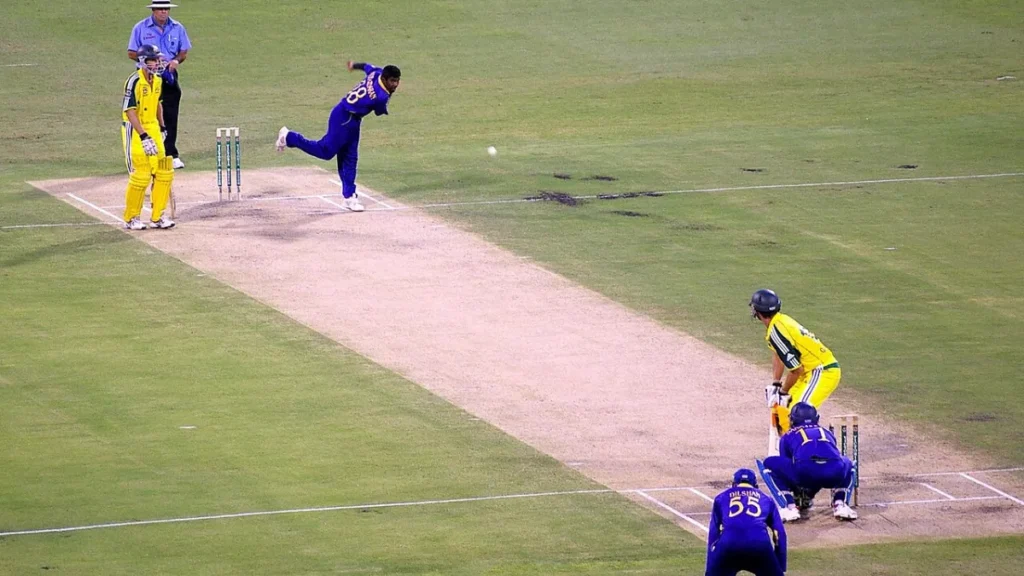
Cricket has seen tremendous transformations over the last few decades, but no position has evolved as dramatically as that of the wicketkeeper. Traditionally viewed as the team’s back-end defender, the wicketkeeper has now become a multi-dimensional match influencer—trusted with batting firepower, advanced field leadership, tactical input, and lightning-sharp reflexes behind the stumps.
The Changing Role of the Wicketkeeper in Modern Cricket symbolizes the evolution of the sport itself: faster, smarter, more aggressive, more analytical, and more unpredictable than ever before.
The Origin: When Wicketkeeping Was a Pure Specialist Skill
Cricket’s early and mid-twentieth-century period treated wicketkeeping as a precision-driven specialist role. The keeper was expected to:
- Collect every delivery with minimum error
- Stump batsmen with perfect timing
- Support bowlers silently from behind the stumps
- Maintain focus for sessions lasting hours
Legends like Rod Marsh, Alan Knott and Ian Healy set unmatched standards.
Their value was measured by:
- The number of byes conceded
- Their consistency and reliability
- Their discipline across five-day Test matches
In this classical era, teams looked at wicketkeepers through one lens: a secure gloveman behind the stumps. Batting ability was merely secondary.
Adam Gilchrist: The First Big Revolution in Wicketkeeping
The late 1990s witnessed the biggest turning point for wicketkeepers globally. Adam Gilchrist of Australia redefined the template permanently.
Before Gilchrist:
“Good keeping + average batting” was acceptable
After Gilchrist:
“Good keeping + dangerous batting” became essential
Gilchrist’s aggressive counter-attacking style turned matches upside down from No. 7 position.
He proved that a wicketkeeper could:
- Break the opponent’s rhythm
- Shift momentum in one session
- Change Test match trajectories in mere hours
Teams worldwide realized that a wicketkeeper who scores runs is not a bonus — he is a weapon.
The Limited-Overs Revolution: A New Level of Expectation
With the rise of ODIs and T20 cricket, wicketkeeping demands changed permanently.
Every team now wanted a:
Fast-scoring batsman
Agile fielder
Tactical decision-maker
Some modern examples that shaped this era include:
| Player | Strengths |
|---|---|
| Jos Buttler | Elite finishing in death overs |
| Rishabh Pant | Explosive unpredictability |
| Quinton de Kock | Power hitting with consistency |
| Mohammad Rizwan | High stamina and game awareness |
| KL Rahul | Adaptable across formats |
Cricketers like these showed that a wicketkeeper can win big tournaments alone with bat + glove + strategy.
DRS and Technology: A New Tactical Authority Behind the Stumps
The Decision Review System transformed the wicketkeeper into an on-field decision advisor.
A modern keeper must:
- Judge faint edges through sound
- Read ball deviation instantly
- Advise on LBW reviews based on angles and bounce
- Decide whether to review within 15 seconds
A successful review can:
Turn a match
Dismiss a set batsman
Break a dangerous partnership
This requires memory, observation, tactical awareness and pressure handling beyond traditional keeping skills.
Wicketkeeper as a Strategic Leader
No fielder has a better view of:
- Bowler rhythm
- Batter footwork
- Shot selection patterns
- Fielding gaps and angles
This unique perspective makes wicketkeepers ideal tactical leaders.
Example:
MS Dhoni — the world’s most influential wicketkeeper-captain — controlled bowling plans, field placements and match tempo ball-by-ball.
Today, many teams train wicketkeepers to take leadership responsibilities even if they are not formal captains.
The New Fitness Benchmark
Wicketkeeping is now one of cricket’s most physically demanding roles.
Modern training includes:
- Sprint power for fast lateral movement
- Diving range drills for extreme reach
- Reaction simulation machines
- Hand-eye intelligence training
- Spine and core protection exercises
A modern wicketkeeper must function as:
Strength athlete +
Sprinter +
Fast thinker +
Wrist-precision specialist
Format-Specific Wicketkeeping: Different Roles for Tests, ODIs and T20s
| Format | Key Expectation |
|---|---|
| Test | Patience, endurance & defensive batting |
| ODI | Strike-rotation + controlled acceleration |
| T20 | Power hitting & finishing under pressure |
A truly successful wicketkeeper thrives in all three battling identities — anchor, stabilizer and finisher.
Market Value: Wicketkeepers Now Among the Highest-Paid Players
T20 leagues like IPL, BBL, PSL, CPL and SA20 have changed global demand.
Teams now pay premium prices for:
- Consistent finishing ability
- Explosive strike rate
- Sharp keeping against spinners in subcontinent tracks
A top-class wicketkeeper can replace two players —
a specialist keeper
a finisher in the batting lineup
That’s why they command elite contracts in modern cricket.
What the Future Holds
The Changing Role of the Wicketkeeper in Modern Cricket is still evolving.
Future wicketkeepers will likely need to:
- Interpret analytics mid-match
- React to AI-driven bowling matchups
- Switch formats within the same week
- Provide leadership regardless of captaincy status
The role is expanding, not shrinking.
Final Verdict
The wicketkeeper is no longer just a gloveman.
They are now:
A top-order or lower-order match-winner with the bat
A tactical partner for the captain
A fielding leader
A mental athlete under pressure
The Changing Role of the Wicketkeeper in Modern Cricket proves that this position is now one of the most influential in the entire sport, and it will remain at the heart of cricket’s evolution in years to come.