
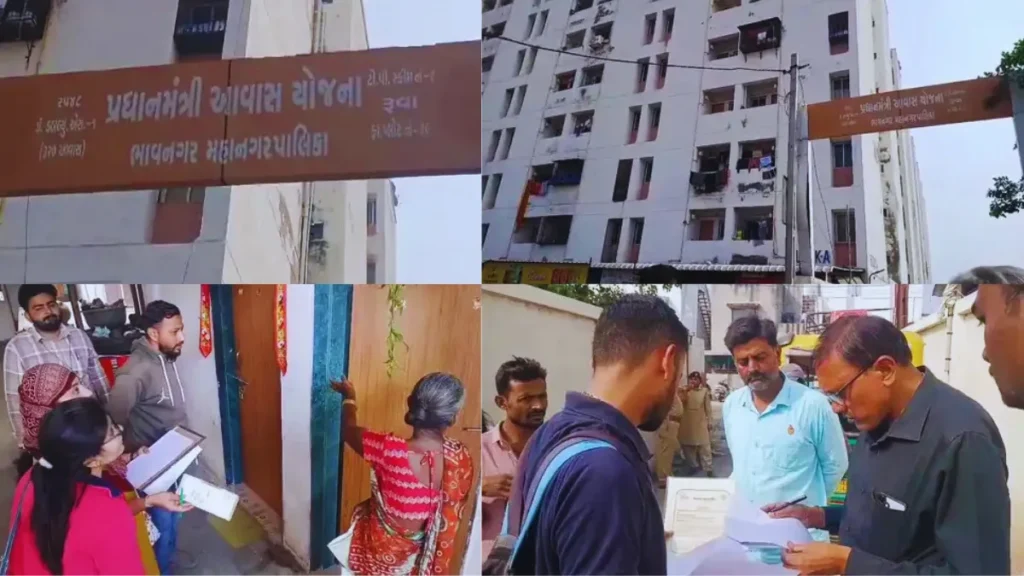
A large-scale inspection was carried out this week by the Bhavnagar Municipal Corporation (BMC) at residential units allotted under the PMAY housing scheme (Pradhan Mantri Awas Yojana). The drive was initiated after repeated complaints that many homes sanctioned for economically weaker beneficiaries were being rented out illegally to unrelated tenants. The inspection, conducted across 320 government-allotted houses, revealed massive misuse of the scheme and resulted in an eviction ultimatum being issued to hundreds of occupants.
According to BMC officials, out of the 320 dwellings inspected, 120 were occupied by tenants, 105 were being used by the original beneficiaries, while 95 houses were locked and not being used at all. The findings have raised serious concerns about the exploitation of the scheme, which was launched to provide permanent, subsidized housing for low-income families.
Authorities have now issued three-day notices to all tenants to vacate the properties. If the houses are not handed back to the rightful owners within the deadline, the municipal corporation will initiate strict action — including sealing the properties.

Purpose of the Inspection Drive
The PMAY housing scheme mandates that houses allotted under the government initiative cannot be sold or rented for a minimum period of seven years. However, complaints began rising that several beneficiaries across Bhavnagar had relocated elsewhere and had rented out their scheme-funded homes to private tenants for monthly profit.
Following these complaints, Bhavnagar’s Municipal Commissioner ordered an immediate and systematic survey of PMAY buildings. The inspection team consisted of the Executive Engineer of the housing department, along with 16 employees divided into four squads. Each squad inspected one wing of the housing cluster from early morning and completed a detailed door-to-door verification.
Officials clarified that their primary goal is to protect the sanctity of the PMAY housing scheme and ensure that the benefit reaches the intended poor families rather than being misused for rental income.
Survey Results: More Than Half the Houses Not Used by Eligibility Holders
The data gathered during the inspection highlighted worrying trends:
| Category | Number of Houses | Description |
|---|---|---|
| Houses with tenants | 120 | Occupied by renters instead of original beneficiaries |
| Houses with original owners | 105 | Beneficiaries living in their allotted homes |
| Locked houses | 95 | Vacant and not being used by beneficiaries |
The figures show that nearly 55% of the houses were not being used by eligible owners, meaning the majority of beneficiaries are either illegally renting their houses or using them for speculative investment rather than residential needs.
A senior BMC official stated, “The PMAY housing scheme was never intended to be a source of rental income. It is a welfare initiative to provide secure housing for economically vulnerable citizens. Misuse will not be tolerated.”
Three-Day Deadline to Move Out — Or Houses Will Be Sealed
Immediately after the verification was completed, the tenants were issued legal notices on the spot requiring them to vacate the premises within three days. Officials will begin a second round of inspection after the ultimatum period expires. If tenants continue to occupy houses, harsh enforcement steps will follow.
The Executive Engineer leading the inspection, M.D. Wadhwania, confirmed, “Those who fail to vacate after the three-day deadline will face sealing of the property. Even if personal belongings are inside, sealing will proceed without delay.”
He added that PMAY houses cannot be rented out or resold within seven years of allotment. If a beneficiary is caught violating this rule repeatedly, the house is liable to be forfeited permanently by the municipal authority.
Wider Crackdown Planned Across the City
The Bhavnagar Municipal Corporation is now preparing similar inspections in other PMAY housing clusters across the city — particularly those where the seven-year restriction period has not yet elapsed. Officials say that they have received similar complaints from multiple localities and that the misuse of public housing subsidies is becoming a widespread problem.
The upcoming verification drives will focus on:
- Identifying illegally rented PMAY units
- Detecting beneficiaries who have abandoned their allotted homes
- Ensuring that original beneficiaries receive housing as intended
- Preventing speculative property sale or rent for profit
If irregularities continue, the corporation is prepared to expand the crackdown statewide.
Important Advisory to PMAY Beneficiaries
The Municipal Corporation has issued a special appeal to PMAY housing residents and their cooperative housing societies. Housing committee leaders have been asked to conduct mandatory identity checks on anyone moving into PMAY homes to prevent illegal renting.
Residents have been advised that:
- PMAY houses cannot be sub-let or rented under any circumstances
- Beneficiaries must live in the house allotted to them for the required seven-year term
- Repeat violations may result in permanent forfeiture
Authorities emphasized that the PMAY housing scheme exists to shelter economically disadvantaged citizens — not to serve as an investment or rental business for profit-making individuals.
Social Debate: Welfare vs. Income Generation
The crackdown has triggered a debate within the community. Many argue that renting homes is justified if beneficiaries have moved elsewhere for work or family needs. However, housing activists counter that thousands of needy families still remain on waiting lists for affordable houses while government-funded units lie locked or rented out for income.
Economic researchers also note that misuse of the PMAY housing scheme could weaken public trust in subsidized welfare programs and discourage future investment in public housing.
What Happens Next
The municipal corporation has confirmed the next steps:
- Three-day eviction notices have been served
- Tenants who fail to vacate will face sealing of properties
- Repeat violations by beneficiaries will result in forfeiture
- More PMAY clusters across the city will be investigated
- Beneficiaries will be required to submit notarized bonds to prevent future violations
Officials have stated that no political pressure or social requests will halt the enforcement process, as the aim is to protect public housing rights.
Conclusion
The Bhavnagar Municipal Corporation’s extensive inspection drive marks a turning point in enforcing accountability within the PMAY housing scheme. With more than half the surveyed houses being used illegally, the government has taken a strict stand to ensure that subsidized housing benefits reach the rightful economically weaker families rather than being exploited by individuals for rent-based profits.
As further checks begin across the city, the enforcement campaign is expected to set a strong precedent for municipal authorities nationwide. The message is clear — public housing schemes are for shelter, not business.