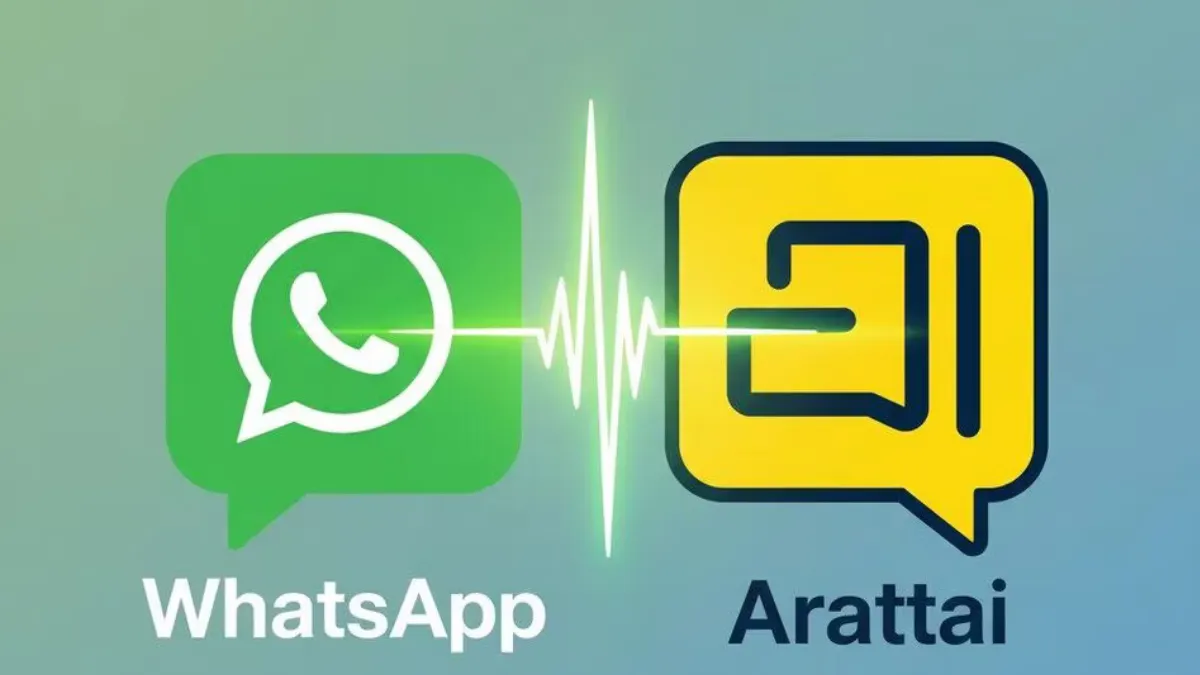
Are the Days of WhatsApp Over: In recent weeks, a question has been making waves across social media — “Are the days of WhatsApp over?” The reason behind this sudden buzz is a homegrown Indian messaging app named Arattai, which means “chat” in Tamil. Developed by India’s tech giant Zoho Corporation, Arattai has rapidly gained attention as a potential alternative to WhatsApp, especially among users concerned about privacy and data security.
But what exactly makes this “Made in India” app so special? Can it really replace WhatsApp, or is it just another short-lived trend? Let’s take a closer look at what’s behind the hype, what sets it apart, and where it still needs improvement.
Why Arattai Is Suddenly Going Viral
Although Arattai was originally launched in 2021, it went viral again in September 2025 after receiving public support from top Indian ministers like Dharmendra Pradhan and Ashwini Vaishnaw. As part of the “Atmanirbhar Bharat” and “Vocal for Local” campaigns, the app quickly became a national talking point.
Within just three days, its daily sign-ups skyrocketed from 3,000 to 350,000, marking a massive surge in downloads. Indians across the country started calling it the “desi WhatsApp.” But beyond patriotism, what’s driving people to switch to Arattai?
What Makes Arattai Different from WhatsApp
At first glance, Arattai may look like just another messaging app, but a closer look reveals that Zoho has packed it with thoughtful features designed specifically for Indian users. It focuses not only on communication but also on privacy, performance, and productivity.
1. Data Stays in India — Full Data Sovereignty
One of Arattai’s biggest strengths is its data storage policy. All user data — including chats, media, and files — is stored within India, on Zoho’s own servers. This means your personal information doesn’t cross borders or end up under the surveillance of foreign governments or companies.
This concept is known as “data sovereignty,” and it’s a growing concern in today’s digital world where global tech companies often store user data in different countries.
2. No Ads, No Data Selling
Zoho has clearly stated that Arattai will never show advertisements and that user data will never be sold to third parties. Unlike WhatsApp’s parent company Meta, which has faced multiple controversies regarding data sharing and targeted ads, Arattai promises a completely ad-free and privacy-first experience.
For Indian users who have long questioned Meta’s data policies, this is a breath of fresh air.
3. Works Smoothly Even on Low Internet Speeds
India still has many areas with poor connectivity, and Zoho designed Arattai with that in mind. The app is optimized to work seamlessly even on 2G or 3G networks. Users report that it runs “like butter” even when the internet connection is weak — something that gives it a major advantage over global competitors.
Exclusive Features That Make Arattai a Professional Tool
Unlike WhatsApp, which focuses mainly on personal communication, Arattai integrates several professional and productivity-based features. These tools make it not just a chat app but also a useful companion for students, office teams, and entrepreneurs.
Meetings: Built-in Video Conferencing
Arattai comes with an in-app video meeting tool that works much like Zoom or Google Meet. You can create instant meetings, schedule them, and even record your sessions — all without leaving the app. This feature is particularly useful for remote teams and educational institutions.
Pocket: Your Personal Digital Locker
The Pocket feature acts as your private storage inside the app. You can save links, notes, images, or reminders for later use. It’s a smarter version of WhatsApp’s “Message Yourself” feature and helps users keep important items neatly organized.
Mentions: Never Miss an Important Message
In group chats, whenever someone tags you using “@username,” those messages appear in a dedicated Mentions tab. This makes it easy to find all important references in one place — no more scrolling endlessly through long group conversations.
But Is Arattai as Secure as WhatsApp?
Here’s where things get a little complicated. While Arattai has a strong focus on privacy, it still lags behind WhatsApp in one crucial aspect — end-to-end encryption (E2EE).
Also read: Panasonic Launches Its First Ultra-Telephoto Zoom Lens in the LUMIX S Series: Compact Yet Powerful
What Is End-to-End Encryption?
End-to-end encryption ensures that only the sender and receiver can read a message. Even the app’s own company or government agencies cannot access its content. WhatsApp, Signal, and Telegram (in secret chat mode) all offer this feature by default.
Where Arattai Falls Short
Currently, Arattai offers end-to-end encryption only for voice and video calls. Text chats, photos, and media files are not yet encrypted by default. This means that, in theory, Zoho or a third party with access to the servers could read those chats — although the company insists it doesn’t.
Zoho has acknowledged this as a temporary limitation, stating that its team is actively working on implementing full encryption for all chats in upcoming updates. Until then, privacy-conscious users might prefer to wait.
Also read: NIKKOR Z Cinema Lenses: Nikon’s Next Big Move in Filmmaking
Should You Download Arattai?
That depends entirely on your priorities. Arattai has many positives — it’s Indian, secure in terms of data storage, ad-free, and packed with smart features. But it still has to overcome one massive challenge: the network effect.
The Network Effect Challenge: Are the Days of WhatsApp Over?
The success of any messaging app depends on how many people use it. Even if Arattai is better than WhatsApp, it won’t matter much if your friends, family, or colleagues aren’t on it. This “network effect” has crushed many promising apps before — including India’s once-popular Hike Messenger.