
Bharat Taxi Launched in Gujarat: Amit Shah Unveils Cooperative Mobility Platform for Drivers and Riders

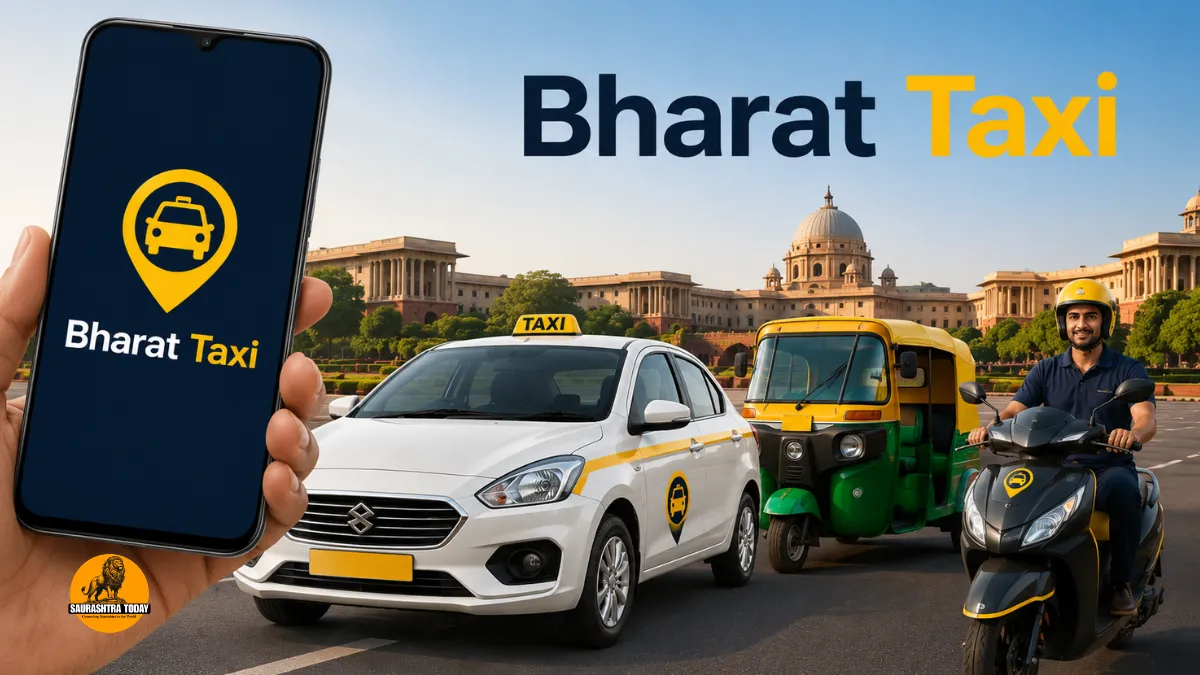
Bharat Taxi officially began operations in Gujarat on Tuesday after being launched by Union Home and Cooperation Minister Amit Shah in Gandhinagar. The cooperative-based mobility platform aims to offer taxi, auto-rickshaw, and two-wheeler ride services while giving drivers a greater sense of ownership, financial security, and participation in the platform’s growth.
The initiative has been introduced across 14 major cities in Gujarat, including Ahmedabad, Vadodara, Surat, and Rajkot. According to the government, the platform is designed to provide commuters with reliable transport services while promoting a cooperative business model that focuses on the welfare of service providers.
आज का दिन गुजरात के टैक्सी चालक बहनों-भाइयों के लिए बहुत अहम है। गांधीनगर से सहकारिता मॉडल पर आधारित टैक्सी सेवा 'भारत टैक्सी' का गुजरात में शुभारंभ किया।
— Amit Shah (@AmitShah) June 27, 2026
चालकों को सम्मान के साथ मालिक बनाने वाली 'भारत टैक्सी' उन्हें अधिक मुनाफा तो दे ही रही है, साथ ही इससे यात्रियों को भी सुगम… pic.twitter.com/zt9MFQ3Ep5
Amit Shah Calls It a Significant Step for India’s Mobility Sector
Speaking at the launch event, Amit Shah described the inauguration of Bharat Taxi as an important milestone for India’s transportation ecosystem. He said that the country’s growing economy has increased the demand for efficient mobility services in both urban and semi-urban areas.
Shah noted that modern mobility is no longer limited to traditional four-wheeler taxi services. Two-wheelers, auto-rickshaws, and other forms of urban transport have become an essential part of daily commuting. He said the new platform seeks to address these changing transportation needs through a cooperative structure rather than a conventional corporate model.
A Cooperative Model That Treats Drivers as Partners
One of the key themes highlighted during the launch was the platform’s approach toward drivers. Amit Shah said that while many ride-hailing companies consider those operating vehicles simply as drivers, Bharat Taxi refers to them as “Sarathis” (charioteers or guides), emphasizing their role as respected partners rather than service providers alone.
According to Shah, this distinction reflects a broader philosophy. Under the cooperative model, Sarathis are expected to have greater participation in the system, with the objective of reducing exploitation while improving earnings and working conditions.
The platform aims to create a fairer ecosystem where both riders and drivers benefit through transparent operations, improved service quality, and reduced dependence on high commission structures.
Expansion Planned Across Hundreds of Cities
The government has outlined an ambitious expansion strategy for Bharat Taxi. Amit Shah announced that the platform is expected to reach more than 500 cities and towns across India within the next two years.
He also said services are scheduled to begin in seven major Indian cities before July 31, marking the first phase of a wider national rollout.
If implemented as planned, the expansion would make the cooperative mobility platform available in a large number of urban and semi-urban markets across the country.
Addressing Challenges in the App-Based Taxi Industry
During his address, Shah referred to concerns that have been raised in recent years regarding app-based transportation services. He said drivers have often complained about high commission charges, delayed payments, and account suspensions without adequate grievance redressal.
According to him, not every challenge can be solved through legislation alone. Instead, he suggested that institutional reforms and alternative business models can provide more sustainable solutions.
The cooperative framework adopted by Bharat Taxi has been developed with the intention of creating a system where drivers receive fair treatment while customers continue to access dependable transportation services.
Also read: Vantara University Announced to Train Future Conservation Leaders and Wildlife Experts
Cooperative Success Stories Cited as Inspiration
To explain the thinking behind the project, Amit Shah pointed to the success of India’s cooperative movement. He highlighted the growth of dairy cooperative Amul, saying it demonstrated how a transparent and member-owned model can empower individuals by eliminating unnecessary intermediaries.
He said many rural women associated with dairy cooperatives have directly benefited from receiving payments into their bank accounts, enabling them to retain the full value of their work.
Shah also referred to fertilizer cooperatives IFFCO and KRIBHCO, noting that together they meet a significant share of the country’s fertilizer requirements. According to him, these examples illustrate how cooperative institutions can build sustainable and large-scale businesses while benefiting their members.
Millions of Users and Lakhs of Drivers Already Connected
According to the figures shared during the launch, more than 7 lakh Sarathis have already registered with Bharat Taxi. The platform has also served approximately 37 lakh customers, indicating growing public adoption even before its wider national expansion.
Beyond providing ride-booking services, the cooperative plans to support its members with financial opportunities such as access to loans, insurance, and business development assistance. These measures are intended to strengthen the long-term financial stability of drivers while improving the overall quality of mobility services.
Also read: Sara Tendulkar Slams Paparazzi Account Over Body-Shaming Remarks: “This Is Not Journalism”
Conclusion
With its Gujarat launch, Bharat Taxi introduces a different approach to India’s rapidly expanding ride-hailing market by combining digital mobility services with the principles of cooperative ownership. Whether the model succeeds on a national scale will depend on its ability to attract more drivers, maintain service quality, and compete with established private platforms.
For now, the initiative represents an effort to reshape the relationship between mobility platforms and their service providers, while expanding transportation choices for commuters across the country.