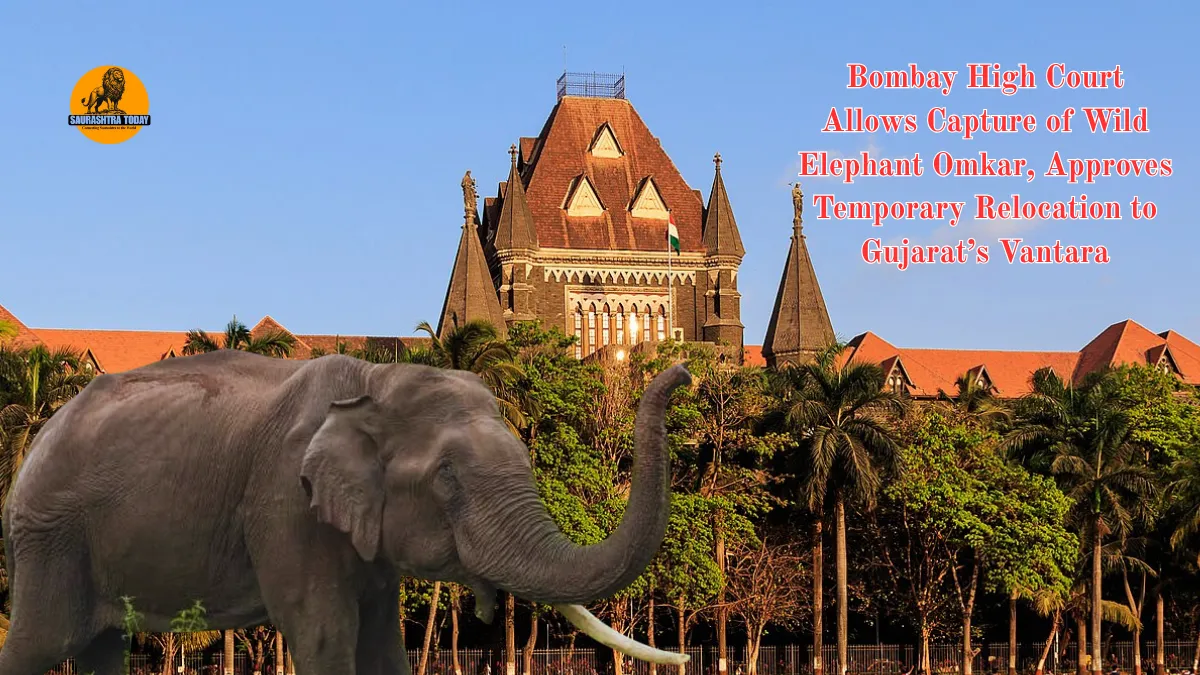
In a significant development concerning wildlife safety and conservation, the Bombay High Court has granted permission for the capture of Omkar, a young wild elephant that has been living in isolation after separating from its herd, and authorised its temporary transfer to Gujarat’s Vantara elephant rehabilitation facility. The ruling, delivered by the Kolhapur bench, emphasises animal welfare, ecological balance, and strict safeguards to ensure Omkar’s well-being throughout the process.
The decision was issued by a division bench comprising Justices M. S. Karnik and Ajit Kadethankar, who underscored that the capture and relocation must be carried out with the highest level of caution. They directed that Omkar should not be subjected to trauma, harassment, or unnecessary human interference during the operation. According to the court, Vantara will be responsible for Omkar’s welfare, early-stage training, and rehabilitation until a high-powered committee finalises recommendations for its long-term future.
Background: A Lone Elephant Caught Between Forests and Human Settlements
The case originated from a public interest litigation (PIL) filed by activist Rohit Kamble. The petitioner highlighted that Omkar, believed to be around ten years old, had naturally migrated from Karnataka into Maharashtra before becoming separated from its herd. Over several months, the young elephant was sighted moving across forest zones in Sindhudurg and Kolhapur, at times venturing dangerously close to human habitations.
According to forest officials, Omkar’s solitary movements had increasingly become a matter of concern. A lone juvenile elephant separated from its herd is highly vulnerable in the wild and more likely to enter agricultural or residential spaces in search of food and water. The department informed the Bombay High Court that Omkar’s unpredictable behaviour posed risks both to the local population and to the elephant itself.
In one tragic incident reported in April, the elephant became aggressive and inadvertently caused the death of a man in Dodamarg, Sindhudurg. Officials added that, without herd support, Omkar was unlikely to survive independently in the region’s dense and fragmented forests.
Why Vantara Was Chosen as the Temporary Destination
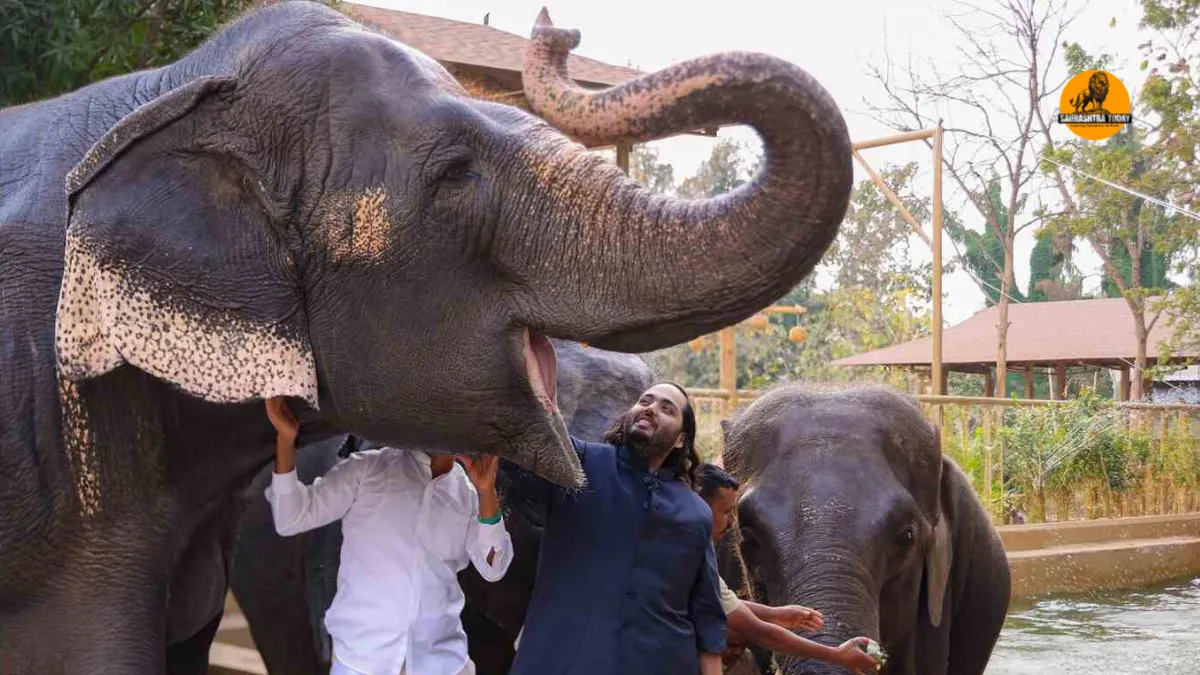
During the hearing, the forest department explained that only the Radha Krishna Temple Elephant Welfare Trust—commonly known as Vantara—had come forward to offer immediate shelter, care, and rehabilitation for Omkar. The facility, located in Gujarat, has the required infrastructure for medical treatment, behavioural training, and controlled socialisation with other elephants.
Officials assured the bench that the proposed stay at Vantara is temporary, not permanent. A Supreme Court-appointed high-powered committee will assess the situation and determine the elephant’s long-term future based on ecological, behavioural, and legal considerations.
The Bombay High Court recorded that Vantara is expected to ensure Omkar’s overall welfare with “minimal human intervention,” allowing the young elephant to gradually regain normal behaviour while avoiding stress. The judges highlighted that the facility’s structure is designed for rehabilitation, not captivity in the traditional sense.
Petitioner’s Concerns: Impact on Wild Instincts and Legal Boundaries
Despite the forest department’s assurances, the petitioner strongly opposed relocating Omkar to Gujarat. He argued that the facility primarily houses captive or bonded elephants and may not provide an appropriate environment for a truly wild animal. Kamble insisted that Omkar should be rehabilitated within Maharashtra, preferably at the Radhanagari Wildlife Sanctuary or in another natural forested habitat within the state.
The PIL further questioned whether Indian wildlife law allows for a wild animal to be placed under the care of a private trust, even temporarily. The petitioner contended that shifting the elephant across state borders could hinder its natural instincts and make future reintegration with a herd more difficult.
However, the Bombay High Court found these concerns less compelling when compared with the immediate risks faced by Omkar and the surrounding communities. The judges pointed out that the existing situation required urgent intervention, and the priority must be ensuring the elephant’s safety and survival.
Court Observations: Ecology, Abuse, and the Elephant’s Vulnerability
In its detailed order, the bench discussed the ecological importance of elephants and the urgent need to protect endangered wildlife in India. The judges noted that elephants are classified as an endangered species in the country, facing constant threats from shrinking habitats, forest fragmentation, and rising human-elephant conflict zones.
The court emphasised that elephants play a crucial role in maintaining forest ecosystems. As mega-herbivores, they shape landscapes, disperse seeds, create natural clearings, and maintain biodiversity. Losing even one young elephant has long-term ecological consequences.
The Bombay High Court also referred to a deeply disturbing incident from November where Omkar, while bathing, was cruelly targeted with powerful firecrackers by unidentified individuals. The bench described the incident as “unfortunate and inhuman,” highlighting the extent of threats the elephant faced outside a protected environment.
Additionally, the judges underlined that juvenile elephants rely heavily on herd interaction. Social bonds, learning from older elephants, and group behaviour are essential for their development. The court accepted the forest department’s assessment that Omkar’s current isolated state made him vulnerable physically, emotionally, and behaviourally.
Temporary Move, Not a Final Decision
A key point clarified by the court was that the relocation to Vantara is strictly temporary. The comprehensive decision on Omkar’s long-term future—whether eventual reintegration into the wild, transfer to a different forest zone, or extended rehabilitation—will be determined by the high-powered committee appointed by the Supreme Court.
The judges stated that the committee’s recommendations will be binding on all parties and will prioritise the elephant’s welfare above administrative or territorial considerations.
To ensure transparency, the Bombay High Court directed the forest department to prepare and submit a detailed proposal outlining:
- The precise capture plan
- On-ground safety measures
- Transportation details
- Temporary accommodation arrangements at Vantara
- A scientifically backed long-term rehabilitation plan
This proposal must be submitted to the committee within three days. The committee, in turn, has been instructed to review the documents and provide its recommendations within two weeks.
Balancing Safety and Conservation
The ruling reflects the broader challenge faced across India—balancing human safety with wildlife protection. As human settlements expand deeper into forested regions, encounters between people and wild elephants are becoming increasingly frequent. The court highlighted that conservation efforts must be supported by proactive policies, humane treatment, and scientific decision-making.
The Bombay High Court stressed that Omkar’s case is not just about a single elephant but about the larger picture of coexistence, habitat security, and the responsibilities of state agencies. The bench noted that rapid habitat loss and fragmentation are pushing elephants into unfamiliar territories, increasing conflict and endangering both animals and humans.
Also read: India Urges UN Wildlife Body Not to Restrict Animal Imports Amid Ambani Zoo Controversy
What Happens Next
In the coming weeks, the high-powered committee will evaluate:
- Omkar’s physical condition
- Behavioural patterns
- Suitability of rehabilitation in Maharashtra
- Feasibility of herd reintegration
- Long-term ecological impact
- Welfare standards at Vantara
Based on these assessments, the committee will issue a final recommendation on Omkar’s future.
Meanwhile, the forest department has been instructed to ensure that no distress or unnecessary interference affects the elephant during capture or transportation. All actions must be in strict compliance with wildlife welfare norms.
Also read: 20 Leopards from Maharashtra to Begin New Life at Vantara Wildlife Rehabilitation Centre
Conclusion
The decision by the Bombay High Court to allow the capture and temporary relocation of Omkar reflects a careful balance between wildlife conservation, public safety, and humane treatment. By directing that the elephant’s interests remain central and by involving a Supreme Court-appointed committee, the court has ensured that Omkar’s long-term welfare will be determined scientifically and ethically.
As India continues to face complex challenges in managing human-wildlife interactions, the Omkar case underscores the urgent need for sustainable conservation strategies, stronger forest protection, and solutions that protect both vulnerable species and the communities living around them.