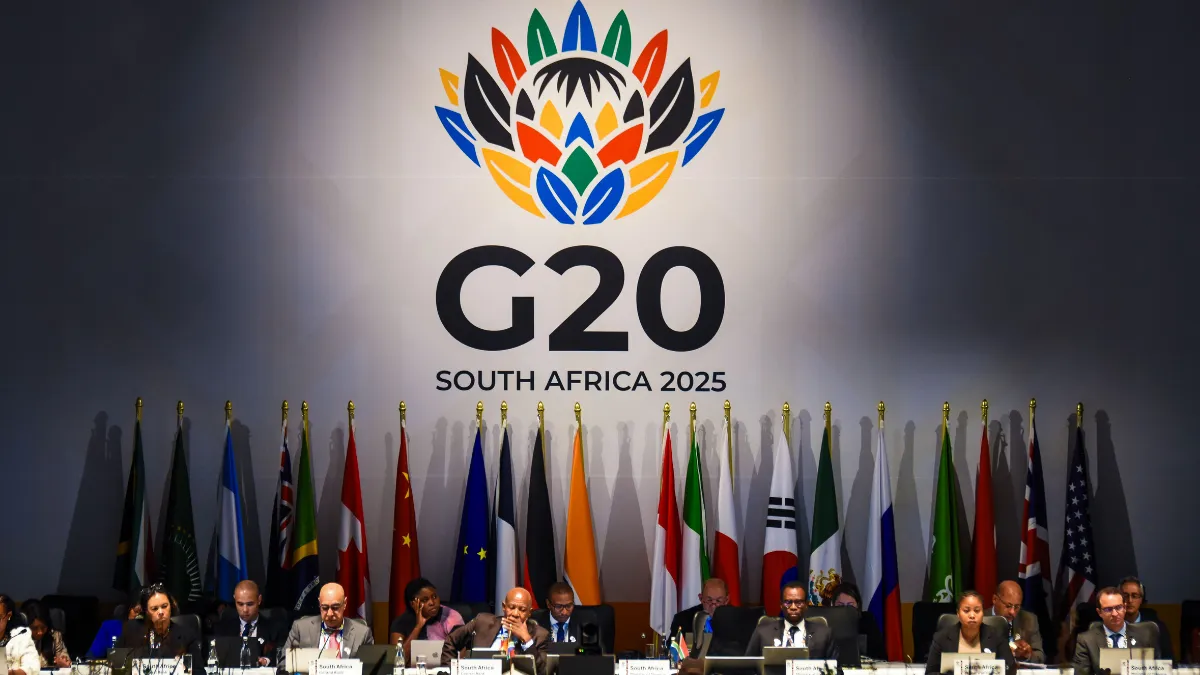
As world leaders convene for the G20 Summit 2025 in Johannesburg, one of the most notable diplomatic moments unfolded on the sidelines when Indian Prime Minister Narendra Modi met British Prime Minister Keir Starmer. The interaction between the two leaders reinforced a renewed sense of momentum in India–UK ties, signaling a strategic global partnership rooted in trade, technology, and mutual growth.
Prime Minister Modi expressed optimism following the high-level meeting with his British counterpart, emphasizing that 2025 has already injected “new energy” into the bilateral relationship. Writing on social platform X, Modi stated, “It was wonderful meeting Prime Minister Keir Starmer in Johannesburg. This year has brought fresh enthusiasm to the India–UK partnership, and we will continue to push it forward across multiple sectors.”
The bilateral meeting during the G20 Summit 2025 marks the latest milestone in a year of intensive diplomatic engagement between the two nations, reflecting a partnership increasingly aligned with global economic and geopolitical priorities.
A Year of Intensive Diplomatic Contact
The Modi–Starmer interaction in Johannesburg follows a series of high-level exchanges that have shaped the current trajectory of India–UK relations.
Just last month, Prime Minister Starmer concluded a two-day visit to India—his first official trip to the country since taking office—following a special invitation from Prime Minister Modi. Starmer was accompanied by the largest UK trade delegation ever to visit India, underscoring the United Kingdom’s intention to expand business and economic ties at an unprecedented scale.
During the visit, both leaders held comprehensive talks in Mumbai, covering a wide range of subjects including trade, technology, defense, innovation, and green energy. The deliberations focused not only on strengthening economic ties but also on establishing long-term cooperation that could benefit both economies and create jobs in new-age sectors.
Starmer’s visit came soon after Prime Minister Modi’s trip to the United Kingdom in July. At the historic Chequers country residence in Buckinghamshire, Modi and Starmer held a one-on-one meeting that later expanded into delegation-level discussions. Their conversations reflected a shared commitment to transforming what has traditionally been a historically complex relationship into a modern strategic alliance.
Breakthrough Agreement Reshapes Bilateral Ties
One of the most significant outcomes of these consecutive engagements was the signing of the India–UK Comprehensive Economic and Trade Agreement (CETA). The deal is widely regarded as a landmark development, upgrading the existing Comprehensive Strategic Partnership and opening broad new avenues for economic activity.
The agreement is expected to increase trade flows, accelerate investment, and create new opportunities across sectors such as:
- Information technology and artificial intelligence
- Advanced manufacturing
- Green energy and climate initiatives
- Defense and aerospace
- Pharmaceutical and healthcare innovations
- Education, skills, and research collaboration
According to both governments, CETA is designed not only to boost import-export volumes but also to attract direct investment and create employment opportunities in both countries. Business analysts anticipate measurable growth in bilateral trade in the first two years of implementation, supported by streamlined rules, modern regulatory cooperation, and simplified access for businesses.
At the G20 Summit 2025, the agreement emerged as a key talking point, as both leaders highlighted how the deal strengthens their shared vision for global economic recovery and sustainable development.
Diplomatic Momentum Beyond Leadership-Level Talks
The growing strategic relevance of India–UK ties has also been reflected beyond the Prime Ministerial level.
Earlier this month, India’s Foreign Secretary Vikram Misri undertook his first official bilateral visit to London. His meetings focused on accelerating collaboration in key domains such as digital infrastructure, security partnerships, strategic technology transfer, and research-driven innovation. The visit served as groundwork for further institutional cooperation and showcased the operational depth of the partnership.
Similarly, high-level political and cultural engagements have continued at both ends. On October 31, India’s External Affairs Minister Dr. S. Jaishankar emphasized that India-UK relations have evolved remarkably—from what he described as a “complicated historical association” into a “dynamic, forward-looking, and mutually beneficial partnership.”
Speaking at an event hosted by the British High Commission in New Delhi to celebrate the birthday of King Charles III, Jaishankar highlighted the rapid pace of diplomatic activity in the past 18 months, noting multiple official visits and the collective effort to expand cooperation across emerging global priorities.
Shared Vision for 2035: A Roadmap for the Future
A pivotal highlight of the recent diplomatic journey was the adoption of the Vision 2035 roadmap, signed during Prime Minister Modi’s earlier visit to the United Kingdom. The roadmap outlines a clear blueprint for 10-year collaboration between the two countries across five major pillars:
| Pillar | Focus Areas |
|---|---|
| Growth | Accelerated bilateral trade, investments, and shared economic priorities |
| Technology & Innovation | AI, quantum computing, semiconductor partnership, cybersecurity |
| Defence & Security | Industrial collaboration, co-development, and maritime security |
| Climate & Clean Energy | Renewables, hydrogen, carbon capture, climate transition |
| Education | Student mobility, joint research, and skill development |
For the first time, both governments also adopted a Defence Industrial Roadmap, reflecting a new emphasis on co-production rather than simply procurement. This involves long-term collaboration on defense research, manufacturing, and high-technology systems.
The roadmap is expected to reshape Indo-Pacific security architecture and enhance defense resilience for both countries.
India, the UK, and the Global Stage: Strategic Synergy at G20 Summit 2025
The G20 Summit 2025 continues to serve as a strategic platform for India and the UK to align on broader global concerns, including supply chain stability, digital security, sustainable energy, and the transformation of global financial systems.
India and the UK share several strategic priorities at this year’s summit:
- Creating resilient global supply chains in critical sectors
- Modernizing financial institutions to support developing economies
- Accelerating clean energy transition and climate financing
- Leveraging digital public infrastructure to drive inclusive growth
- Reinforcing global peace and Indo-Pacific maritime stability
With both nations advocating for a fair and balanced international order, their partnership is increasingly seen as a pillar of global economic and geopolitical stability.
Economic, Cultural, and Social Impact of Intensifying Relations
Beyond strategic diplomacy, the India–UK partnership carries significant impact for citizens, businesses, universities, and industries in both countries.
Growing Opportunities for Businesses
The UK delegation’s recent tour of India saw extensive engagement with:
- Tech startups and innovation hubs
- Renewable energy and climate technology firms
- Automobile and aerospace manufacturers
- Pharmaceutical and biotechnology leaders
Indian companies have also expanded their footprint in the UK, with strong presence in IT, manufacturing, and research sectors. Joint ventures are expected to increase sharply under CETA.
Higher Education and Student Mobility
The UK remains one of the most preferred destinations for Indian students. Under the Vision 2035 roadmap, both governments plan to expand research partnerships, boost scholarship programs, and facilitate easier student exchange opportunities.
Tourism and Cultural Relations
Both governments have agreed to enhance tourism promotion, streamline visa processes, and increase air connectivity to support people-to-people contact.
Looking Ahead: A Transformational Decade for India–UK Relations
As leaders prepare to conclude the G20 Summit 2025, both governments appear aligned on sustaining the current pace of engagement. Diplomats and analysts believe that the partnership is entering a new phase driven by economics, innovation, strategic defense cooperation, and shared democratic values.
Key areas expected to dominate cooperation in the next decade include:
- Semiconductor ecosystem collaboration
- Joint space missions and satellite projects
- Artificial intelligence and cybersecurity regulations
- Maritime defense and Indo-Pacific coordination
- Clean hydrogen and climate technology deployment
Both governments have acknowledged that the success of this renewed partnership will ultimately depend on long-term implementation and steady political commitment.
Conclusion
The interaction between Prime Minister Narendra Modi and British Prime Minister Keir Starmer during the G20 Summit 2025 stands as a defining moment in a year marked by diplomatic acceleration and structural progress in India–UK ties. What was once a historically complex association has now become a forward-looking, strategic collaboration positioned to shape the global economic and geopolitical landscape.
With the signing of the Comprehensive Economic and Trade Agreement, the adoption of Vision 2035, and strengthened defense cooperation, the two nations have laid the groundwork for a partnership that extends far beyond traditional diplomacy. As both governments continue to align on global priorities, the India–UK relationship appears set to define a new era of collaboration—one rooted in mutual trust, modern strategic interests, and a shared commitment to sustainable, technology-driven growth.