Hiraba No Khamkaro Yojana: In a powerful blend of philanthropy and social reform, Surat-based industrialist Piyush Desai has launched an ambitious education-focused initiative titled hiraba no khamkaro yojana, pledging direct financial support to 21,000 underprivileged girls. At a time when global conversations are centered around gender equality, the campaign stands out as a purposeful, measurable and scalable model for youth-led nation building.
Desai’s announcement, marking the 75th birth anniversary of Prime Minister Narendra Modi, underscores a broader vision — strengthening India by empowering young girls through education. The initiative pays tribute to the late Hiraba, the mother of PM Modi, whose life embodied simplicity, sacrifice, and a deep belief in moral upbringing.
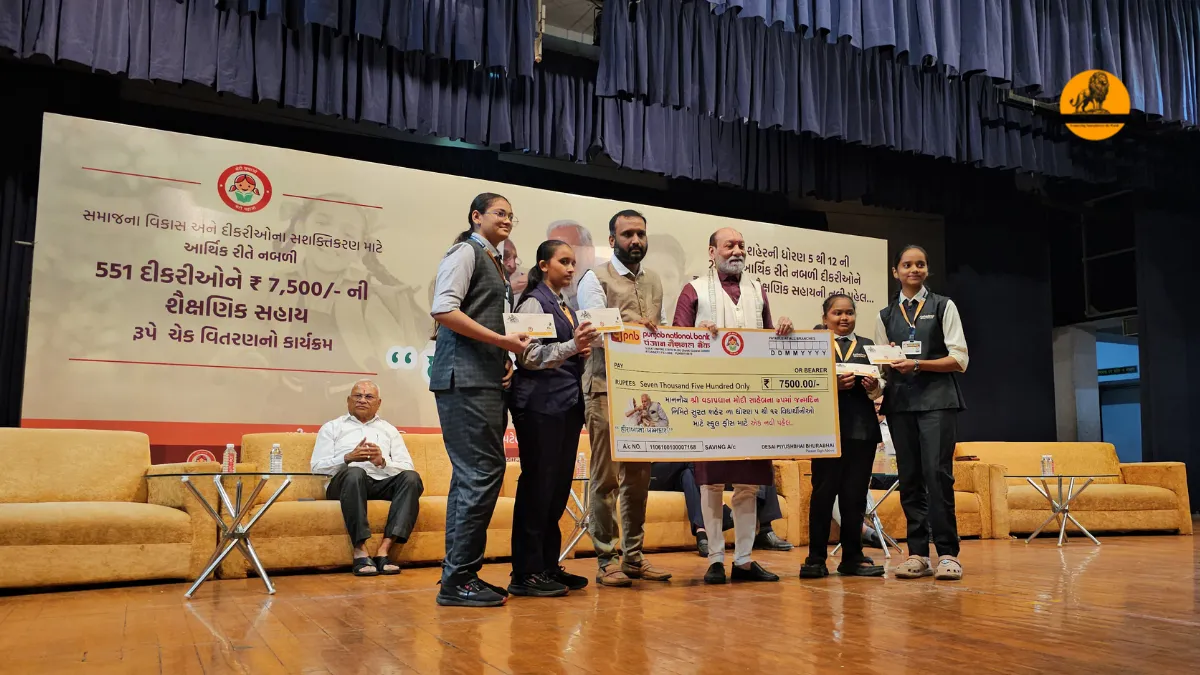
The campaign’s numbers are as bold as its intention: ₹7,500 per girl, amounting to an overall impact of nearly ₹15.75 crore. Unlike many philanthropic attempts that remain symbolic or loosely structured, hiraba no khamkaro yojana has set clear targets, transparent financial commitments, and measurable milestones, making it one of the most promising education-driven programs of recent years.
A Mission Rooted in Heart and Strategy
At its core, hiraba no khamkaro yojana aims to remove financial obstacles that keep young girls from continuing their education. The plan covers essential academic needs such as tuition fees, uniforms, books, and basic educational tools.
While ₹7,500 may seem modest in isolation, it is often the difference between a girl staying in school or dropping out due to financial strain — especially for families living below or near the poverty line.
The first phase has already delivered results:
- 251 girls have received the financial package
- 151 more will receive it during the auspicious festival of Dhanteras
For many families, this support is not just monetary; it represents recognition, dignity, and hope.
A High-Impact Launch With National Recognition
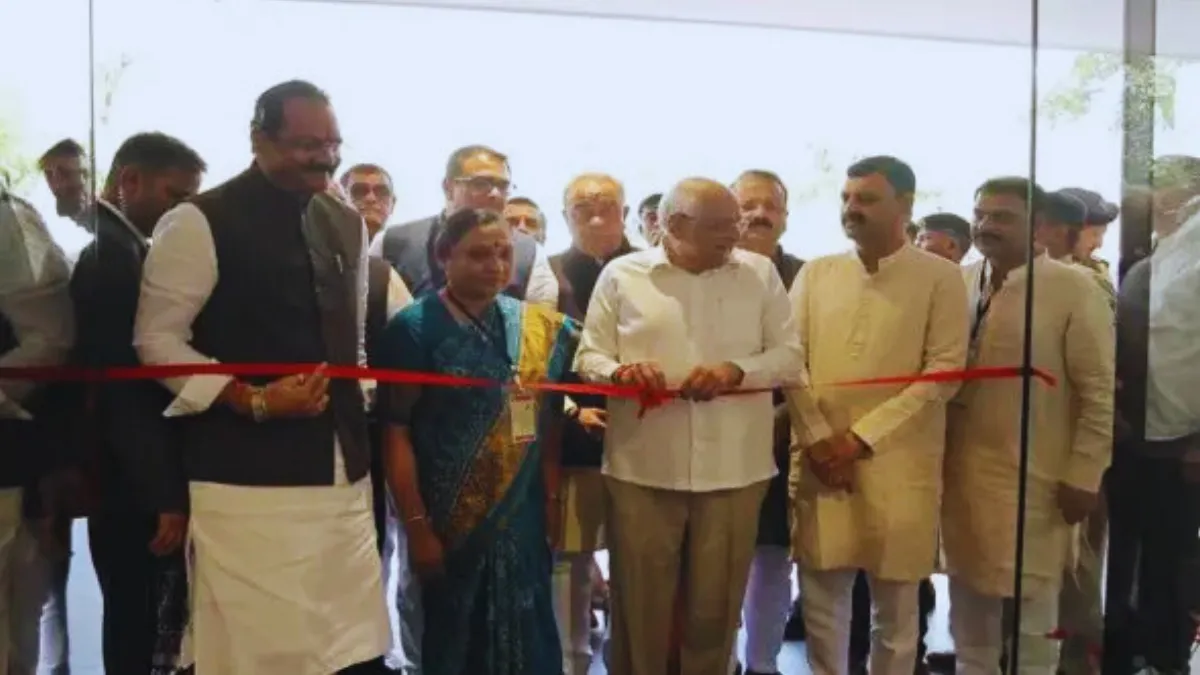
The initiative received a strong endorsement when Union Jal Shakti Minister C.R. Patil formally inaugurated the campaign. The presence of a senior Union Minister brought political legitimacy and national visibility, reflecting the government’s acknowledgement of the program’s potential.
The optics were powerful:
A 30-year-old entrepreneur, a nationally respected leader, and a mission that aligns with India’s long-term development goals — all converging to build a more equitable society.
What sets hiraba no khamkaro yojana apart is its immediate action. There are no vague commitments, no indefinite timelines. It is a campaign built on quantifiable promises, a rarity in the world of corporate social responsibility.
Who Is Piyush Desai? The Young Mind Behind the Mission
Born on 21 April 1993 in Nanota village of Banaskantha district, Gujarat, Piyush Desai represents a new generation of Indian entrepreneurs — ambitious, socially aware, and courageous enough to act early in life.
Before turning 30, he established successful ventures across:
- Textiles
- Real estate
- Construction
- Finance
His story exemplifies upward mobility powered by hard work, vision, and a desire to create meaningful change in society.
Desai believes that success is incomplete without social responsibility. For him, hiraba no khamkaro yojana is not charity; it is an investment in India’s future. He often emphasizes that empowering girls is among the most impactful ways to strengthen families, communities and the nation.
Why Girls’ Education Matters — A Global and National Perspective
Research across the world repeatedly shows that educating girls creates a ripple effect with far-reaching benefits. A single intervention can break cycles of poverty and transform entire communities.
Key benefits of girls’ education include:
- Higher household income: Educated girls grow into skilled women who participate meaningfully in the workforce.
- Lower child mortality: Educated mothers make better health decisions, reducing malnutrition and early deaths.
- Population stability: Awareness and access to family planning directly correlate with education.
- Economic growth: Countries with higher female education rates see stronger and more stable GDP growth.
- Reduced social inequality: Education helps girls escape systemic disadvantages and discrimination.
India has made significant progress in the past two decades, yet challenges remain. Many girls drop out due to financial strain, household responsibilities, lack of resources, or early marriage.
This is where the targeted approach of hiraba no khamkaro yojana becomes crucial. By removing financial burdens, the initiative directly fights the root causes of educational inequality.
A Model for Young Entrepreneurs Across India
Desai’s campaign is being widely discussed as a blueprint for modern-day youth entrepreneurship combined with social responsibility.
In a world where entrepreneurial success is often defined by profits and scale, hiraba no khamkaro yojana highlights a larger truth:
Real success lies in using power, wealth, and influence to uplift others.
The initiative sends a strong message to young business leaders:
- Social responsibility is not optional.
- Philanthropy must be timely, targeted, and structured.
- Transformative impact comes from measurable actions, not press releases.
Whether in Surat or Silicon Valley, society increasingly respects leaders who care about human development as much as business expansion. Desai’s approach aligns with global expectations and sets new standards in the Indian entrepreneurial ecosystem.
Economic Significance of a ₹15.75 Crore Grassroots Investment
A financial pledge of ₹7,500 per girl may seem like a small number on the surface, but its combined impact is profound.
Here’s why:
1. Direct Financial Relief for Families
For economically struggling families, even basic educational expenses become overwhelming. This initiative eases that burden instantly.
2. An Investment in Human Capital
Educated girls grow into economically productive adults, contributing to national development.
3. High ROI Social Intervention
Global studies say that for every $1 invested in girls’ education, societies gain up to $10 in long-term economic returns.
4. Breaking Generational Poverty
Education leads to better opportunities, healthier families, and financial independence — ending decades-long cycles of poverty.
5. Encouraging Community Participation
Such initiatives inspire other families to prioritize education, creating awareness and cultural shifts.
Cultural and Emotional Significance: Honouring Hiraba
Naming the initiative after Hiraba, PM Modi’s late mother, adds emotional depth and cultural resonance. Hiraba represented strength, discipline, and compassion — values deeply rooted in Indian family culture.
Her story symbolizes:
- The dignity of simplicity
- Value of hard work
- Importance of moral upbringing
By invoking her name, the initiative connects thousands of families to a maternal symbol of guidance and resilience. It reinforces the idea that every girl child deserves the same opportunity and respect that Hiraba believed in.
Also read: New Atal Pension Yojana Form Introduced: Old Forms No Longer Valid from October 1, 2025
Dhanteras and the Festival Connection — A Thoughtful Touch
The decision to distribute funds to 151 girls on Dhanteras isn’t coincidental. In Indian culture, Dhanteras symbolizes prosperity, blessings, and new beginnings.
This timing amplifies:
- The emotional impact on families
- A sense of cultural pride
- A message that education is the greatest wealth
Such thoughtful planning strengthens community trust and enhances long-term engagement with the initiative.
Also read: PM SVANidhi Yojana: Empowering India’s Street Vendors with Financial Freedom
Global Relevance — Why the UK, US and Worldwide Audience Should Pay Attention
Though the initiative is India-focused, its message holds universal relevance.
Countries in the UK, US, and Europe have ongoing debates about social inequality and gender gaps in education.
The hiraba no khamkaro yojana offers a replicable framework:
- Community-driven educational support
- Young leadership taking responsibility
- Transparent numbers and accountability
- Grassroots empowerment instead of top-down policy alone
As societies worldwide seek innovative ways to support marginalized groups, this initiative serves as a case study of how targeted micro-level interventions can create macro-level impact.
Looking Ahead: A Campaign With Huge Potential for Expansion
With 20,598 girls yet to benefit, the initiative is only at the beginning of its journey. Its structured, scalable and measurable nature positions it for long-term success.
Future possibilities include:
- Expansion to other districts or states
- Partnerships with educational NGOs
- Scholarships for higher education
- Digital learning support programs
- Corporate collaborations for increased financial backing
If executed consistently, hiraba no khamkaro yojana could become one of India’s most impactful grassroots educational campaigns.
Conclusion: A Blueprint for Nation-Building Through Empowerment
In an era dominated by headline-driven philanthropy, hiraba no khamkaro yojana stands out as a sincere, actionable and transformative movement led by a young entrepreneur. It blends heart and strategy, tradition and modernity, vision and execution.
By supporting 21,000 girls with ₹7,500 each, the initiative does more than fund education — it protects dreams, strengthens families, and invests in the nation’s long-term future.
If Surat is setting the benchmark, it’s time for the rest of India — and perhaps even the world — to take notes.