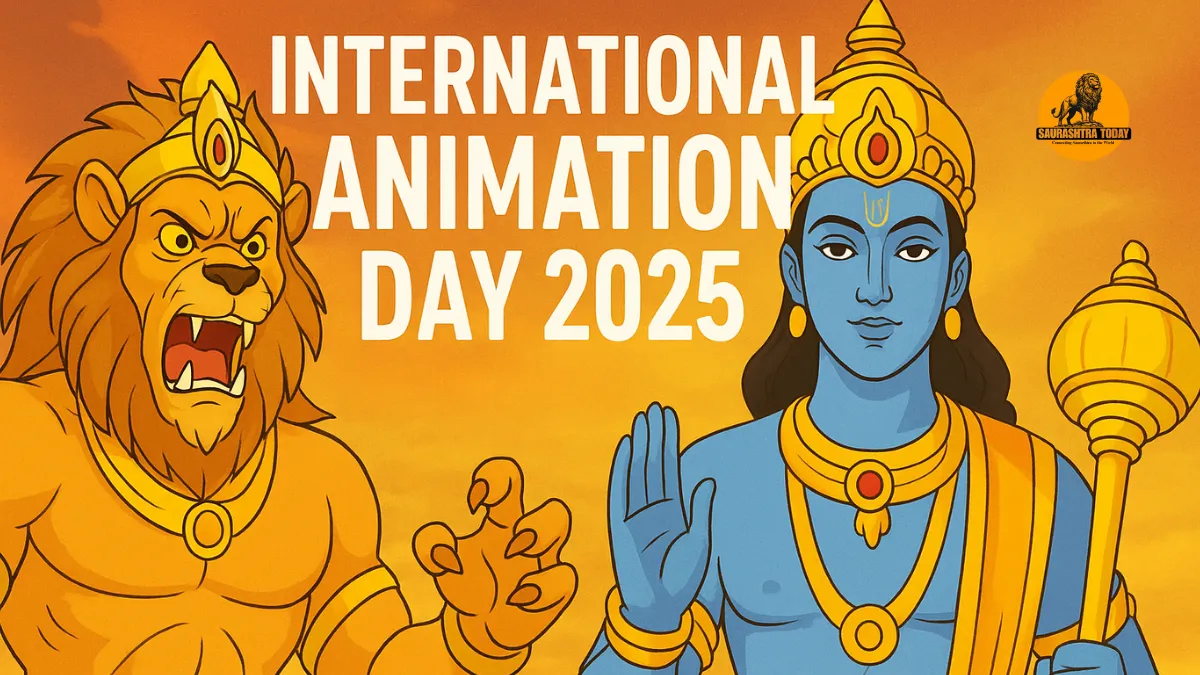
As the world marks International Animation Day 2025, a quiet revolution is brewing in Indian cinema. For years, animation in India has walked an uneasy path—torn between mythological retellings of the Ramayana and Mahabharata on one side and experimental modern stories led by animal characters on the other. But this year, something remarkable has changed. Indian animation has finally stepped out of its shadow, capturing mainstream attention like never before.
A New Milestone: “Mahavatar Narsimha” Reignites the Genre
The turning point came with filmmaker Ashwin Kumar’s stunning creation, Mahavatar Narsimha. Released just a week after Saiyaara—a romantic drama featuring Mohit Suri, Ahaan Panday, and Aneet Padda—the film defied expectations. It went on to earn more than ₹248 crore at the box office, becoming India’s highest-grossing animated feature and ranking among the top 50 biggest hits in Hindi cinema.
This unprecedented success has reignited hope across the Indian animation industry, inspiring studios and investors to take risks again. Mahavatar Narsimha isn’t just a movie—it’s a movement.
Myth Meets Modern Technology
Directed by Ashwin Kumar, the film reimagines the divine story of Lord Vishnu’s half-lion, half-human incarnation—Narasimha—and the tale of Prahlad and Hiranyakashyap. What sets it apart is its perfect blend of mythology, emotion, and cutting-edge technology. The animation feels vivid and cinematic, the storytelling deeply rooted yet universal.
The film managed to connect with a broad audience—children, parents, young adults, and even older viewers—many of whom had drifted away from animated entertainment. It proved that animation, when done right, can evoke the same emotions and grandeur as live-action blockbusters.
Building the “Mahavatar Universe”
Even before Mahavatar Narsimha hit theaters, Hombale Productions, known for Kantara and Salaar: Part 1 – Ceasefire, had joined hands with Ashwin Kumar to envision something much larger: the Mahavatar Universe.
Here’s the ambitious lineup already in development:
- Mahavatar Parshuram (2027)
- Mahavatar Raghunandan (2029)
- Mahavatar Dwarkadhish (2031)
- Mahavatar Gokulananda (2033)
- Mahavatar Kalki – Part 1 (2035)
- Mahavatar Kalki – Part 2 (2037)
This shared universe could be India’s answer to the Marvel or DC cinematic universes—rooted in spiritual depth, powered by modern animation, and built for global audiences.
Streaming Platforms Join the Movement
The resurgence of mythological animation isn’t limited to theaters. Streaming giants are now stepping in to bring these stories to a global audience.
Just this week, Netflix announced an epic new animated series titled Kurukshetra, created by Anu Sikka, Alok Jain, and Ajit Andhare. The show reimagines the legendary battle from the Mahabharata, offering a rich, multi-perspective view of the 18-day war that defined dharma and destiny.
Anu Sikka described it beautifully:
“The battle of Kurukshetra is timeless—it’s a clash of duty, destiny, and moral choices. Through this animated series, we blend eternal wisdom with powerful visual storytelling to make the epic accessible to both Indian and global viewers.”
This collaboration marks a major step in India’s cultural storytelling—bringing mythology to streaming screens worldwide, perfectly in sync with the spirit of International Animation Day 2025, which celebrates the diversity and power of animation as a global art form.
Telugu Industry’s Bold Leap: “Vayuputra”
Meanwhile, in South India, producer Naga Vamsi, known for blockbuster hits like War 2 starring Hrithik Roshan and Jr NTR, has announced his own animated venture—Vayuputra. Scheduled for a Dussehra 2026 release, the film focuses on Lord Hanuman, one of the most beloved and enduring mythological heroes in Indian culture.
Hanuman has long been an anchor in Indian animation—from V.G. Samant’s Hanuman (2005) to Anurag Kashyap’s Return of Hanuman and the more recent OTT series The Legend of Hanuman by Sharad Devarajan. Vayuputra aims to carry this legacy forward with world-class production design and cinematic scale.
Also read: Gujarati Composer Achint Thakkar Wins R.D. Burman Award at 70th Filmfare Awards-Winners List
Looking Back: India’s Early Animation Milestones
To understand this new wave, it’s essential to look back at how far Indian animation has come.
- Hanuman (2005) marked the first true breakthrough, giving Indian children their own animated superhero.
- Jayantilal Gada’s Mahabharat (2013) followed, with an all-star voice cast including Amitabh Bachchan, Ajay Devgn, Sunny Deol, Anil Kapoor, and Vidya Balan.
- The homegrown franchise Chhota Bheem became a household name, spawning countless movies and merchandise, proving that Indian animation could be both entertaining and commercially viable.
Outside mythology, films like Char Sahibzaade (based on Sikh history), Roadside Romeo, and Delhi Safari showcased creativity but struggled commercially. Now, with stronger technology, storytelling, and investment, Indian animation seems ready to reclaim its rightful place.
Why 2025 Marks a Turning Point
The global animation industry has long been dominated by Hollywood with franchises like Toy Story, Kung Fu Panda, and Inside Out. But 2025 may mark the beginning of India’s own animation revolution. The success of Mahavatar Narsimha has proven that Indian audiences are ready for large-scale animated storytelling rooted in culture yet modern in execution.
As International Animation Day 2025 celebrates creativity across borders, India’s renewed focus on mythological animation offers something rare: stories that carry deep philosophical meaning, moral strength, and emotional depth—told through the universal language of animation.
Also read: Avatar Fire and Ash Trailer: Pandora Faces New Threat as Sully Family Endures Tragedy
The Future Looks Bright
If even half of the upcoming Mahavatar Universe projects and other regional animated films reach completion, the Indian animation industry could grow exponentially within the next decade. Global streaming platforms, international collaborations, and advanced CGI are paving the way for India to become a powerhouse in this space.
For a country where mythology forms the soul of storytelling, animation has become the bridge between the past and the future.
As we celebrate International Animation Day 2025, it’s clear that India’s animated stories are no longer confined to Saturday morning TV—they’re becoming cinematic events that the entire world can enjoy.