
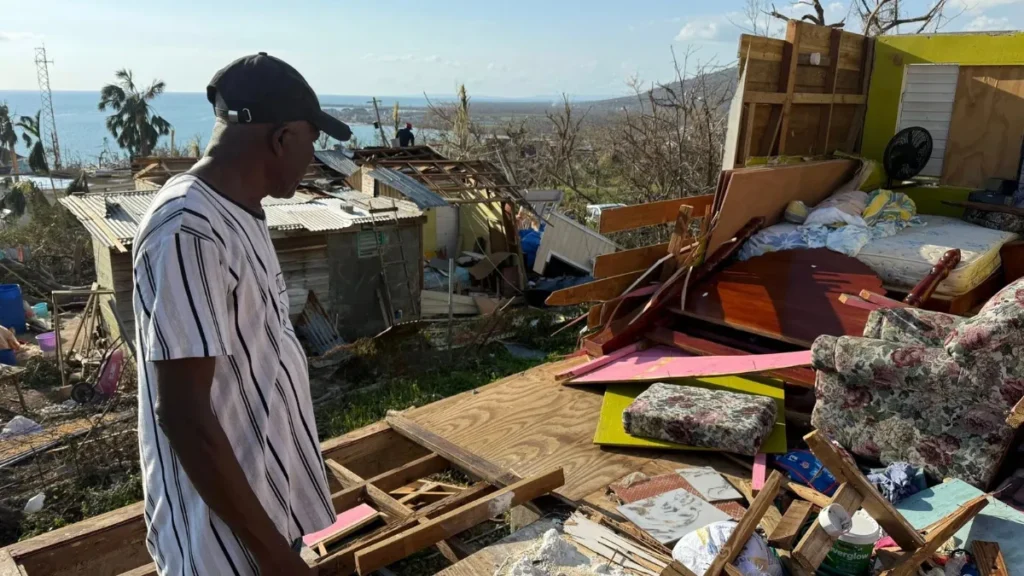
A Week of Destruction Across Cuba, Haiti, and Jamaica
The Melissa Cyclone has wreaked unprecedented havoc across the Caribbean, claiming the lives of at least 75 people and displacing nearly five million residents across Cuba, Haiti, and Jamaica. A week after the storm’s initial landfall, the region continues to grapple with widespread devastation, power outages, and humanitarian emergencies.
According to the United Nations, more than 770,000 people have been forced to leave their homes, while thousands of houses, schools, and hospitals have sustained severe damage. The international community has swiftly mobilized to deliver emergency relief, with multiple UN agencies working hand-in-hand with local governments to support rescue and rehabilitation efforts.
Mass Displacement and Infrastructure Collapse
The powerful Melissa Cyclone tore through coastal regions with winds exceeding 160 kilometers per hour, flattening villages, uprooting trees, and flooding entire communities. In Haiti, already struggling with political instability and poverty, the storm has pushed local infrastructure to the brink of collapse. Roads remain blocked, and communication networks have been largely disrupted.
In Jamaica, torrential rains caused widespread landslides, isolating rural communities from critical supplies. Emergency teams are working around the clock to restore connectivity and deliver food and medicine to stranded residents. Cuba’s eastern provinces, heavily dependent on agriculture, have reported extensive crop damage, threatening local food security for months to come.
UN Agencies Intensify Humanitarian Response
UN spokesperson Farhan Haq announced that several UN agencies have been deployed across affected areas to deliver essential aid and restore normalcy. “Our teams are working closely with national authorities to provide shelter, food, and healthcare to those most in need,” he said during a press briefing in New York.
The Food and Agriculture Organization (FAO) has distributed farming equipment, livestock feed, and fishing gear to help local farmers and fishermen restart their livelihoods. Meanwhile, the World Food Programme (WFP) has established mobile warehouses, lighting towers, and temporary shelters in eastern Cuba to coordinate large-scale food and resource distribution.
The UN Population Fund (UNFPA) has prioritized the safety and dignity of women and girls, distributing health kits and supporting local organizations focused on gender-based violence prevention. Simultaneously, the UN Development Programme (UNDP) is supplying roofing materials, construction tools, and power generators to help communities rebuild homes and essential infrastructure.
Providing Clean Water and Preventing Disease Outbreaks
The UN Children’s Fund (UNICEF) has stepped up efforts to prevent disease outbreaks in the aftermath of the Melissa Cyclone. The agency is providing clean drinking water and purification materials to ensure that over 16,000 people have access to safe water daily. Public health experts warn that without swift action, contaminated water sources could lead to outbreaks of cholera and other waterborne diseases.
UNICEF’s regional coordinator emphasized that “children are always the most vulnerable during disasters like the Melissa Cyclone. Our priority is to restore safe water, hygiene facilities, and schooling as quickly as possible.”
Local and International Collaboration in Full Swing
Local authorities, community volunteers, and international organizations are coordinating large-scale relief operations to reach remote villages and distribute essentials such as food, blankets, and medicines. The Caribbean Disaster Emergency Management Agency (CDEMA) has also activated its emergency response mechanism, calling on neighboring nations for logistical support.
Governments of the United States, Canada, and the United Kingdom have pledged financial assistance and humanitarian supplies. Military aircraft have been deployed to transport aid packages, while naval ships are being used to deliver heavy equipment and generators to the hardest-hit coastal zones.
Long-Term Challenges Ahead
Even as relief operations continue, experts warn that the road to recovery will be long and complex. Agricultural losses are expected to reach billions of dollars, while thousands of families have lost their means of livelihood. Schools and hospitals that survived the storm are overcrowded, with limited supplies and intermittent electricity.
The Melissa Cyclone has also exposed deep social and economic vulnerabilities in the Caribbean, highlighting the urgent need for stronger climate adaptation and disaster management strategies. Local governments are now appealing for international funding to rebuild critical infrastructure with greater resilience to future storms.
Climate Scientists Link Melissa Cyclone to Global Warming
Environmental scientists have drawn a direct connection between the Melissa Cyclone and the ongoing global climate crisis. Research indicates that severe tropical storms are now five times more frequent and intense than they were just a few decades ago. Rising ocean temperatures, fueled by greenhouse gas emissions, are creating ideal conditions for cyclones to strengthen rapidly and cause greater destruction.
Dr. Alicia Moreno, a climate researcher at the University of Oxford, explained, “The Melissa Cyclone is not an isolated event — it is a warning sign of a warming planet. As sea levels rise and ocean heat increases, storms like this will continue to devastate coastal populations unless we take urgent climate action.”
Also read: Nepal Avalanche Kills Seven Climbers on Yalung Ri Peak; Search Operation Continues Amid Bad Weather
Human Stories of Survival and Loss
Amid the statistics, stories of human endurance stand out. In northern Jamaica, a young mother named Althea recounted how she and her children spent three days trapped in their flooded home before rescue teams arrived. “We lost everything,” she said, “but we’re grateful to be alive. The Melissa Cyclone showed us how fragile life can be.”
In Haiti, communities are coming together to rebuild. Local NGOs are setting up temporary shelters and community kitchens to provide meals to displaced families. Volunteers are clearing debris, repairing roads, and helping reconnect villages to essential services.
Global Solidarity and the Road Ahead
As the Caribbean recovers from the Melissa Cyclone, international attention is turning toward long-term solutions. The UN has called for a global relief fund to assist the affected nations in rebuilding sustainably. The focus is not only on immediate recovery but also on preparing for future climate-driven disasters.
The resilience of Caribbean people remains remarkable. Despite unimaginable loss, communities are showing solidarity, courage, and a determination to rebuild stronger than before. The Melissa Cyclone may have tested their strength, but it also united the world in compassion and collective resolve.
Conclusion
The Melissa Cyclone stands as a grim reminder of the increasing power of nature in an era of climate instability. With over 75 deaths, millions displaced, and extensive destruction across Cuba, Haiti, and Jamaica, the storm underscores the urgent need for global cooperation on climate action, disaster preparedness, and humanitarian support.
As the winds settle and the rebuilding begins, the Caribbean’s recovery journey will depend on sustained international aid, local resilience, and a renewed global commitment to protecting vulnerable communities from the next inevitable storm.