The twin coastal settlements of Nargol and Sanjan, nestled along the Maharashtra–Gujarat border, continue to draw visitors searching for unspoiled beaches, gentle sea breezes and a deeper connection to India’s Zoroastrian legacy. Their sandy shores hold more than scenic beauty — they hold the earliest memories of an entire community that found its destiny here. Today, travelers arrive to experience the calm waters, chikoo orchards, traditional Parsi cuisine and a sense of peace that quietly transports one back in time.
A Coastal Haven with a Sacred Past
Nargol in south Gujarat is widely remembered as the very first place where Zoroastrians — later known as Parsis — set foot in India after fleeing persecution in ancient Persia. Walking through the settlement today reveals a cluster of whitewashed heritage homes, many preserved lovingly but tended by caretakers as families gradually moved to cities.
The lanes are quiet, breezy and shaded. A short stroll leads to one of the most untouched beaches on this coastline — nearly four kilometres of clean, silver-white sand bordered with tall casuarina trees. The beach seems to exist in its own timeless bubble. Visitors often describe the experience as stepping into a landscape that is unaware of the world rushing past it.
The tranquillity of Nargol and Sanjan stands in striking contrast to the turbulent history that brought a determined community to these shores centuries ago.
Historic Tides: How the Parsis Arrived
By the end of the 7th century, the powerful Sassanian Empire collapsed under the onslaught of Arab invaders. Thousands of Zoroastrians were killed for their faith. Those who survived escaped to the mountains of Iran, only to be forced out again. After a brief refuge in Hormuz, a group of Zoroastrians sailed across the Arabian Sea in search of safer lands.
Their journey was nearly cut short. The ship was battered by a massive storm, but the travelers held on and prayed for deliverance. When the skies finally cleared, they discovered that the sea had washed them ashore on the western coast of India — at Nargol.
From there, the group made its way to Sanjan, ruled by a king named Jadhav Rana. What followed is one of the most symbolic stories of cultural harmony in Indian history.
The Milk and Sugar Legend
According to legend, the Zoroastrian leader — a Dastur, or priest — requested permission for his people to settle in Sanjan. The king responded by filling a vessel with milk to the brim and presenting it to the Dastur. His message was clear: the kingdom was already full.
The Dastur smiled, sprinkled sugar into the milk, and returned the vessel without spilling a drop. The milk had become sweeter — symbolizing that his people, too, would blend into the kingdom and make it better.
Impressed by the gesture, Jadhav Rana granted the Zoroastrians permission to settle in Sanjan. What began that day is celebrated as one of the greatest examples of peaceful cultural integration the world has ever witnessed.
The Sacred Fire and Its Remarkable Journey
Soon after settling in Sanjan, the Parsis requested the king’s approval to build a fire temple. In the Zoroastrian faith, fire represents purity, divinity and the presence of Ahura Mazda, the supreme creator. The most sacred of these fires — created from 16 different types of flames, including fire from a goldsmith, a potter, a king’s hearth, a shepherd’s house and even a lightning strike — is meticulously consecrated over several years.
The Sacred Fire that the Parsis established in Sanjan took nearly three years to prepare. Once enshrined, it burned continuously for 669 years.
But its safety was threatened when the Mughals, led by Sultan Mahmud, attacked Sanjan in the 13th century. The Parsis, who had long given up warfare, took up arms to defend their home. Fourteen hundred warriors under the leadership of Ardeshir fought alongside the king’s army. Despite their courage, they were defeated.
Fearing persecution similar to what their ancestors endured, the Parsis fled again — but they carried with them the most precious symbol of their faith: the Sacred Fire.
A Fire That Never Died
The next chapters of the fire’s journey are extraordinary:
- 12 years hidden in the caves of Bahrot
- 14 years sheltered in the dense forests of Vansda
- 313 years preserved in Navsari
- Later relocated to Surat, then back to Navsari
- Then taken to Valsad
- And finally, in 1742, it was installed in the Fire Temple at Udvada
Today, the Iranshah Atash Behram in Udvada is the holiest fire temple for Parsis across the globe. The same sacred fire continues to burn there — a living symbol of resilience that began in Nargol and Sanjan.
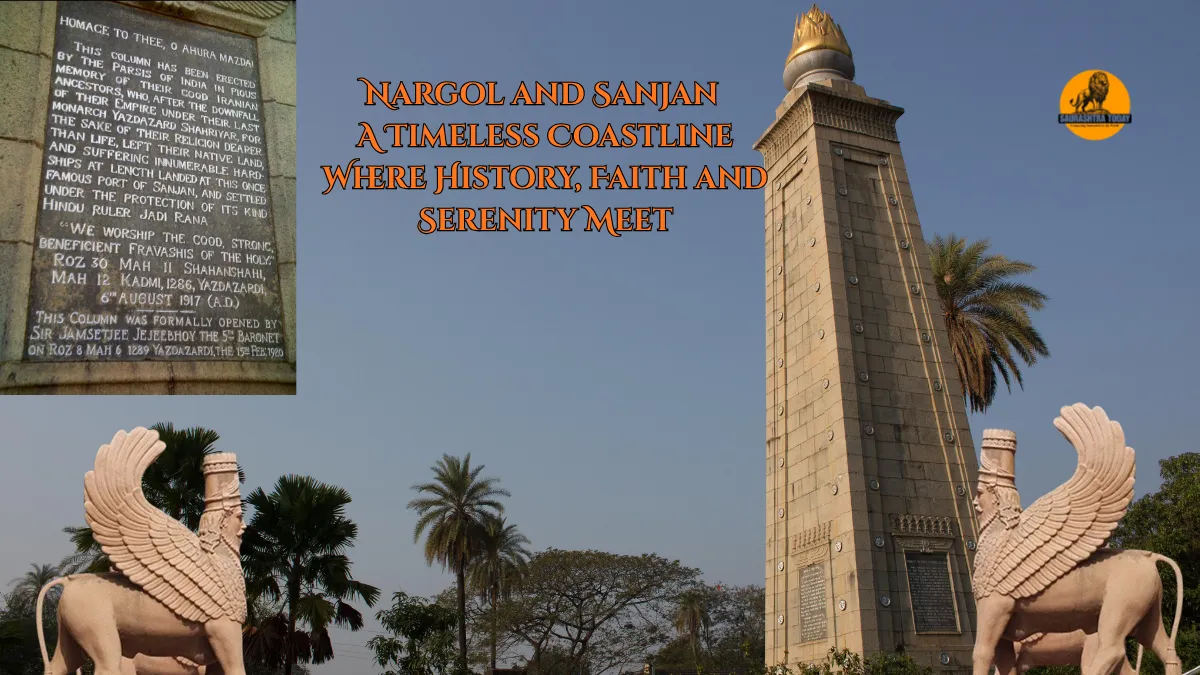
At Sanjan itself, the original fire temple has long disappeared. Instead, a commemorative pillar stands marking the site where the Parsis first arrived in India.
Beaches, Food and Calm: What Visitors Can Expect
Travelers often plan their visit to Udvada and then continue further to the beaches of Bordi and Gholvad — coastal gems located close to Nargol and Sanjan. This region is famously known as the “chikoo bowl of Maharashtra,” thanks to its sprawling chikoo orchards.
Here’s what awaits visitors:
1. Uncrowded Beaches
The shoreline stretches for nearly 17 kilometres, perfect for long walks, sunset viewing and peaceful moments by the sea.
2. Authentic Parsi Cuisine
The region offers some of the finest traditional Parsi food in western India. Popular dishes include:
- Lagan-Nu-Bhonu
- Sali Boti
- Dhansak
- Kheema-Pao
- Dal-Pulao
- Patra-Ni-Machchi
- Caramel Custard
Gool Khush restaurant is often recommended by locals for its homestyle flavours.
3. Chikoo Orchards and the Aroma of Toffee
Visitors can explore shaded chikoo plantations. The resin of chikoo trees releases a sweet, toffee-like fragrance that fills the air — an experience many travelers describe as nature’s version of dessert.
4. Historic and Scenic Spots
Nearby, the Asavli Dam offers postcard-perfect views — paddy fields on one side and calm blue water framed by gentle hills on the other. Not far from this landscape are the Bahrot Caves, where the Parsis once protected their sacred fire for twelve long years.
A Legacy That Lives On
Zoroastrians believe that Prophet Zarathustra laughed as soon as he was born — unlike ordinary infants. Looking at the harmony with which the Parsi community integrated into India and how they nurtured their culture without conflict, one can imagine that this prophetic smile has endured through centuries.
Today, the story of Nargol and Sanjan is not just about migration. It is a tale of courage, acceptance, faith and gratitude — values that continue to echo across these quiet coastal villages.
Also read: Sanjan Day to be Celebrated by Parsi Community: Historic Memorial Event at Kirti Stambh Today
Travel Guide: How to Reach Nargol and Sanjan
- Distance from Mumbai: Approximately 200 km
- Route: Follow the Western Express Highway and continue along NH8
Where to Stay
Accommodation options in Nargol, Sanjan and Udvada are limited and modest. Most travelers choose to stay in Bordi or Dahanu, which offer comfortable guesthouses and beachside stays.
For selecting the best stay according to your budget, check verified tourism portals or official regional tourism websites.
Also read: 150 Years of Lord Birsa Munda: India Celebrates a Legacy of Tribal Pride, Freedom and Justice
Why Nargol and Sanjan Matter Today
In a world rushing toward modernity, Nargol and Sanjan stand as gentle reminders of the past — places where faith survived, cultures blended and communities thrived against all odds. For travelers seeking peace, history enthusiasts searching for authentic stories, and food lovers who appreciate Parsi cuisine, this coastline offers a rare, soulful experience.
These twin villages are not just destinations; they are living museums of memory and meaning. Visiting them is a chance to touch the sand where a displaced community rebuilt its destiny — and to breathe in the same calm air that has carried their story across centuries.