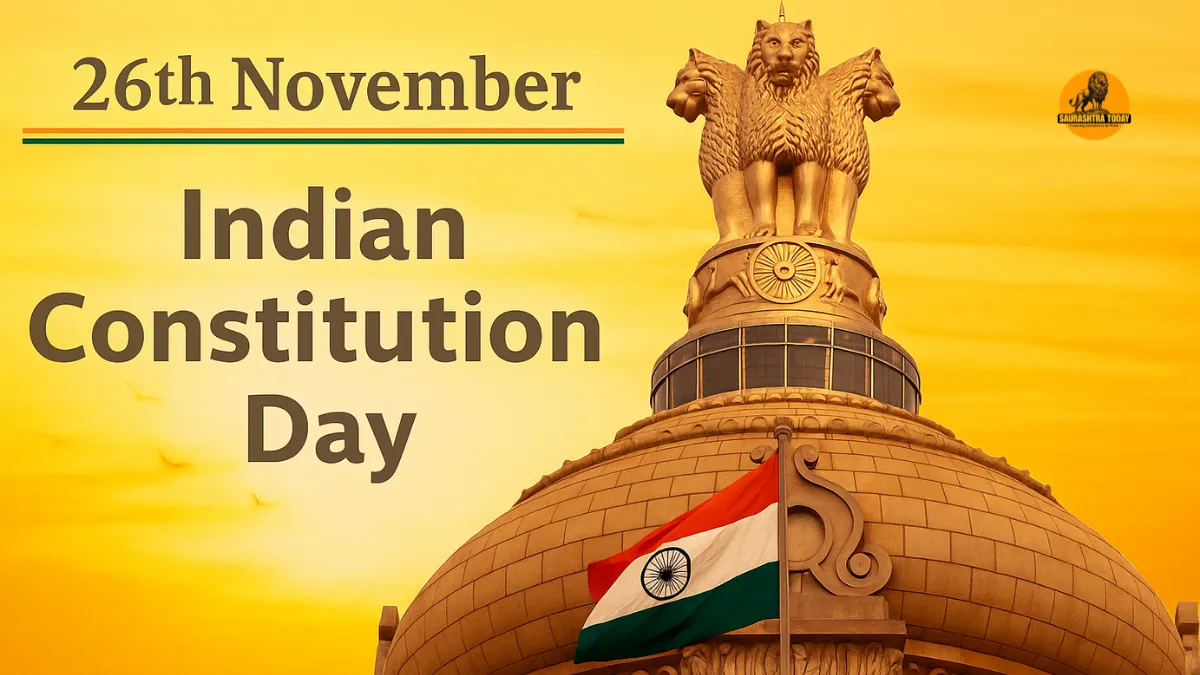
National Constitution Day in India, observed every year on 26 November, stands as a powerful reminder of the moment the country adopted its supreme guiding document—the Constitution of India. Known widely as Samvidhan Divas, the day celebrates not only the adoption of the Constitution in 1949 but also the vision, courage, and intellectual depth of the leaders who built the foundational framework of the world’s largest democracy.
As India prepares to mark National Constitution Day in India 2025, the occasion carries renewed relevance. With changing social dynamics, fast-evolving governance systems, and rising public awareness about constitutional values, the day acts as a bridge between India’s democratic past and its future aspirations.
This comprehensive article explores the history, significance, values, and detailed timeline related to the Constitution’s drafting and adoption, offering a complete understanding of why 26 November holds such a critical place in India’s national calendar.
What Is National Constitution Day in India?
National Constitution Day in India is celebrated annually on 26 November to commemorate the adoption of the Constitution by the Constituent Assembly in 1949. Although the Constitution came into force on 26 January 1950—now celebrated as Republic Day—the adoption date marks the moment India defined its democratic character, legal identity, and commitment to justice, equality, liberty, and fraternity.
The Constitution’s drafting was an extraordinary exercise, spanning 2 years, 11 months, and 18 days, beginning with the Constituent Assembly’s first meeting on 9 December 1946 and ending with the historic adoption on 26 November 1949.
The day pays tribute to Dr. B.R. Ambedkar, the chairman of the Drafting Committee, whose leadership and intellectual brilliance shaped the legal and social foundation of modern India. It also encourages citizens—especially students, public servants, and youth—to deepen their understanding of constitutional provisions, rights, duties, and democratic principles.
History of National Constitution Day in India
Although the Constitution was adopted in 1949, National Constitution Day as an annual observance was officially declared only in 2015. On 19 November 2015, the Government of India announced that 26 November would be celebrated nationwide as Constitution Day. This decision marked the 125th birth anniversary year of Dr. B.R. Ambedkar and acknowledged his unparalleled contribution to India’s constitutional development.
Before 2015, the day was recognized informally as Law Day, primarily within the legal community. Renaming it as Constitution Day expanded its relevance to every citizen, reinforcing the idea that understanding the Constitution is not limited to lawyers or academicians—it is essential for the democratic participation of everyone.
Key milestones in the history of National Constitution Day include:
- Adoption of Constitution: 26 November 1949
- Enforcement of Constitution: 26 January 1950
- Renamed as Constitution Day: 19 November 2015
- Former name: Law Day
This shift symbolized a national commitment to strengthening constitutional literacy and public participation in democracy.
Why National Constitution Day in India Matters
The significance of National Constitution Day in India goes far beyond ceremonial observances. It serves as a reminder that the Constitution is not merely a legal document; it is a living framework that shapes governance, institutions, rights, responsibilities, and the collective identity of India.
1. Enhancing Constitutional Literacy
A core purpose of the day is to increase awareness about:
- Fundamental Rights
- Fundamental Duties
- Directive Principles of State Policy
Understanding these principles enables citizens to participate meaningfully in democracy.
2. Honouring the Constitution’s Framers
The day pays tribute to:
- Dr. B.R. Ambedkar
- Dr. Rajendra Prasad
- Jawaharlal Nehru
- Sardar Vallabhbhai Patel
- All members of the Drafting Committee and Constituent Assembly
Their vision continues to guide India’s governance seven decades later.
3. Strengthening Democratic Values
National Constitution Day reinforces India’s commitment to:
- Democratic governance
- Rule of law
- Equality and justice
- Participation and accountability
4. Promoting National Unity and Civic Awareness
By reading the Preamble, conducting debates, and organizing educational programmes, institutions help citizens reconnect with constitutional values.
The Drafting of the Indian Constitution: A Detailed Timeline
The drafting of the Indian Constitution remains one of the most remarkable democratic exercises in global history. The Constituent Assembly, comprising 299 members after partition, carried out extensive debates, discussions, and reviews to shape the future of a newly independent nation.
Key Events in the Drafting Process
- Formation of the Constituent Assembly: 9 December 1946
- First Meeting of the Assembly: 9 December 1946
- Election of Dr. Rajendra Prasad as President: 11 December 1946
- Formation of Drafting Committee (Chairman: Dr. B.R. Ambedkar): 29 August 1947
- Presentation of the Draft Constitution: 4 November 1948
- Adoption of the Constitution: 26 November 1949
- Enforcement of the Constitution (Republic Day): 26 January 1950
The process displayed India’s commitment to inclusivity, public debate, and democratic ideals. Over 7,600 amendments were proposed during the debates, reflecting the thoroughness with which the framers examined every clause.
Constitutional Values Highlighted on National Constitution Day in India
Each Constitution Day highlights the foundational principles enshrined in the Preamble and the Constitution. These values shape India’s political structure, social order, and national identity.
Justice
The Constitution aims to ensure social, economic, and political justice, providing equal opportunities and fair treatment to all citizens.
Liberty
Liberty under the Constitution includes freedom of:
- Thought
- Expression
- Belief
- Faith
- Worship
These freedoms protect the dignity and autonomy of every individual.
Equality
Equality forms a core constitutional commitment, guaranteeing equal rights, preventing discrimination, and ensuring equal access to public opportunities.
Fraternity
The idea of fraternity promotes national unity, social harmony, and a sense of brotherhood among India’s diverse population.
Secularism
India’s secularism ensures equal respect for all religions without state interference in religious practices.
Democracy
The Constitution firmly establishes India as a democratic republic where citizens elect their government and participate actively in governance.
Rule of Law
The principle asserts that the law is supreme, and no individual—regardless of position or power—is above it.
These values serve as guiding lights for the nation’s democratic journey, and Constitution Day reinforces their importance.
National Constitution Day vs Republic Day: Key Differences
Although both days are closely related to India’s Constitution, their purpose and nature differ significantly.
| Feature | Constitution Day (26 November) | Republic Day (26 January) |
|---|---|---|
| Purpose | Marks the adoption of the Constitution | Marks the enforcement of the Constitution |
| Declared As | Constitution Day (since 2015) | National Festival |
| Focus | Promoting constitutional literacy | Celebrating India becoming a sovereign republic |
| Type of Holiday | Not a public holiday | National public holiday |
| Activities | Preamble reading, debates, seminars, educational programmes | National parade, awards, cultural performances |
Both days reflect India’s enduring respect for its constitutional heritage, but Constitution Day is specifically dedicated to learning, reflection, and civic awareness.
How National Constitution Day in India Is Celebrated
Across India, 26 November sees large-scale participation from schools, universities, government institutions, and civil society.
Common activities include:
- Reading the Preamble collectively
- Essay competitions and debates
- Seminars and workshops on constitutional themes
- Public lectures by legal scholars
- Quizzes on constitutional history
- Exhibitions and document displays
- Awareness campaigns on Fundamental Duties
Digital platforms also play a major role, with millions participating in online Preamble readings and educational programmes.
Why National Constitution Day in India Continues to Be Relevant in 2025
As India enters 2025, the relevance of Constitution Day is more profound than ever. With major conversations taking place around social justice, governance reforms, human rights, and federalism, the Constitution stands as the nation’s moral and legal compass.
In 2025, Constitution Day resonates because:
- Citizens are increasingly aware of their rights and responsibilities.
- Digital platforms have expanded access to legal and civic education.
- Policy debates highlight the continued relevance of constitutional values.
- India’s global role emphasises its identity as a stable democracy.
The day encourages every individual, from students to policymakers, to reflect on how constitutional ideals can guide the nation’s progress.
Also read: Understanding the Notaries Act 1952: A Complete Guide
Conclusion: A Day to Celebrate India’s Democratic Soul
National Constitution Day in India 2025 is not just a commemoration—it is a celebration of India’s identity, values, and democratic strength. As the nation honours the framers of the Constitution, it also renews its commitment to justice, liberty, equality, fraternity, and the rule of law.
The Constitution continues to be the moral backbone of India’s democracy, shaping its present and inspiring its future. On 26 November, citizens across the country pause to reflect on the remarkable journey of the Constitution and reaffirm their duty to uphold its principles.