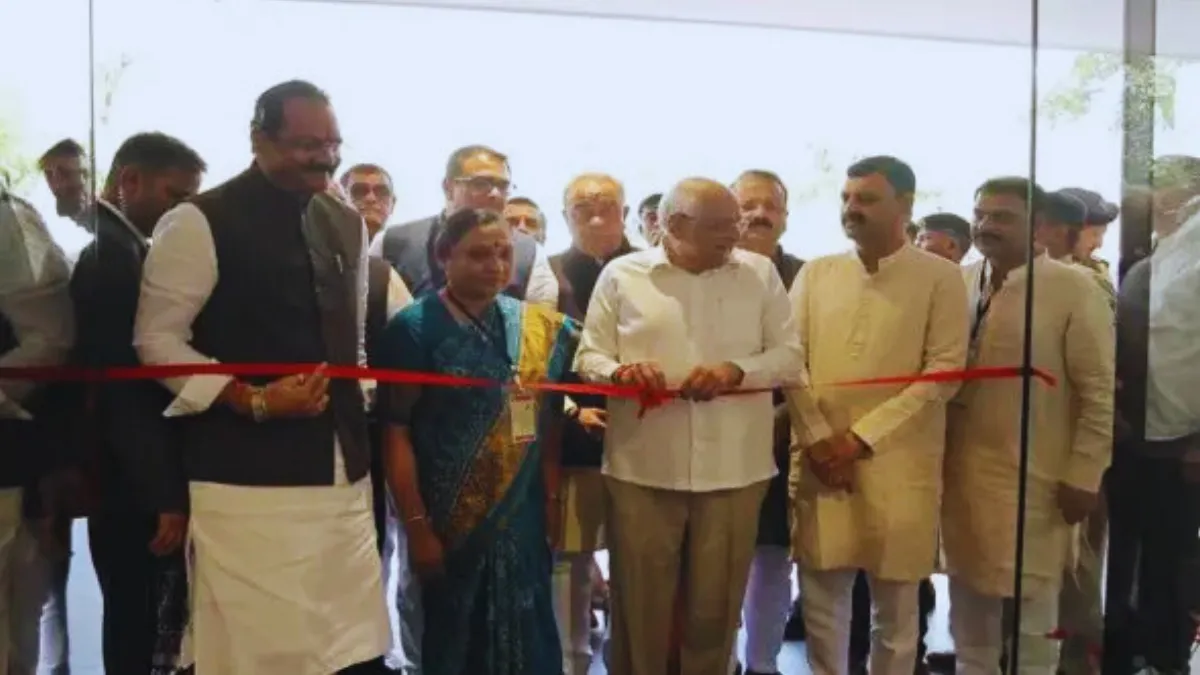
Rising Rajkot: Rajkot has always been a city of history, resilience, culture and innovation. Today, that legacy has been transformed into a spectacular public exhibition titled “Rising Rajkot”, inaugurated at the Race Course Art Gallery by Gujarat Chief Minister Bhupendra Patel. The exhibition is becoming a major attraction, offering a detailed visual narrative of how Rajkot evolved from a historic settlement before India’s Independence to a world-class urban centre of the 21st century.
Organised by Rajkot Municipal Corporation, the exhibition showcases more than six extensive art galleries filled with rare photographs, unique models, interactive technology, and futuristic project blueprints. Together, they narrate 400 years of Rajkot’s transformation — its heritage, its present achievements, and its ambitious roadmap for the future.
From a 3D tour of Smart City projects and a look into the upcoming Working Women’s Hostel, to the opportunity to take an AI-generated picture with Prime Minister Narendra Modi at Atal Sarovar, the exhibition has quickly become a must-visit destination for residents, tourists and urban development students across India.
Gallery 1 — Rajkot Before Independence: A Rare Glimpse Into the Past
The first gallery captures the rich cultural and historical foundation of Rajkot, presenting visuals rarely seen by the public.
Exhibition Highlights:
- A pre-Independence map of Rajkot and its 3D model
- Vintage photographs of the iconic Zhulavni buggy
- A rare family photograph of Sardar Vallabhbhai Patel during his time in Rajkot
- Historic snapshots of Zhulavni Rajkot
- Aerial photographs of Rajkot taken from an aircraft, offering a bird’s-eye view of the old city structure
- Polo Ground sports arena during its early days
- Photographs of the railway track passing directly through the city centre
- Heritage images of the renowned Arbanda Dharamshala
This gallery pays homage to Rajkot’s legacy — the architecture, the social atmosphere, and the everyday life of the era. Visitors often describe it as “time travel through photographs”.
Gallery 2 — Saurashtra’s Industrial Crown: The Rise of Economic Identity
The second gallery focuses on Rajkot’s identity as an industrial hub — known widely for its dedication to craftsmanship, engineering and entrepreneurship.
Featured Segments:
- Valuable artefacts representing Saurashtra and Rajkot’s cultural and historical wealth
- A dedicated section on jewellery, architecture and handcrafted gold-silver artistry
- Exhibits honouring legendary personalities from the world of literature and arts
- Model versions of pioneering machines that played key roles in Rajkot’s industrial modernization
- A display named “Lifelines of Rajkot”, summarising the city’s defining strengths across trade, technology, design and innovation
The second gallery bridges the historic foundation with Rajkot’s reputation as one of India’s fastest-growing manufacturing and industrial powerhouses.
Gallery 3 — The Development Voyage 2005–2025: PM Modi’s Connection With Rajkot
The third gallery documents twenty remarkable years of urban development — largely linked with the city’s transformative administrative journey influenced by Prime Minister Narendra Modi.
Key Highlights:
- A display titled “PM Modi and Rajkot”, capturing decisive moments from his public life associated with the city
- A visual tribute to the iconic AI-based Pona Taluka flight project
- Modi Sports Train exhibit and an interactive photo booth
- A chronological timeline showcasing Rajkot’s evolution between 2005 and 2025
- Advanced 3D projection models and digital archives illustrating the city’s current and future growth milestones
Visitors are particularly drawn to the technological displays that communicate how strategic planning transformed Rajkot into a model smart city.
The Exhibition Experience: Immersive Technology, AI & 3D Future Vision
One of the most talked-about attractions at Rising Rajkot is the 3D virtual tour of the upcoming Working Women’s Hostel, designed to be built within the New Rajkot Smart City zone. With VR headsets and a comfortable theatre-style seat, visitors can explore the entire model just as if they were watching a 3D movie.
Sheetal Mehta, a visitor attending the exhibition, expressed her excitement:
“The arrangement of old photographs is stunning, and the VR tour of the Working Women’s Hostel is unbelievable. Sitting on a reclining chair with the VR device felt like entering a real building. Everyone in Rajkot should come and see this.”
Moreover, the AI photo station with Prime Minister Narendra Modi at Atal Sarovar is drawing a massive crowd. Visitors can choose from four different digital locations around the lake to generate an AI photograph that is instantly downloadable through a QR code.
Rajkot’s Water Journey — From Crisis to Smart Management
The exhibition also educates younger generations about the city’s struggle with water scarcity. There was a time when Rajkot and Saurashtra were classified as drought-affected regions, so much so that water tankers required security escorts, much like cash vans.
In an unimaginable period of crisis, drinking water was transported to Rajkot by trains. That reality changed dramatically as water policies shifted and large-scale infrastructure projects were implemented under visionary leadership.
The Narmada Revolution
Thanks to long-term planning and investment in the Narmada water project, Rajkot today enjoys secure water supply even in low-rainfall years. The entire water story — from crisis to stability — is displayed through charts, videos, and rare archival data.
A Preview of the Future — Development Projects That Will Shape Rajkot Beyond 2025
The exhibition also explores how Rajkot will look in the next decade. A particularly eye-catching segment illustrates the upcoming Ring Road-2, a large-scale transport project being developed by RMC and RUDA.
This new expressway-style ring road is expected to:
- Reduce traffic congestion across the city
- Integrate emerging urban zones with existing infrastructure
- Accelerate business connectivity and logistics
In addition, the sixth gallery offers a detailed explanation of the Urban Development Model for 2025, which categorises infrastructural growth into six pillars covering:
- Housing expansion
- Road and transport networks
- Digital smart city infrastructure
- Industrial acceleration
- Public welfare and safety
- Tourism, culture and environmental sustainability
A Grand Response From the Public — and an Exhibition Not to Be Missed
The Rising Rajkot exhibition is already receiving an overwhelming response from the community. With praise from the Chief Minister and thousands of citizens visiting daily, the exhibition is expected to draw record crowds until 21 December, operating from 10:00 AM to 10:00 PM.
Whether you are a resident, an urban planning student, an architecture enthusiast, a historian, or simply someone curious about Rajkot’s rise — the exhibition provides an unforgettable experience.
Why “Rising Rajkot” Matters
This event is not merely an exhibition; it is an identity statement. It shows a city that refuses to stand still. Rajkot has:
- Preserved its heritage
- Strengthened its industry
- Improved the lives of citizens through governance and innovation
- Set an ambitious roadmap for the future
For the new generation, Rising Rajkot serves as a reminder that progress is the result of resilience, strategic vision and collective effort. For visitors from India and abroad, it presents Rajkot as a city ready to lead — culturally, technologically and economically.
Conclusion
From the dusty lanes of the pre-Independence era to the illuminated skyline of the smart city of tomorrow, Rising Rajkot celebrates a remarkable 400-year evolution. It honours the memory of the past, recognises the achievements of the present, and welcomes the promise of the future.
The exhibition proves that Rajkot is not just a city — it is a story of determination, innovation and pride.