
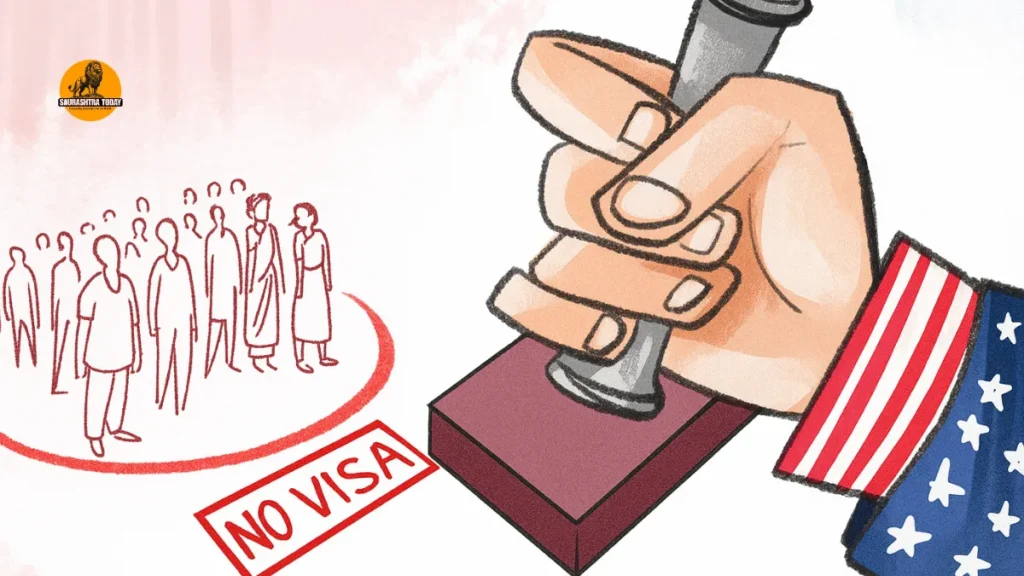
Washington, D.C. —US Visa Policy Update: People suffering from chronic health conditions such as diabetes, cancer, and obesity may now face tougher scrutiny when applying for a US visa, as new health-based screening rules come into effect. The U.S. State Department has issued fresh instructions to American embassies and consulates worldwide, advising visa officers to deny entry to applicants who could become a financial burden on the U.S. healthcare system.
This policy stems from the long-debated “public charge” rule, which aims to prevent immigrants who are likely to depend on government-funded welfare, healthcare, or social services from obtaining U.S. visas or residency permits.
Health and Financial Status to Determine US Visa Eligibility
According to the updated guidance, visa officers must carefully review applicants’ health, age, and financial stability before issuing a US visa. Applicants suffering from chronic or costly medical conditions may face visa rejections if they are deemed likely to require extensive medical treatment or rely on public assistance once in the country.
The State Department emphasized that the new review process is meant to “protect government resources and ensure that new immigrants can financially sustain themselves.”
The medical conditions under scrutiny include heart disease, diabetes, cancer, respiratory issues, obesity-related disorders, neurological conditions, and mental health challenges. Officials argue that these health issues often lead to expensive, long-term medical care costing the government millions of dollars annually.
Officials Will Assess if Applicants Could Become a ‘Public Charge’
Under the new regulations, visa officers must determine whether an applicant is likely to become a “public charge” — meaning a person who might depend on U.S. government aid for survival or healthcare.
Authorities will also consider whether the applicant has the financial means to pay for medical care without relying on government subsidies. Family health history, dependents (such as elderly parents or children), and the likelihood of requiring long-term treatment will all factor into the assessment.
For example, a middle-aged applicant with diabetes and limited income may now be viewed as a higher-risk immigrant compared to a younger, financially secure applicant with no pre-existing medical conditions.
Concerns Over Officer Training and Fairness
Experts and immigration attorneys have expressed concern about how these health evaluations will be conducted, noting that visa officers are not trained medical professionals.
Charles Wheeler, a senior attorney at the Legal Immigration Network, warned that this new rule could lead to “subjective and inconsistent” decisions.
“Visa officers are not equipped to assess how serious a medical condition is or how much it might cost the government in the long run,” Wheeler said. “This could result in unfair rejections for people who are otherwise healthy and financially stable.”
Similarly, Sophia Genovese, an immigration lawyer from Georgetown University, stated that while medical records are already required for green card applicants, the new directive puts undue weight on applicants’ medical costs rather than their actual ability or intention to work.
“Anyone can develop diabetes or heart issues,” Genovese noted. “If the rule is applied strictly, it could unfairly penalize people for health conditions beyond their control.”
What Visa Officers Will Now Examine
Until now, the medical screening for US visa applicants primarily focused on infectious diseases such as tuberculosis or HIV. Under the new system, applicants must disclose complete medical histories and answer questions like:
- How much does your medical treatment cost annually?
- Can you afford lifelong care without government support?
- Do your children or parents require special medical attention?
- Are you able to work and sustain yourself in the U.S.?
Officers may also evaluate whether an applicant’s illness could limit their ability to work or contribute economically. If an applicant or their dependents appear likely to need public assistance or long-term care, their visa could be denied.
Public Health Experts Warn of Broader Consequences
Public health experts believe the rule could have dangerous ripple effects, discouraging immigrants from seeking medical care and creating a “chilling effect” within immigrant communities.
The Trump administration first tightened the “public charge” rule in 2019, declaring that “America should welcome immigrants who contribute, not those who become a burden.” That version of the rule led many immigrant families to withdraw from public health programs such as Medicaid, SNAP (food assistance), and housing benefits, even if they were legally eligible.
Data from that period showed that one in seven immigrant families avoided medical care or welfare services out of fear of jeopardizing their immigration status. Experts worry that the new iteration of the policy could trigger similar effects.
Potential Impact on Green Cards and Work Visas
According to immigration analysts, the new guidelines could sharply increase visa and green card rejections, particularly for applicants from developing nations where chronic diseases like diabetes are widespread.
In 2019, after the initial “public charge” rule took effect, between 2 million and 4.7 million people reportedly lost healthcare coverage under Medicaid and CHIP.
The current rule could hit Indian and Asian immigrants particularly hard. India has over 100 million adults with diabetes, one of the highest rates globally, and many Indian professionals apply for H-1B visas or permanent residency in the U.S.
“Applicants with diabetes, obesity, or elderly dependents are at high risk of denial,” says immigration consultant David Moore. “Even if they have sponsorship, their medical history could now be grounds for refusal.”
Experts estimate that 20–30% of Indian applications for U.S. green cards could be rejected due to health and financial eligibility concerns, especially for middle-income applicants in the technology and healthcare sectors.
Economic and Family Implications
Critics argue that while the policy may reduce short-term government spending, it could harm the U.S. economy in the long term by restricting the inflow of skilled foreign workers.
Immigrants make up a significant portion of the U.S. labor force, especially in technology, medicine, and research sectors. Limiting entry based on health conditions could shrink the talent pool and slow innovation.
Moreover, the rule may cause family separations, as elderly parents or dependents with medical conditions are less likely to receive visas. Families could face painful choices between migrating to the U.S. for work opportunities or staying back to care for sick relatives.
India Tops Global Diabetes Cases
The global burden of diabetes continues to rise sharply. According to the International Diabetes Federation (IDF), around 537 million adults worldwide currently live with diabetes — a number projected to increase to 783 million by 2045.
India tops the list, followed by China. The IDF Diabetes Atlas 2025 estimates that the number of adults (aged 20–79) with diabetes in India will grow from 101 million in 2024 to nearly 134 million by 2045.
Given these numbers, immigration experts warn that millions of potential Indian applicants could face obstacles under the new US visa health-screening framework.
Critics Question the Policy’s Humanitarian and Legal Basis
Immigration advocates have condemned the move, arguing that it discriminates against people with medical conditions and contradicts America’s long-standing humanitarian values.
The American Immigration Council noted that denying visas based on health status could be interpreted as a violation of disability rights. Others argue it unfairly punishes individuals for conditions often linked to genetics or socio-economic factors.
“Health should not determine a person’s worth or their right to migrate,” said Lisa Harper, a senior policy analyst at the Migration Policy Institute. “This approach risks branding millions as unworthy of opportunity simply because they need healthcare.”
Government’s Defense: Reducing Public Burden
However, the U.S. government maintains that the policy is essential to protect national interests and taxpayer funds. A senior State Department spokesperson said the goal is “to ensure that those entering the country can support themselves without burdening public resources.”
Officials argue that healthcare costs for chronic diseases such as diabetes, heart disease, and cancer already place heavy pressure on U.S. federal and state budgets. By screening applicants more rigorously, they aim to prioritize individuals who can contribute economically and remain self-sufficient.
Global Reactions and Ongoing Debate
The decision has sparked intense debate worldwide, particularly in nations like India, where millions aspire to study, work, or settle in the United States.
Health and immigration experts are calling for a balanced approach — one that safeguards U.S. interests while ensuring compassion and fairness for applicants. Many believe the U.S. should instead promote accessible health insurance options for immigrants rather than barring them based on medical conditions.
Immigration attorney Sophia Genovese summed it up:
“Health is unpredictable. Denying someone a visa because of a manageable condition like diabetes is short-sighted and inhumane.”
As the new health-screening rules roll out, the world will closely watch how these policies affect global mobility, economic opportunity, and America’s reputation as a nation of opportunity.
Also read: ₹2 Million Fraud Exposed in Hajj Pilgrimage Scam: Three Travel Agency Owners Booked in Thane
Conclusion
The updated US visa health guidelines reflect a growing emphasis on economic self-sufficiency and healthcare sustainability. Yet, they raise difficult questions about fairness, ethics, and the role of compassion in immigration policy.
If applied rigidly, the rule could reshape global migration patterns, disproportionately affecting millions of aspiring immigrants with common health conditions — especially from countries like India, where diabetes and obesity are prevalent.
While the policy may reduce short-term healthcare costs, experts warn that the long-term human and economic consequences could be far greater — potentially undermining America’s image as a land that welcomes talent, diversity, and hope.