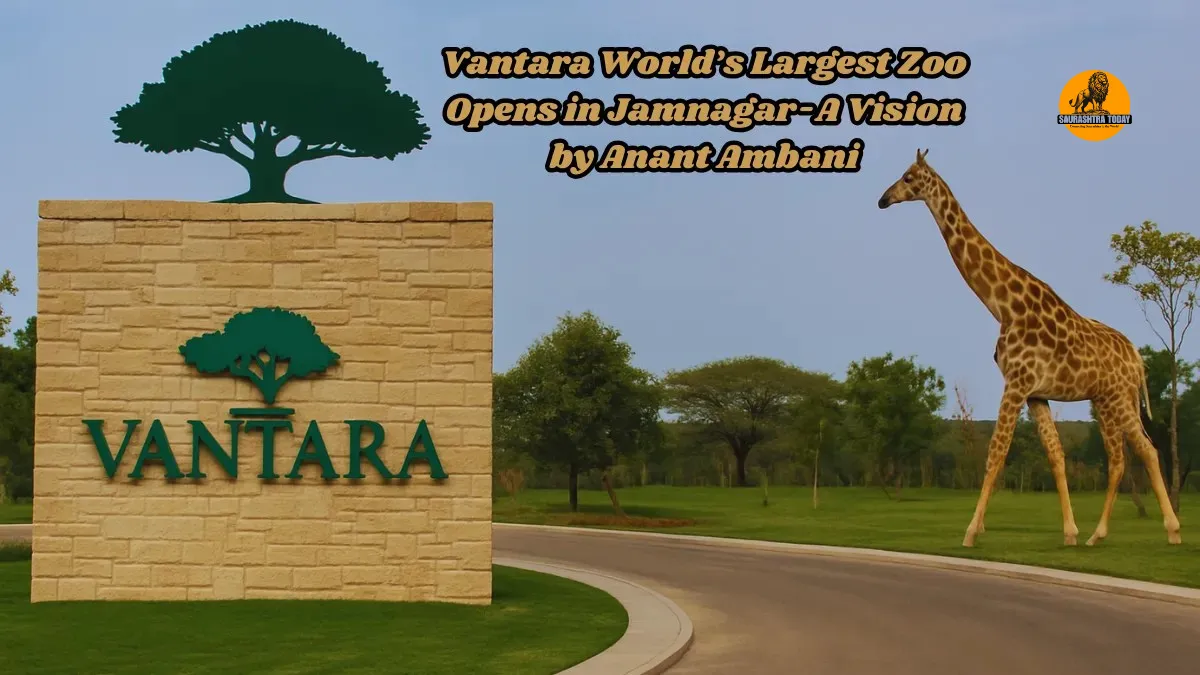
A new chapter in wildlife conservation has begun in India with the inauguration of Vantara zoo, a first-of-its-kind private wildlife rescue and rehabilitation centre built on a massive 3,500-acre campus inside the Jamnagar Refinery Township in Gujarat.
Developed as a non-commercial, philanthropic project by the Reliance Foundation, Vantara (which translates to “Star of the Forest”) represents an ambitious and humane vision led by Anant Ambani, whose passion for animal welfare has taken shape in what many experts are calling one of the world’s most advanced wildlife rehabilitation facilities.
A Vision Rooted in Compassion and Conservation
The story of Vantara began with a simple yet profound goal — to provide a safe and permanent sanctuary for injured, abandoned, and rescued animals from across India and abroad. Unlike traditional zoos that serve public recreation, Vantara zoo is built on the foundation of rescue, recovery, and reintegration.
Anant Ambani, spearheading this initiative under Reliance Industries, described Vantara as a space “where every living being — no matter how small or large — finds care, respect, and a chance to heal.”
Backed by Reliance Foundation’s sustainability and wildlife welfare programs, Vantara has emerged as a beacon of responsible animal care, blending compassion with cutting-edge technology.
Inside the Heart of Vantara: Location and Scale
Nestled in the lush greenery of Motikhavdi village in Jamnagar district, Gujarat, Vantara zoo spans an extraordinary 3,500 acres of land. Within this expanse lies the Greens Zoological Rescue and Rehabilitation Centre (GZRRC) — a sprawling 650-acre area dedicated to the specialized care of wildlife.
The facility’s layout has been carefully designed to replicate natural habitats, ensuring that rescued species experience minimal stress and maximum comfort. From open grasslands for herbivores to shaded zones for big cats and wet enclosures for reptiles, every section follows international standards of animal care and safety.
Greens Zoological Rescue and Rehabilitation Centre (GZRRC)
At the core of Vantara zoo is the GZRRC, a meticulously planned sanctuary divided into eco-zones for various animal groups — including big cats, reptiles, birds, and herbivores. Each zone features species-specific enclosures built to international welfare standards, monitored through 24×7 CCTV systems, and staffed by experienced veterinarians and animal behaviorists.
What sets GZRRC apart is its scientific approach to rehabilitation. The centre prioritizes healing and recovery, not display. Every animal brought in is examined, treated, and either permanently housed (if unable to survive in the wild) or prepared for eventual release under professional supervision.
The Specialized Elephant Care Centre
Among the standout facilities within Vantara zoo is its Elephant Rescue and Rehabilitation Centre. Spread across several acres, it is equipped with:
- Hydrotherapy pools for joint and muscle recovery
- Advanced imaging and diagnostic systems for medical care
- Spacious recovery zones where elephants can rest and heal in peace
Here, elephants rescued from circuses, illegal captivity, or conflict zones are provided lifelong care. Specialized diets, enrichment programs, and gentle handling methods ensure they regain their health and dignity.
State-of-the-Art Veterinary and In-House Infrastructure
Vantara zoo has built a world-class animal healthcare network within its campus. The on-site veterinary hospital includes modern surgical theatres, quarantine areas, diagnostic labs, and an emergency trauma unit.
Supporting these facilities is a robust in-house transport system designed to move animals safely across the vast property without causing stress. Each enclosure is equipped with natural shelters, temperature regulation systems, and round-the-clock monitoring.
To prevent disease transmission and ensure species-specific welfare, strict biosecurity protocols are followed, from quarantine checks to controlled feeding programs.
Biodiversity and Species Diversity
Today, Vantara zoo shelters over 150,000 animals across 2,000 species — one of the most diverse collections in Asia. The residents include:
- Indian and African elephants
- Leopards and lions
- Rhinoceroses and crocodiles
- Exotic birds such as macaws, hornbills, and flamingos
- Various reptiles, amphibians, and herbivores
Each species is housed in enclosures mimicking their native ecosystem — deserts, wetlands, savannas, or tropical forests. This ensures not only comfort but also mental stimulation through natural surroundings.
Not a Public Zoo: Focused on Rescue, Not Recreation
Despite its vastness and world-class infrastructure, Vantara zoo is not open to the public. The centre’s mission is clear — it is not a tourist attraction, but a refuge for the voiceless.
Unlike conventional zoos or safari parks, Vantara does not conduct animal shows or public exhibitions. However, the management has indicated that limited educational tours may be introduced in the future, specifically to raise awareness about conservation and animal welfare among students and researchers.
This non-commercial approach distinguishes Vantara from most global facilities, reinforcing its core identity as a rescue and rehabilitation institution.
A Global Benchmark for Corporate Animal Welfare
With its sheer scale, advanced veterinary systems, and deep commitment to ethical care, Vantara zoo is being hailed as a landmark model for corporate social responsibility (CSR) in wildlife protection.
In 2025, the project received the “Prani Mitra Award” from the Animal Welfare Board of India (AWBI), recognizing its pioneering contribution to animal care and biodiversity conservation.
Experts believe that Vantara could serve as a template for future private-sector involvement in wildlife rescue and habitat restoration. The Reliance Foundation’s role in funding, infrastructure, and ongoing care demonstrates how business conglomerates can contribute meaningfully to environmental sustainability.
Innovation Meets Empathy
Technology plays a crucial role at Vantara zoo. The facility employs AI-assisted animal health monitoring, GPS-based tracking for large mammals, and digital medical records for every resident animal.
Energy needs are met through renewable sources, including solar grids installed across the premises. Water recycling systems, organic waste management, and natural cooling techniques reflect the project’s emphasis on environmental responsibility.
In short, Vantara combines science and compassion to redefine how humans can coexist with wildlife.
Educational and Research Opportunities
While not open for mass tourism, Vantara zoo is envisioned as a hub for education and research. Collaborations with universities, veterinary colleges, and conservation NGOs are planned to promote research on wildlife behavior, rehabilitation, and genetics.
Workshops and training programs for veterinarians, wildlife officers, and zookeepers will be organized to share best practices in animal welfare and conservation management.
By fostering knowledge exchange, Vantara aims to build a new generation of conservationists equipped with modern tools and a humane approach.
Also read: Vantara: A Sanctuary Offering Hope for Wildlife and Humanity
Community and Environmental Impact
Beyond its animal care mission, Vantara zoo also contributes to local employment, afforestation, and ecosystem restoration around Jamnagar. Thousands of trees have been planted across the 3,500-acre area, creating a natural buffer and carbon sink.
Local communities benefit from jobs in maintenance, veterinary support, landscaping, and logistics — making the initiative both socially inclusive and environmentally sustainable.
Also read: CITES Urges India to Pause Wildlife Imports Amid Concerns Over Illegal Trade Linked to Cites Vantara
The Broader Message: A Star of the Forest
The name “Vantara”, meaning Star of the Forest, perfectly captures the project’s essence — a shining example of hope and harmony between humans and nature.
Anant Ambani’s vision for Vantara zoo goes beyond providing shelter to rescued animals; it aspires to redefine compassion as the foundation of modern development.
In a world increasingly aware of climate change and biodiversity loss, projects like Vantara offer a blueprint for responsible coexistence. It reminds us that progress and empathy can — and must — go hand in hand.
Also read: Maharashtra Seeks Central Nod to Relocate Leopards to Ambani’s Vantara Centre in Jamnagar
Conclusion
Vantara zoo in Jamnagar, Gujarat, stands as a testament to what visionary leadership and empathy can achieve together. From cutting-edge veterinary care to sustainable design and a deep moral commitment to animal welfare, Vantara is not just India’s largest private rescue centre — it’s a global symbol of hope for wildlife.
As the world takes note, Vantara zoo could soon inspire similar models across continents — where business, science, and compassion come together to protect the planet’s most vulnerable creatures.