
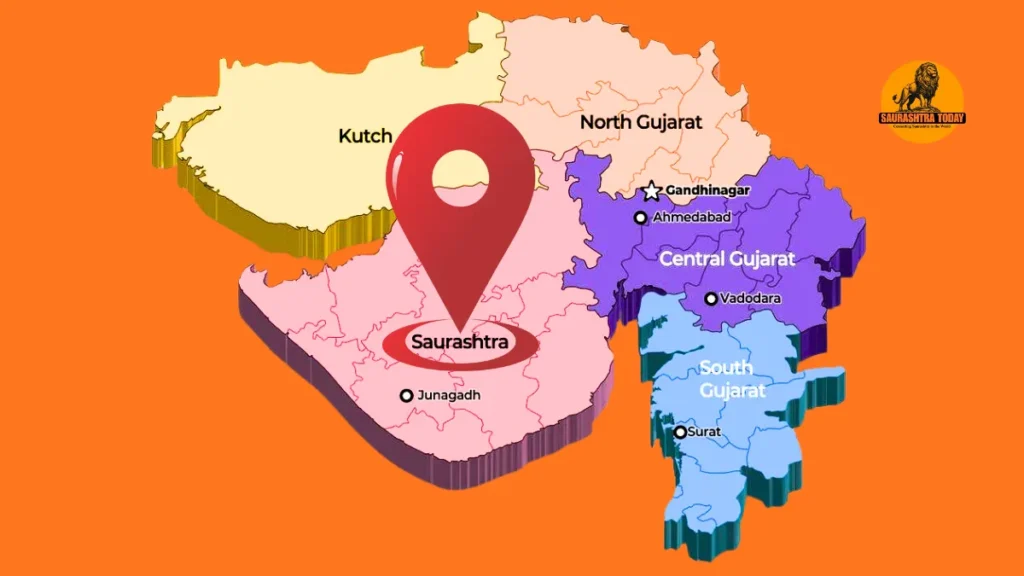
Saurashtra location has always held a special significance in India’s history, culture, and geography. Situated along the western coast of Gujarat, this iconic peninsula is not just a region-it is a vibrant blend of heritage, spirituality, wildlife, traditions, and coastal beauty. Whether you are a traveler, researcher, student, or someone looking to understand the region’s importance, this guide explains everything you need to know.
Where Exactly Is Saurashtra Located?
Saurashtra, also known as Kathiawar Peninsula, occupies the southwestern part of Gujarat. It is surrounded by the Arabian Sea on three sides, giving it a unique geographical shape.
Key Details About Saurashtra Location
- State: Gujarat (Western India)
- Area: Approximately 61,000 sq km
- Geographical Identity: Peninsula (landmass surrounded by water on three sides)
- Boundaries:
- North: Gulf of Kutch
- South: Arabian Sea
- East: Gulf of Khambhat
- Major Cities: Rajkot, Jamnagar, Junagadh, Bhavnagar, Porbandar, Amreli
- Dominant Language: Gujarati
- Famous For: History, temples, wildlife, Gir Lions, coastal culture, handicrafts
Understanding the Importance of Saurashtra Location in Indian Geography
Saurashtra’s location makes it one of India’s most strategically significant regions. Its peninsular geography has shaped its ecology, trade patterns, agriculture, and cultural exchanges.
Why Saurashtra’s Geography Is Unique
- It is one of India’s few major peninsulas, apart from the Indian Peninsula itself.
- It has a rich mix of hills, plateaus, plains, and 1,000+ km of coastline.
- The region’s proximity to the Arabian Sea influenced ancient maritime trade.
- Unique soil and climate patterns support crops like groundnut, cotton, onion, and spices.
Saurashtra’s location historically made it a hub for seafarers, traders, and cultural travelers between Africa, the Middle East, and western India.
Saurashtra Location and Its Historical Significance
Because of its coastal position, Saurashtra has been a center of civilization since ancient times.
Key Historical Highlights
- Indus Valley Connections: Archaeological evidence shows links with early Harappan sites.
- Mauryan and Gupta Empires: Due to its location, major dynasties controlled Saurashtra to access the Arabian Sea.
- Princely States: Before independence, Saurashtra was made up of around 200 princely states.
- Birthplace of Mahatma Gandhi: Porbandar, on the coast of Saurashtra, holds global historical significance.
The region’s geography constantly shaped its economy, politics, and culture.
Saurashtra Location and Biodiversity
Saurashtra is home to some of India’s most iconic wildlife habitats.
Major Natural Highlights
- Gir National Park: The only wild home of the Asiatic Lion.
- Marine National Park, Jamnagar: India’s first marine sanctuary.
- Unique Coastal Ecosystems: Mangroves, coral reefs, mudflats, and marine species.
- Hills & Forests: Gir Hills, Barda Hills, Girnar, and the lush ranges surrounding Junagadh.
The region’s location allows both marine and terrestrial biodiversity to coexist.
Tourism Flourishes Because of Saurashtra Location
Saurashtra’s accessibility and geographical charm make it a major tourism destination.
Top Places to Visit in Saurashtra
- Somnath Temple: One of the 12 Jyotirlingas located on the coast.
- Dwarka: One of India’s Char Dham pilgrimage sites.
- Gir National Park: The famed lion sanctuary.
- Girnar Hills: A sacred and natural attraction.
- Porbandar: Birthplace of Mahatma Gandhi.
- Diu (Near Saurashtra coastline): A tranquil beach destination.
Travelers love the region because its peninsula geography offers both spiritual and coastal experiences.
How Saurashtra Location Impacts Its Climate and Lifestyle
Because the region is surrounded by sea, Saurashtra experiences moderate weather, saline winds, and unique seasonal patterns.
Climate Characteristics
- Hot summers
- Pleasant winters
- Strong monsoon influence from the Arabian Sea
- High humidity in coastal areas
The lifestyle, food habits, and agricultural practices of local people deeply reflect coastal culture.
Also read: Saurashtra Tourism: Exploring the Cultural and Historical Gem of Gujarat
Economy Shaped by Saurashtra Location
The region’s economy benefits immensely from its geography.
Major Economic Drivers
- Agriculture: Groundnut, cotton, onion, castor, and oilseeds
- Ports & Trade: Veraval, Porbandar, Okha, and Pipavav
- Fisheries: One of India’s largest fishing zones
- Industries: Brass, chemicals, textiles, and diamond polishing
- Tourism: Beaches, temples, wildlife, history
Being located between two gulfs, Saurashtra is a major maritime and industrial hub of western India.
Also read: Pradyuman Zoological Park Rajkot: A Record-Breaking Visitor Rush During Diwali Holidays
Saurashtra Location in Modern Infrastructure and Connectivity
The region is well-connected across Gujarat and India.
Connectivity Overview
- Airports: Rajkot, Jamnagar, Porbandar, Diu (nearby)
- Road Network: Excellent national and state highways
- Rail Connectivity: Strong network connecting all major cities
- Ports: Key link for global maritime trade
Its strategic position has encouraged ports, highways, and renewable energy investments.
Also read: Bhavnagar to Surat RoRo Ferry Service: Complete Guide on Schedule, Fares, and Booking
Conclusion: Why Understanding Saurashtra Location Matters
Saurashtra location is not just a coordinate on the map—it represents a living blend of geography, culture, history, economy, and natural beauty. From the majestic lions of Gir to the holy shores of Somnath and Dwarka, the region’s identity is deeply rooted in its peninsular formation.
Whether you are planning a trip, conducting research, studying geography, or exploring Gujarat’s cultural heritage, understanding Saurashtra’s location gives you a complete picture of why this region is considered the heart of western India.