
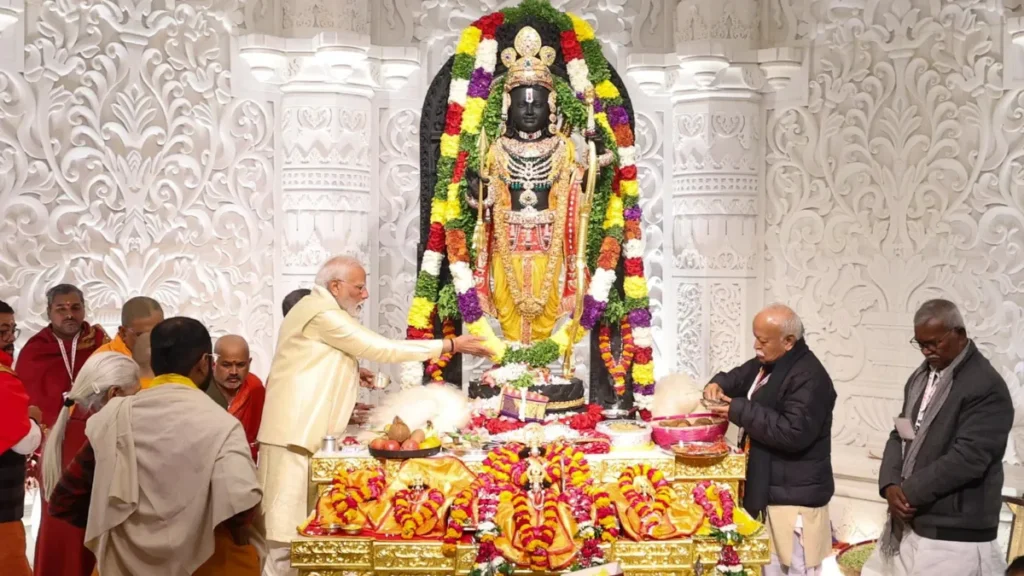
PM Modi Ayodhya Visit: Ayodhya is preparing for one of the most significant moments in India’s cultural and spiritual history. On November 25, Prime Minister Narendra Modi will visit the Shri Ram Janmabhoomi Mandir in Uttar Pradesh for a landmark event that is expected to resonate across the country and among Hindu communities worldwide. The PM Modi Ayodhya Visit has captured nationwide attention, not only for its spiritual significance but also for its cultural symbolism, historical relevance, and architectural grandeur.
Officials have confirmed that the Prime Minister will be participating in a sequence of sacred rituals and ceremonial celebrations, marking a new era for Ayodhya — a city that has stood at the heart of devotion to Bhagwan Shri Ram for centuries. The temple, constructed after decades of anticipation and emotional investment by millions of devotees, now stands as a monumental tribute to India’s spiritual heritage.
A Historic Day Begins at 10 AM with Temple Darshan
The PM Modi Ayodhya Visit will officially commence around 10 AM, when the Prime Minister reaches the temple premises to begin a detailed tour of the holy complex. His first stop will be the Saptmandir, an assembly of seven temples constructed in honor of revered sages and divine figures central to ancient Indian civilization.
The Saptmandir is dedicated to:
- Maharshi Vashishtha
- Maharshi Vishwamitra
- Maharshi Agastya
- Maharshi Valmiki
- Devi Ahilya
- Nishadraj Guha
- Mata Shabari
These figures hold major significance in the Ramayana, and their spiritual presence within the temple complex symbolizes the universal values of devotion, wisdom, virtue, and humility.
Following this, the Prime Minister will proceed to the Sheshavtar Mandir and Mata Annapurna Mandir, where traditional rituals have been scheduled in advance. The meticulous planning reflects not only the sanctity of the occasion but also the importance placed on honoring every divine symbol associated with Bhagwan Shri Ram.
Darshan and Pooja at Ram Darbar Garbh Grah and Ram Lalla Garbha Grah
A key highlight of the PM Modi Ayodhya Visit will be the sacred Darshan and Pooja at the Ram Darbar Garbh Grah, followed by a solemn visit to the Ram Lalla Garbha Grah. These sanctums represent the spiritual nucleus of the temple complex. The Garbha Grah is considered the most divine space in Sanatan tradition, believed to channel the deepest energies of devotion.
The Prime Minister’s worship ritual will be performed in accordance with ancient Vedic practices. Devotees across India and abroad are expected to join the celebrations through live broadcasts and community events, reflecting the spiritual connect that Shri Ram continues to hold globally.
Saffron Flag Hoisting at 12 Noon — A Moment of Historic Significance
The most anticipated event of the PM Modi Ayodhya Visit is scheduled to take place around 12 noon, when the Prime Minister will ceremonially hoist a saffron flag atop the Shikhar of the Shri Ram Janmabhoomi Mandir. This moment symbolizes the formal completion of the temple’s construction and the beginning of a new cultural chapter.
The event carries multilayered symbolism:
- The saffron flag represents sacrifice, valor, purity, and the ideals of Ram Rajya — righteousness, justice, and harmony.
- The hoisting aligns with the Abhijit Muhurat of Shri Ram and Maa Sita’s Vivah Panchami, an auspicious time marking divine union.
- The occasion coincides with the martyrdom day of Guru Tegh Bahadur Ji, the ninth Sikh Guru, who meditated in Ayodhya for 48 hours in the 17th century.
This meaningful overlap reflects India’s cultural inclusivity and shared spiritual legacy.
The Flag Design: A Message of Devotion and Unity
The saffron flag prepared for the ceremony is triangular in shape, ten feet tall, and twenty feet long. Every element of the flag has been thoughtfully curated to convey a message of national and spiritual unity:
| Symbol on the Flag | Meaning |
|---|---|
| Radiant Sun | Represents brilliance, light, and the righteous power of Bhagwan Shri Ram |
| Kovidara Tree | Symbol of compassion and natural harmony |
| Sacred ‘Om’ | Eternal representation of Sanatan Dharma and cosmic vibration |
The flag embodies virtues associated with Ram Rajya — dignity, justice, harmony, courage, and compassion.
Architectural Grandeur of the Ram Mandir
The Shri Ram Janmabhoomi Mandir has been designed to reflect India’s architectural diversity and rich spiritual legacy. The Shikhar, where the flag will be hoisted, has been constructed in the traditional North Indian Nagara architectural style — known for pyramid-shaped towers and intricate stone carvings.
Surrounding the temple is an 800-metre Parkota, a circumambulatory enclosure modeled in South Indian architectural style. The blend of architectural traditions from north and south symbolizes cultural unity across India — an aspect that resonates with the theme of the PM Modi Ayodhya Visit.
Intricate Stone and Bronze Artwork Reflects India’s Cultural Depth
One of the most remarkable elements of the temple complex is its sculptural detailing:
- 87 intricately carved stone episodes depicting the life of Bhagwan Shri Ram — inspired by the Valmiki Ramayana — appear on outer temple walls.
- 79 bronze-cast cultural scenes from Indian civilisation embellish the enclosure walls, offering an educational experience for visitors.
These artistic elements contribute to both architectural beauty and cultural storytelling, making the shrine not only a place of worship but also a living museum of Indian heritage.
Ayodhya Prepares for a Celebration of National Scale
As the PM Modi Ayodhya Visit approaches, the holy city has been adorned with vibrant decorations, floral arches, security arrangements, and lighting installations. Cultural performances, devotional music recitals, and Vedic chanting are scheduled across temple courtyards and public spaces.
Millions of devotees across the world are expected to participate through televised broadcasts, temple gatherings, and community events. Schools, organisations, and religious groups have announced special prayer sessions to mark the day.
Why the PM Modi Ayodhya Visit Matters Nationally and Globally
The event carries influence far beyond Ayodhya:
- It marks the culmination of a centuries-long emotional journey for devotees of Bhagwan Shri Ram.
- It symbolises the revival and celebration of India’s civilizational identity.
- It is expected to boost religious tourism, regional development, and international cultural representation of India.
Scholars and cultural experts believe that this moment will be remembered as a defining chapter in India’s history — comparable to landmark spiritual milestones witnessed in ancient eras.
Security and Crowd Management Prepared at Maximum Scale
Given the global attention on the event, Ayodhya has been placed under a robust security framework featuring layered surveillance, personnel deployment, medical units, and emergency response stations. Crowd management plans have been coordinated to ensure smooth movement for pilgrims and public officials.
A Moment of Devotion for Millions
For countless devotees, the PM Modi Ayodhya Visit is not merely a political or ceremonial event — it is an emotional culmination of faith, hope, and endurance. The sight of a saffron flag flying high atop the Shikhar of the Shri Ram Janmabhoomi Mandir is expected to become a defining image of spiritual unity for generations to come.
Conclusion
The sacred ceremony on November 25 will become a historic day not only for Ayodhya but for the entire nation and Hindu communities worldwide. The PM Modi Ayodhya Visit represents faith, culture, architectural excellence, and a collective celebration of India’s civilizational identity. As the saffron flag rises over the temple, the world will witness a moment that blends history, devotion, and national pride — a moment that will echo in India’s spiritual timeline for centuries ahead.