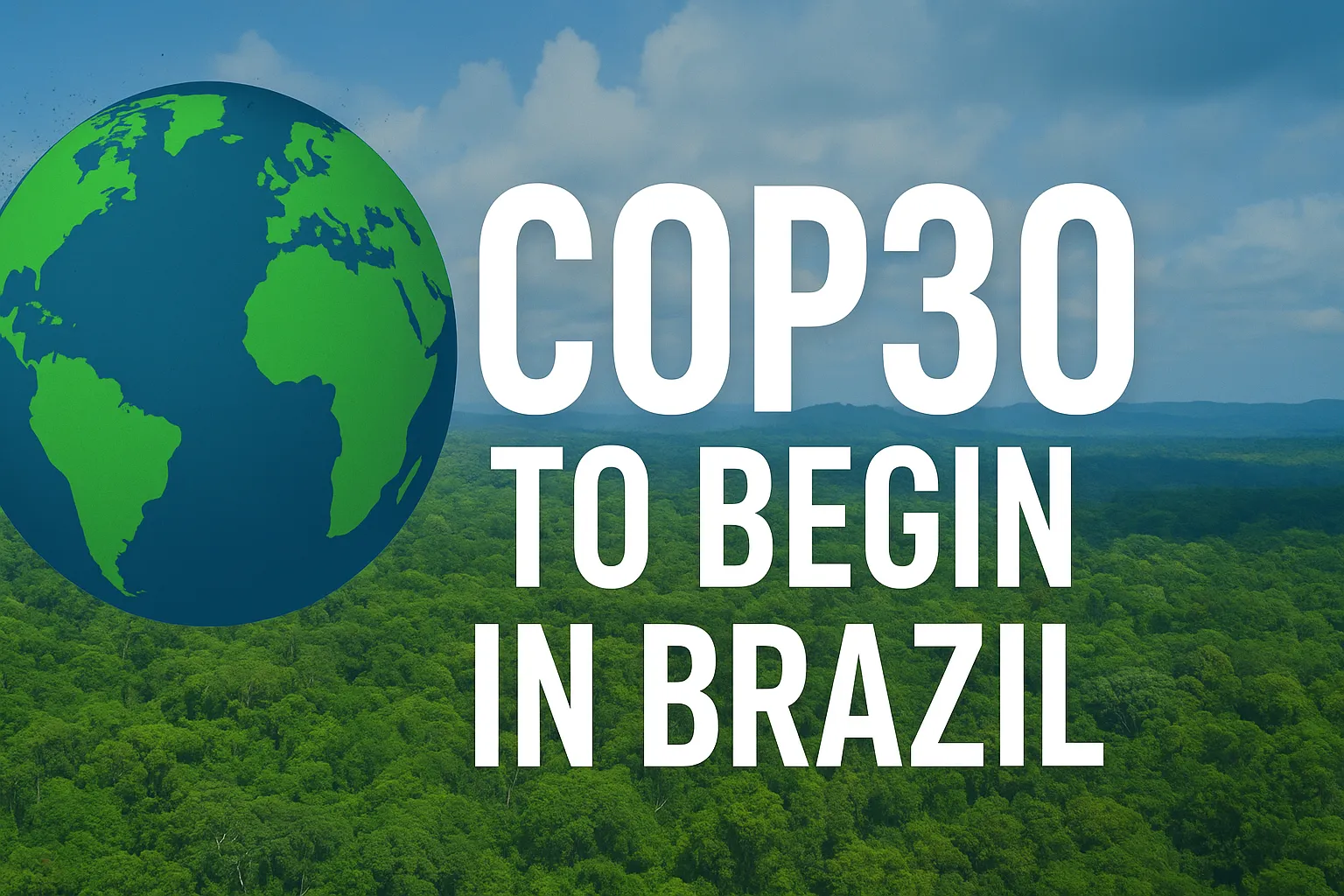
COP30 to Begin in Brazil: The world is once again preparing for one of the most significant global climate conferences of the decade. The 30th United Nations Climate Change Conference, commonly known as COP30, is set to begin in Brazil on November 10 and continue until November 21.
This year’s meeting — themed “Unity for a Sustainable Future” — is more than just another annual summit. As global temperatures break records, natural disasters intensify, and communities face unprecedented losses, COP30 to begin in Brazil has taken on historic importance in the worldwide fight against climate change.
What is COP30?
The acronym COP stands for the Conference of the Parties — the supreme decision-making body of the United Nations Framework Convention on Climate Change (UNFCCC). Established in 1992, this international treaty brings together 197 countries, all committed to tackling the growing threat of climate change through cooperation, negotiation, and accountability.
Each year, the COP summit serves as a platform where world leaders, scientists, business executives, and climate activists gather to assess global progress and update commitments under agreements like the Paris Accord (2015).
Now in its 30th edition, COP30 marks a milestone moment — three decades of collective efforts, evolving climate pledges, and, equally, missed targets.
But what makes COP30 in Brazil different from its predecessors is its timing and setting: it’s being hosted in Belem, the gateway to the Amazon rainforest — the planet’s largest carbon sink and a vital ecosystem for global climate stability.
Why Brazil’s Amazonian Setting Matters
Hosting COP30 in Belem, Pará, is both symbolic and strategic. Brazil’s Amazon rainforest, often called “the lungs of the Earth,” has been under increasing threat due to deforestation, illegal logging, and wildfires.
By bringing the global climate community directly to the heart of the Amazon, Brazil aims to spotlight the urgent need for forest conservation and restoration — not just for the country, but for the world.
President Luiz Inácio Lula da Silva, who has made climate action a central theme of his administration, stated that the choice of Belem sends a strong message: “Protecting the Amazon is not just a Brazilian duty, it’s humanity’s responsibility.”
The Amazon is home to over 390 billion trees and stores approximately 123 billion tons of carbon. Losing it would mean losing one of Earth’s most critical natural defenses against global warming.
What’s on the Agenda for COP30?
With COP30 to begin in Brazil, delegates are expected to address multiple high-stakes issues. The summit’s agenda includes:
- Strengthening Climate Adaptation Plans – Helping vulnerable nations prepare for worsening climate impacts such as floods, heatwaves, and droughts.
- Securing Finance for Developing Countries – Ensuring that climate funds promised by developed nations actually reach the countries most affected by climate change.
- Curbing Carbon Emissions – Reassessing national commitments (known as NDCs) to limit global warming to below 1.5°C.
- Protecting Global Forests – Launching the Global Forest Fund, a Brazilian initiative aimed at mobilizing USD 125 billion for the conservation of endangered forests.
- Energy Transition & Green Innovation – Encouraging global investment in renewable energy, sustainable agriculture, and eco-friendly infrastructure.
The Global Forest Fund is expected to be one of the most ambitious financial instruments ever proposed at a COP summit. It seeks to unite governments, private investors, and international organizations in a shared mission to preserve forest ecosystems.
The Climate Finance Debate: Still Unresolved
At last year’s COP29 in Baku, negotiators made progress on climate finance. Wealthier countries agreed to mobilize around USD 300 billion annually by 2035 for developing nations.
However, key questions remain unanswered — particularly what qualifies as climate finance, who contributes, and how much each nation should pay.
Developing countries continue to argue that industrialized nations — responsible for the bulk of historical emissions — must take greater responsibility in funding adaptation and mitigation efforts.
With COP30 to begin in Brazil, expectations are high that the conference will deliver more than promises. Nations will be pushed to demonstrate real mechanisms for disbursement, transparency, and accountability in climate finance.
A Controversial Start: US Withdrawal and Cost Concerns
The road to COP30 has not been without controversy. The United States, under the leadership of former President Donald Trump, has once again withdrawn from active participation in the summit.
The decision has sparked widespread criticism from global leaders and environmental groups, especially since the US remains the world’s third-largest carbon emitter.
Meanwhile, reports of skyrocketing accommodation prices in Belem have drawn complaints from several smaller delegations, particularly from African and Pacific Island nations. Some have warned that the rising costs could limit their ability to attend and participate effectively.
Still, despite logistical hurdles, the momentum for COP30 remains strong. Over 30,000 delegates from nearly 200 countries are expected to arrive in Belem — signaling the global urgency to take unified action.
India’s Perspective: Equity and Shared Responsibility
For India, the COP summits are more than diplomatic gatherings; they directly impact its development pathway, energy policy, and climate resilience strategy.
Indian leaders have consistently emphasized “climate justice” — the principle that nations contributing least to the problem should not bear the highest costs of solving it.
India’s Minister of State for Environment, Forest and Climate Change, Kirti Vardhan Singh, reaffirmed this stance, saying:
“We in the Global South bear huge financial burdens and losses caused by climate impacts, despite contributing the least to the problem.”
India has called for:
- A fair global financial mechanism,
- Technology transfers for renewable innovation, and
- Recognition of developing nations’ needs in global policy frameworks.
As India accelerates its renewable energy targets — including 500 GW of non-fossil energy capacity by 2030 — outcomes from COP30 could shape future access to funding and technology partnerships crucial for sustainable growth.
Lessons from COP29: Progress, but Not Enough
Last year’s COP29 in Baku offered glimpses of hope. Delegates finalized new carbon market rules under Article 6 of the Paris Agreement, aiming to regulate how countries trade carbon credits.
Yet, many observers described the outcomes as “incremental” rather than transformational.
The challenge now is implementation. COP30 will need to convert pledges into concrete actions — ensuring that emission cuts are measurable, verifiable, and equitable.
Environmental experts warn that without urgent steps, the world could surpass the 1.5°C threshold within the next decade, leading to irreversible ecological damage.
The Global South and the Future of Climate Cooperation
Developing nations, often grouped as the Global South, have become increasingly vocal at COP meetings. They argue that climate discussions must go beyond carbon targets — to address loss and damage, livelihood security, and adaptation funding.
Brazil’s leadership in hosting COP30 may help amplify these voices. With Latin America, Africa, and Asia facing mounting environmental crises, this year’s summit is expected to emphasize “inclusive sustainability.”
Brazil’s Environment Minister, Marina Silva, recently said:
“We cannot talk about saving the planet if we leave half of humanity behind. The fight against climate change must also be a fight against inequality.”
The Economic Stakes: Green Growth and Global Trade
The climate crisis is no longer just an environmental issue; it’s a global economic challenge.
According to the World Bank, unchecked climate change could cost developing countries up to 6% of their GDP annually by 2050. Conversely, the transition to a low-carbon economy could unlock trillions of dollars in green investment opportunities.
During COP30 in Brazil, discussions will focus on green finance models, carbon pricing, and corporate accountability. International businesses and financial institutions are expected to pledge new investments in renewable energy, carbon capture, and sustainable supply chains.
Why COP30 Is Critical Now
Scientists have issued repeated warnings: 2025 could mark one of the hottest years in recorded history. Catastrophic floods in Asia, wildfires in North America, and droughts in Africa underline the worsening crisis.
With emissions still rising, COP30 to begin in Brazil represents a rare chance for global leaders to reset the trajectory of climate action before it’s too late.
The stakes are enormous:
- Over 3 billion people now live in areas vulnerable to extreme climate events.
- Sea levels are projected to rise by one meter by 2100.
- Global biodiversity loss continues at unprecedented rates.
In short, what happens in Belem may shape the planet’s future for generations to come.
Also read: Melissa Cyclone Devastates the Caribbean: Over 75 Dead, Millions Displaced as UN Steps In
Looking Ahead: Can COP30 Deliver?
While expectations are high, skepticism remains. Past COPs have often ended in compromise, with lofty declarations but limited execution.
However, the convergence of crises — economic, environmental, and social — has made inaction politically and morally untenable.
If COP30 in Brazil can bridge divides, secure genuine financial commitments, and catalyze technology transfer, it could mark a new era of global climate cooperation.
Environmental analysts believe that the Belem Declaration, the anticipated outcome document from COP30, could serve as a new blueprint for collective global resilience.
Also read: Nepal Avalanche Kills Seven Climbers on Yalung Ri Peak; Search Operation Continues Amid Bad Weather
Conclusion: Hope in the Heart of the Amazon
As COP30 begins in Brazil, the world’s attention turns once again to a small Amazonian city hosting a monumental conversation.
It’s a reminder that while climate change is a global challenge, its solutions depend on local action, shared responsibility, and sustained global unity.
From the rainforests of the Amazon to the deserts of Africa, the glaciers of the Himalayas, and the coastlines of the Pacific — the message from COP30 is clear:
Act now, together, or face a future beyond repair.