Maritime sector in india: India has stepped into a new era of maritime progress, positioning itself as one of the world’s most promising destinations for investment in the blue economy. Prime Minister Narendra Modi has declared that “India is the perfect harbour for investing in the maritime sector,” calling global investors to participate in a rapidly modernizing and expanding ecosystem that bridges ancient maritime heritage with future-ready infrastructure.
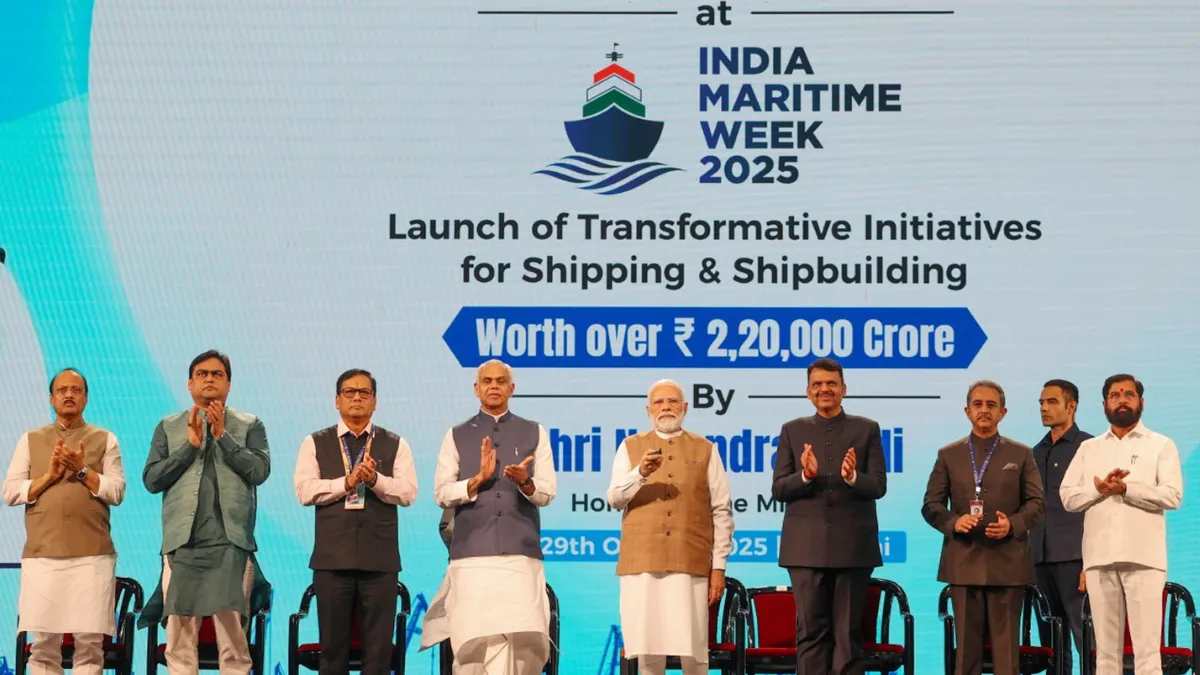
In a detailed message shared on LinkedIn, PM Modi outlined how India’s strategic location, world-class ports, digital systems, and strong policy reforms have collectively turned the nation into a global maritime powerhouse. His comments came shortly after he addressed the Maritime Leaders Conclave in Mumbai during the India Maritime Week 2025, where he engaged with top global CEOs and industry leaders shaping the future of international trade, shipping, and logistics.
A Vision Rooted in History and Geopolitical Strength
Prime Minister Modi began his message by reconnecting India with its historic maritime identity. For centuries, ancient Indian empires—including the Cholas in the south and the Marathas on the western coast—used their naval capabilities to strengthen trade connections across Asia, Africa, and the Middle East. Their dominance proved that oceans were more than boundaries—they were gateways of prosperity.
But despite this remarkable history, the Prime Minister acknowledged that a decade ago, India’s maritime sector had lost momentum. Outdated regulations, slow processes, and a lack of modern capacity restricted growth. The oceans were no longer being leveraged fully as engines of economic transformation.
His government, he said, undertook major reforms with the goal of reviving India’s maritime spirit and reconnecting the nation with its historical potential. Over ten years, India has rebuilt the sector from the ground up, making ports more efficient, expanding capacity, boosting seafaring workforce numbers, and encouraging innovation through technology.
Remarkable Transformation in India’s Maritime Landscape
One of the key highlights of PM Modi’s message was the extraordinary growth that India has achieved in port capacity, cargo handling, and port performance. These improvements show how India invests in the maritime sector with long-term sustainability and modernization in mind.
Major achievements include:
- Port capacity doubled from 1,400 MMTPA to 2,762 MMTPA
- Cargo handling increased from 972 MMT to 1,594 MMT
- FY 2024–25 cargo alone reached 855 MMT
- Vessel turnaround time reduced from 93 hours to 48 hours
- Net surplus of major ports rose ninefold to ₹9,352 crore
- Operating ratio improved from 73% to 43%, indicating major efficiency gains
This rapid improvement reflects India’s shift toward building globally competitive ports capable of handling a surge in trade volumes and larger vessels. Modern port infrastructure, digitalized customs processes, and multimodal connectivity now match international benchmarks.
India Becomes a Global Hub for Maritime Talent
Beyond infrastructure, India has also strengthened its position as a major contributor to the global seafaring workforce. The number of Indian seafarers—essential for international shipping operations—has risen dramatically.
- The workforce expanded from 1.25 lakh to over 3 lakh
- India now accounts for 12% of the global seafaring community
This means every 1 in 8 merchant navy professionals worldwide is Indian—a major advantage for global shipping companies that rely on skilled and efficient crew members.
Expanding Maritime Growth Beyond the Coastline
PM Modi emphasized that India’s maritime progress is not limited to its coastline. The government has pushed aggressively to boost inland water transport, coastal shipping, and Indian-flagged vessel registrations.
Key improvements include:
- Indian-flagged vessels grew from 1,205 to 1,549
- Fleet gross tonnage rose to 13.52 MGT
- Coastal cargo volumes nearly doubled
- Inland waterway cargo surged by 710%, jumping from 18 MMT in 2014 to 146 MMT in 2025
- Operational national waterways increased from 3 to 32
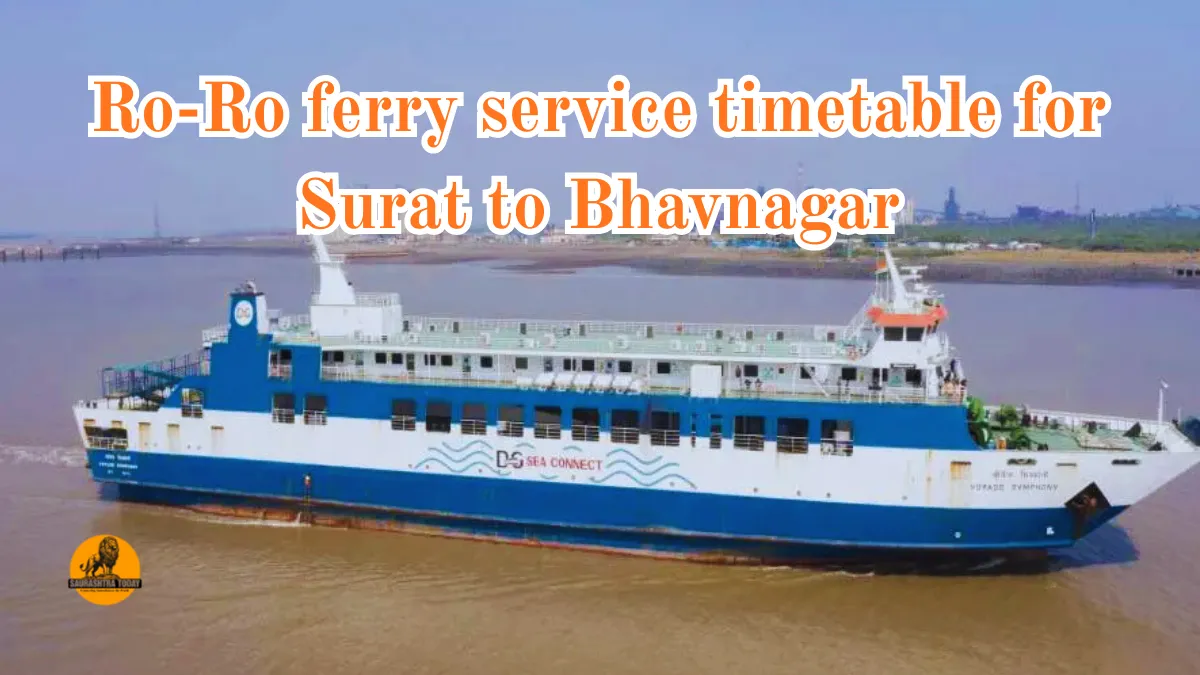
- Ferry and Ro-Pax services carried over 7.5 crore passengers in 2024–25
For a country with vast rivers such as the Ganga, Brahmaputra, and Godavari, inland waterways offer a cheaper, cleaner alternative to road transportation. Their expansion represents a paradigm shift in India’s logistics culture.
Landmark Projects Turning India into a Global Maritime Power
The Prime Minister highlighted multiple mega-projects that symbolize how India invests in the maritime sector to build world-leading infrastructure.
Vizhinjam Port – India’s first deep-water transshipment hub
This port places India on the global map of major container transshipment centers, reducing dependence on foreign hubs such as Colombo, Dubai, and Singapore.
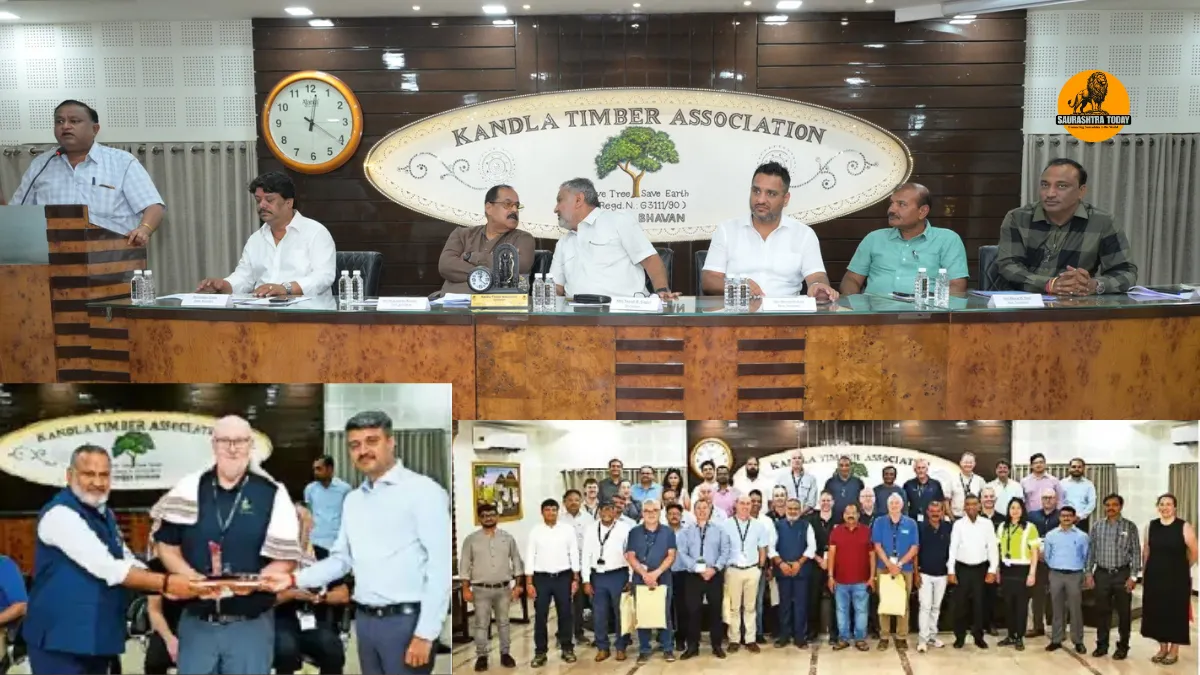
Kandla Port – India’s first green hydrogen facility
By integrating renewable energy and green fuels, India aims to lead the world in sustainable maritime operations.
JNPT – Doubling capacity and attracting record foreign investment
Jawaharlal Nehru Port Trust is now among the world’s most efficient ports, transforming logistics for western India.
Vadhvan Port – A ₹76,000 crore mega infrastructure project
With a water depth of 20 meters, this port will be one of the deepest in the world.
It will connect seamlessly with:
- Delhi–Mumbai Expressway
- Western Dedicated Freight Corridor
This project alone is expected to revolutionize India’s trade efficiency and create thousands of jobs.
A Strong Legislative Foundation for Future Growth
PM Modi mentioned five major legislations—including the Indian Ports Bill 2025 and the Bills of Lading Bill—that align India’s maritime governance with global standards.
These laws aim to:
- Simplify shipping procedures
- Improve transparency
- Reduce logistics bottlenecks
- Facilitate smoother international trade
- Boost investor confidence
This legal modernization ensures that India offers not just infrastructure, but also a smooth and reliable business environment.
A Massive Financial Push for Maritime Expansion
To accelerate growth, the government has approved a ₹70,000 crore umbrella package for the maritime sector. This is in addition to several targeted schemes that aim to support manufacturing, shipbuilding, and innovation.
These include:
- Shipbuilding Assistance Scheme
- Maritime Development Fund
- Shipbuilding Development Scheme
Collectively, these initiatives are expected to attract ₹4.5 lakh crore in investments and support the development of more than 2,500 new vessels. This shift will help India reduce reliance on foreign shipyards while strengthening its maritime independence.
A Future Driven by Technology, Sustainability, and Youth
India’s maritime vision is not just about expanding ports or increasing cargo. PM Modi emphasized sustainability, digitalization, and innovation as the pillars of the next decade of growth.
The country is focusing on:
- Green fuels
- Automated port operations
- AI-driven cargo management
- Coastal community development
- Startups in maritime technologies
- Smart port logistics
- Blue Economy innovation
India’s young population and tech-driven ecosystem provide a strong foundation for building the maritime sector of tomorrow.
Also read: Sensex, Nifty Slip Amid Weak Global Market Cues as Fed Signals Final Rate Cut of 2025
“Come, Invest in India”: PM Modi’s Message to the World
The Prime Minister concluded his message with an open invitation to global investors, urging them to join India’s maritime success story.
He wrote:
“We have strategic global trade routes, world-class ports, and an ambitious vision for Blue Economy growth. Thanks to our youth, our ecosystem is primed for innovation. Come aboard. Come, invest in India.”
His call reflects India’s ambition to become one of the world’s leading maritime nations—creating opportunities not only for domestic investors but for businesses and partners across the globe.
Also read: India Maritime Week 2025: Maharashtra Signs 15 MoUs Worth ₹56,000 Crore to Boost Blue Economy
Conclusion: India’s Maritime Push Will Shape Global Trade, Maritime sector in india
With strong political vision, major policy reforms, world-class ports, and a massive financial push, India invests in the maritime sector with a clarity of purpose—to become a global hub for trade, shipping, logistics, and sustainable maritime innovation.
The transformation achieved in the last decade is extraordinary. The opportunities in the decade ahead are even greater.
And as PM Modi said, the message to the world is simple:
India is the perfect harbour for maritime investment—and the world is invited to anchor its future here.