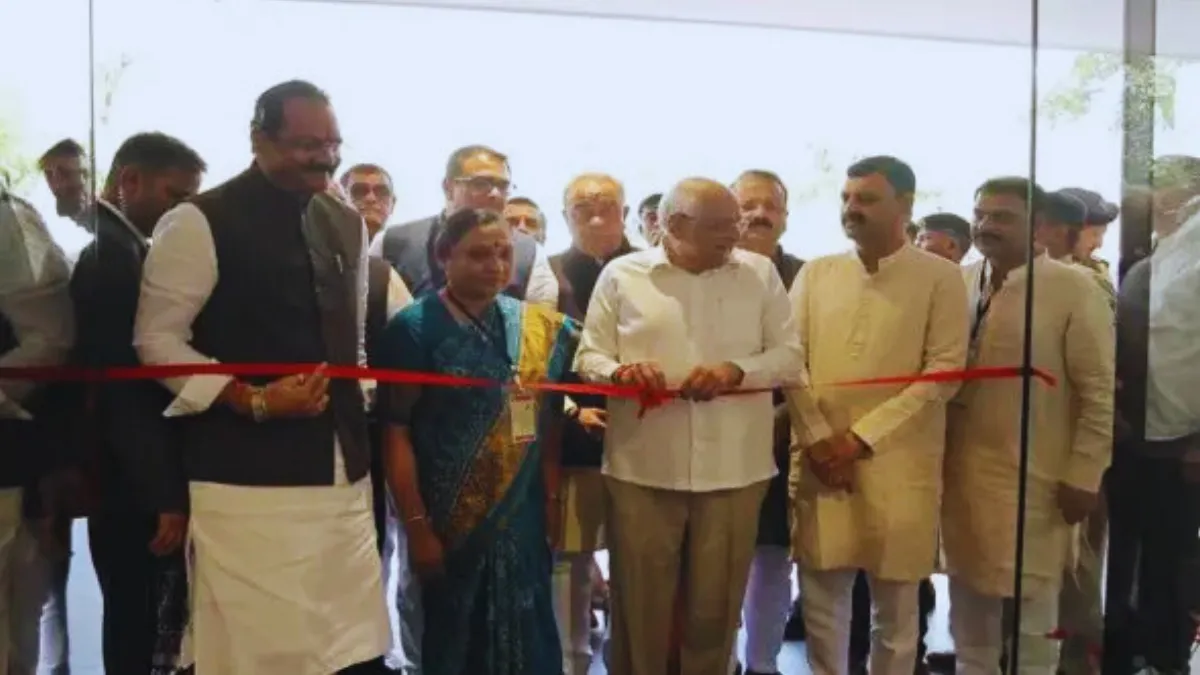
Surat, India — Surat Diamond Burse: In a development that has the potential to transform the global diamond trade map, Botswana is preparing to conduct direct auctions of rough diamonds at the Surat Diamond Burse, shifting the trade operations away from Dubai and bringing them directly to India’s diamond capital. The decisive move follows high-level meetings between Botswana’s leading mining entities and members of the Surat Chamber of Commerce and Industry, who have been aggressively working to restore momentum in international trade, especially after recent U.S. tariffs affecting Indian businesses.
This unprecedented decision marks a historical milestone: for the first time, miners from Botswana — home to some of the world’s most valuable diamond reserves — will auction rough stones directly in Surat rather than routing transactions through markets such as Dubai. For the diamond-polishing industry in Surat, this is more than a business shift — it is a transformative moment that brings the supply chain, marketplace, and buyers under one roof.
Surat Strengthens its Global Position as the Epicentre for Rough Diamond Trade
A delegation from the Surat Chamber of Commerce recently travelled to Botswana with a clear objective — to ensure that rough diamonds mined in the African nation are brought directly to Surat instead of being auctioned abroad. Roughly 70% of Botswana’s diamond reserves are controlled by private mining companies, and until now, most of their auctions were hosted in Dubai.
Today that dynamic is changing.
Sources reveal that multiple private diamond-mining stakeholders in Botswana have agreed in principle to auction rough stones in India at the Surat Diamond Burse. Industry insiders describe the breakthrough as one of the most significant diplomatic and commercial achievements for the Indian diamond ecosystem in decades.
For exporters and manufacturers in Surat — already responsible for polishing nearly 90% of the world’s diamonds — this shift eliminates the need to travel abroad and compete in distant auctions. Instead, auction access will now be local, faster, cheaper, and more transparent. The logistical and financial advantages of this development are expected to reduce operational costs while improving profit margins for thousands of manufacturers, traders, and exporters.
A Major Boost for the Local Industry: Rough Diamonds Available Domestically
For decades, Indian diamantaires have travelled across the globe to secure rough diamonds — particularly to Belgium, Dubai, Hong Kong, and South Africa. Travel costs, bidding challenges, and comparative demand have often placed Indian buyers at a competitive disadvantage.
Direct auctions at the Surat Diamond Burse significantly change that landscape.
With rough diamonds arriving straight from Botswana’s mines to the auction floor in Surat, manufacturers will no longer need to rely on foreign intermediaries. The trade will become:
- Faster
- More affordable
- Less dependent on international auction schedules
- Better aligned with domestic demand cycles
This reshaping of trade flow is expected to create new opportunities for small and mid-size diamond businesses in Surat as well — companies that previously could not compete in overseas auctions due to travel expenses, capital requirements, or limited bidding access.
In short, Botswana’s decision could lead to a more equal and open diamond business ecosystem in India.
Surat’s Initiative Extends Beyond Diamonds — New Doors for Textile, Solar, and Coal Trade
The diplomatic mission of the Surat Chamber of Commerce to Botswana was not limited to the diamond trade alone. Alongside rough diamond negotiations, the delegation explored additional avenues for bilateral trade between India and Botswana, including:
- Solar energy projects
- Coal trade agreements
- Enlargement of textile export opportunities
With trade cooperation taking center stage, business experts believe that the Surat economy — heavily dependent on diamonds and textiles — could soon expand into new trading territories.
One of the most strategically important discussions focused on the textile sector. At present, textile products entering Botswana are primarily imported from China and Bangladesh. The introduction of direct trade channels between India and Botswana could allow Surat’s textile industry to tap into Botswana’s market and potentially re-export products to other African nations.
Should trade agreements successfully develop, Surat could witness an economic ripple effect across multiple industries — not only diamonds.
Tariff Advantage: A New Window of Opportunity for Indian Manufacturing
Botswana currently imposes a tariff of 22% on several categories of imported goods. If future trade deals enable Indian companies to send textile products to Botswana and re-export them to neighboring countries through Botswana, a significant tariff advantage could emerge — making Indian-made textiles more competitive on the global stage.
Industry strategists estimate that if trade channels open fully, the benefits will not be limited to large corporations. Small and medium textile manufacturers in Surat — who often struggle with international market entry — could gain direct access to African markets.
The anticipated trade cluster being discussed has the potential to link:
- Textile manufacturers
- Logistics networks
- African distributors
This could allow Surat to emerge as a major textile supply-center for Africa — mirroring the way it dominates the global diamond trade.
Surat Diamond Burse: From Polishing Hub to Global Marketplace
For decades, Surat has been distinguished as the world’s biggest diamond-cutting and polishing center, processing around 9 out of every 10 diamonds worn worldwide. However, until now, the city has not hosted direct auctions of rough stones, compelling diamantaires to procure raw materials from foreign markets.
With Botswana’s shift toward the Surat Diamond Burse, the power equation of the global diamond market is beginning to realign.
If the auctions become a sustained commercial model, Surat will evolve from:
| Earlier | Now Emerging |
|---|---|
| Polishing and finishing hub | Full-scale global diamond marketplace |
| Imports dependent on foreign auctions | Direct rough diamond supply at source |
| Manufacturer-driven ecosystem | Integrated manufacturing + trading ecosystem |
| Limited influence in pricing | Greater global bargaining power and price stability |
According to analysts, once auctions commence regularly in Surat, India could gradually reduce its dependency on Belgium and Dubai for sourcing rough diamonds. This shift could further stabilize the Indian rupee outflow by reducing overseas procurement expenditures — a long-standing concern for raw-material-driven industries.
Economic Ripple Effects Expected Across India
The benefits of Botswana’s auction move are not limited to Surat alone. The economic impact is expected to reach:
- Mumbai’s diamond financing and export corridors
- Gujarat’s gem-and-jewelry manufacturing zones
- Employment hubs connected to diamond processing
- Global trade networks across the U.S., Europe, and the Middle East
As demand for rough diamonds increases locally, financial institutions, brokers, exporters, and jewelry houses are projected to increase operations in Surat.
Industry estimates suggest that direct auctions may generate:
- Higher employment across polishing units
- Broader opportunities for diamond artisans
- Increased exports of finished diamonds to the U.S. and UK markets
- Greater foreign investment confidence in India’s gemstone ecosystem
Surat’s Bid to Become the World’s Largest Diamond Marketplace
With the auction arrival, Surat is set to compete with hubs such as:
- Dubai
- Antwerp
- Hong Kong
If volumes continue expanding through the Surat Diamond Burse, the city could become the world’s strongest centralized location for both rough and polished diamonds — a position no city has ever held simultaneously.
Industry leaders call it a turning point that will reshape global trade routes over the coming decade.
Conclusion: A New Era for Indian Trade and Global Diamond Commerce
The decision by Botswana’s mining companies to conduct auctions directly in India represents a historical commercial achievement that has the potential to redefine global commodity logistics. What began as an initiative to counter U.S. tariff pressure has rapidly evolved into a large-scale restructuring of global diamond trading.
The direct sale of rough diamonds at the Surat Diamond Burse is not just a milestone — it is a strategic leap toward making Surat the world’s most influential diamond business hub. At the same time, growing discussions on textiles, solar trade, and coal collaboration indicate a broader evolution in India–Botswana economic relations.
As these developments unfold, Surat is positioning itself not merely as a manufacturing powerhouse but as a full-spectrum global trade city poised to play a decisive role in international markets for years to come.