
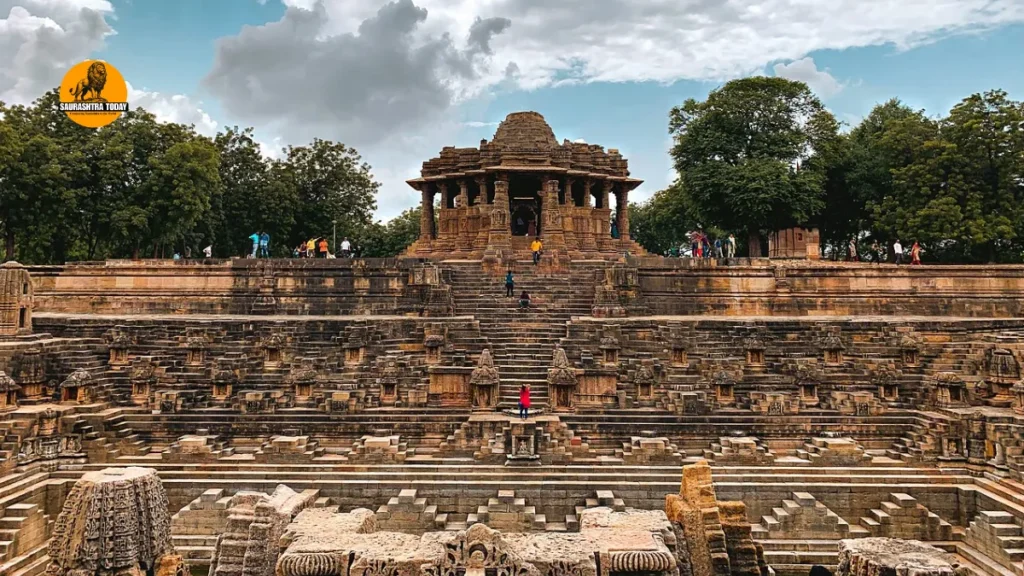
Ancient Sun Temple Near Ahmedabad Showcases Remarkable Engineering, Art and Cultural Heritage
The Modhera Sun Temple, located in Gujarat’s Mehsana district, remains one of India’s most celebrated historical landmarks and a symbol of the state’s rich cultural legacy. Situated about 100 kilometers from Ahmedabad, the centuries-old monument attracts thousands of visitors every year who come to admire its stunning architecture, intricate carvings, and fascinating connection to astronomy.
India is home to several temples dedicated to the Sun God, but the Modhera Sun Temple stands apart for its unique design and historical significance. Built nearly a millennium ago, the temple is widely regarded as one of the finest examples of medieval Indian craftsmanship and engineering.
A Monument Built During the Solanki Era
According to historians, the temple was constructed around 1026–27 CE during the reign of King Bhima I of the Chaulukya (Solanki) dynasty. The Solankis were known for their patronage of art, architecture, and religious institutions, and the Modhera Sun Temple is considered one of the most important surviving monuments from their rule.
Located on the banks of the Pushpavati River, the temple reflects the prominence of Sun worship in western India during that period. Today, the site is protected and maintained by the Archaeological Survey of India (ASI), ensuring the preservation of its historical and architectural value for future generations.
Architectural Brilliance That Continues to Fascinate Experts
One of the most remarkable aspects of the Modhera Sun Temple is its sophisticated architectural planning. Historians and researchers have long noted that the structure was designed in such a way that the first rays of the rising sun would illuminate the temple’s sanctum at specific times of the year.
The temple complex is divided into three primary sections:
Garbhagriha-Sanctum
The innermost chamber, or sanctum, was once the sacred space where the deity was installed. Although the original idol is no longer present, the structure remains a key feature of the temple’s design.
Sabha Mandap-Assembly Hall
The Sabha Mandap served as a gathering space for devotees and religious activities. Its pillars and ceilings are decorated with detailed carvings that showcase the artistic excellence of the era.
Surya Kund-Sacred Reservoir
Perhaps the most visually striking part of the complex, the Surya Kund is a large stepped tank featuring numerous miniature shrines along its terraces. The geometric layout and symmetry of the reservoir continue to impress architects and visitors alike.
Intricate Carvings Tell Stories of Faith and Mythology
The walls, pillars, and ceilings of the Modhera Sun Temple are adorned with elaborate stone carvings depicting gods, goddesses, celestial dancers, animals, birds, and scenes from Hindu mythology. These sculptures offer valuable insights into the religious beliefs, artistic traditions, and daily life of the period.
The attention to detail visible throughout the temple highlights the exceptional skills of the craftsmen who worked on the monument nearly a thousand years ago. Even today, many of the carvings remain remarkably preserved despite centuries of exposure to natural elements.
Why Regular Worship Is No Longer Conducted
Unlike many active temples across India, the Modhera Sun Temple does not host regular religious worship. Over the centuries, invasions, structural damage, and changes in the temple’s condition affected its original form. As a protected historical monument, the site is now preserved primarily for its archaeological and cultural importance rather than as a functioning place of worship.
Its status as a heritage monument allows scholars, historians, and tourists to study and appreciate its architectural significance without alterations that could affect its authenticity.
Also read: Devmogara Temple: Story, History, Pilgrimage and Tribal Legacy of Gujarat’s Sacred Shrine
How to Reach the Modhera Sun Temple
The temple is located in Modhera village in Gujarat’s Mehsana district and is well connected by road to major cities across the state.
- Nearest Airport: Ahmedabad Airport
- Nearest Railway Station: Mehsana Railway Station, approximately 25 kilometers away
- Road Connectivity: Regular buses, taxis, and private vehicles provide convenient access from Ahmedabad, Mehsana, and nearby towns
The destination is often included in heritage tourism circuits that explore Gujarat’s historical and architectural landmarks.
Best Time to Visit
The ideal time to visit the Modhera Sun Temple is between October and March, when Gujarat experiences pleasant weather suitable for sightseeing.
A major attraction during this period is the Modhera Dance Festival, typically held in January. The cultural event features classical dance performances against the backdrop of the illuminated temple, offering visitors a memorable blend of history, art, and tradition.
Also read: Nargol and Sanjan: A Timeless Coastline Where History, Faith and Serenity Meet
A Heritage Landmark with Modern Recognition
Beyond its historical importance, Modhera has gained national attention in recent years as India’s first solar-powered village. This modern achievement has added another dimension to the village’s identity, complementing the legacy of the ancient temple dedicated to the Sun God.
For travelers interested in history, architecture, culture, and heritage tourism, the Modhera Sun Temple remains one of Gujarat’s most remarkable destinations. Its combination of artistic beauty, scientific planning, and historical significance continues to make it a treasured landmark in India’s architectural heritage.